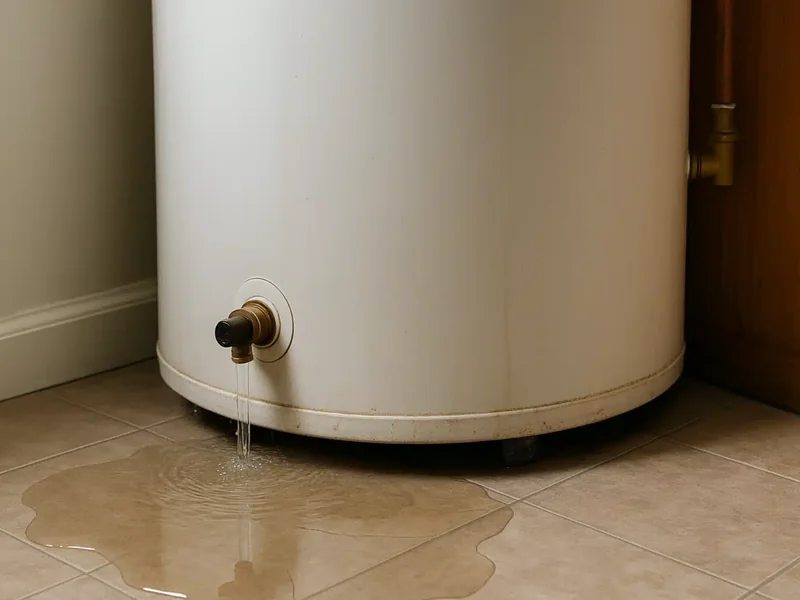
Water is spreading across your floor and the clock is ticking — this is the action plan, no theory, just the steps in order. Shut off the water. Shut off the power or gas. Relieve the pressure and figure out where it's coming from. Contain the damage. Call for help. Then handle the aftermath: documentation, thorough drying, insurance if needed, and the prevention upgrades that stop it happening again. Every minute you spend unsure is another gallon on the floor, which is why this guide exists to be read twice — once now, calmly, so you know where your shutoff valves are and what not to do; and once in the moment, step by step, when the heater is leaking and you need clear instructions. For Goose Creek homeowners, ten minutes of preparation today is the difference between a manageable repair and a renovation.
Step 1: Shut Off the Water
Find the cold-water inlet valve on the pipe feeding into the top of the tank — a lever handle (quarter-turn to close) or a round wheel (clockwise to close). Closing it stops new water from feeding the leak. If the valve is seized or you can't find it, use your home's main water shutoff instead. Do this first, before anything else — every gallon you stop now is a gallon you don't mop later.
Step 2: Shut Off the Power or Gas
Electric: Switch off the water heater's breaker. If the panel isn't labeled, turn off breakers until the heater's indicator goes dark — or kill the main if you're unsure. Water and electricity are a dangerous combination; don't skip this.
Gas: Turn the gas control dial to PILOT or OFF. If you smell gas (rotten-egg odor), don't touch electrical switches — leave the house and call the gas utility's emergency line from outside.
Step 3: Relieve Pressure and Assess
Open a hot-water tap somewhere in the house to relieve system pressure. Then look: where is the water coming from? The top (fittings, pipes — often repairable), a valve (drain valve, TPR valve — repairable), or the tank body and base (seams weeping, bottom pooling with no fitting source — replacement territory)? This 60-second assessment determines your next move. Take photos — they help the technician and your insurance.
Step 4: Contain the Water
Move valuables, electronics, and anything absorbent away from the water's path. Towels contain spreading water; a wet-dry vacuum removes standing water fast. If water is heading toward living areas or dripping through a ceiling (attic installations), prioritize barriers — rolled towels at doorways buy real time. If the leak is slow and the area is safe, attach a hose to the drain valve and run it to a floor drain or outside to reduce the water the tank can release.
Step 5: Call for Help
Call (833) 713-2101 and report: gas or electric, where the water is coming from, how fast it's leaking, whether you've shut off water and power, and where the heater sits (garage, attic, closet). With those details, our emergency team arrives prepared — and we can often tell you over the phone whether you're facing a repair or a replacement. For the complete shutdown procedure, see our emergency shutoff guide.
What NOT to Do
- Don't keep using hot water "until the plumber arrives" — every gallon you draw feeds the leak.
- Don't try to seal a tank-body leak with epoxy, tape, or sealant and consider it fixed. Tank leaks mean failed steel; sealants are at best a delay, at worst a false confidence that lets damage spread.
- Don't cap the TPR valve discharge pipe to stop a drip — that valve is a critical safety device.
- Don't wade into standing water near an electric heater until the breaker is confirmed off.
- Don't ignore a "small" leak overnight. Weeping seams become ruptures without further warning. A small puddle at bedtime can be inches of water by morning.
After the Immediate Crisis
Once the flow is stopped and help is on the way (or the repair is done), handle the aftermath:
- Document everything. Photos of the leak source, the water's extent, and any damaged materials — before cleanup, if possible.
- Dry thoroughly. Standing water is only the start; moisture in drywall, subflooring, and insulation causes mold within days in Lowcountry humidity. Fans, dehumidifiers, and — for significant flooding — professional drying.
- Contact insurance if there's meaningful damage. Your photos and the technician's assessment support the claim.
- Address the root cause. If the leak came from a failed component on an old tank, discuss with your technician whether the tank itself is trustworthy going forward — see our repair vs. replace guide.
- Prevent the repeat. Drain pan with a drain line, a leak detector with an alarm, annual maintenance — the unglamorous trio that prevents encore performances. Our maintenance service sets all of it up.
The Best Time to Prepare Was Yesterday
Read this guide again when nothing is leaking: locate your inlet valve and main shutoff, confirm they turn, identify your breaker or gas dial, and save (833) 713-2101 in your phone. Households that rehearse the shutdown handle real leaks calmly; households meeting their shutoff valve for the first time during a flood do not. Five minutes of preparation, done once, pays off for the life of the heater.
If the Leak Starts While You're Away
Some leaks announce themselves to an empty house — you discover them when you return from work or vacation. The procedure shifts slightly: don't rush in if there's deep standing water near electrical equipment; kill power at the main breaker before entering if needed. Document everything before cleanup, then work the same steps — the water's off already (or shut it off now), and the priority becomes drying. In Goose Creek's humidity, mold colonizes damp drywall within days, so start fans and dehumidifiers immediately and consider professional drying for anything beyond a small area. Then make the call that prevents the sequel: a leak detector with an automatic shutoff valve watches the heater when you can't, closing the water supply at the first sign of moisture. For anyone who travels regularly, it's the single highest-value protection you can add — it turns 'discovered after a week' into 'stopped in minutes.'
Goose Creek Resources for Water Emergencies
A leaking heater sometimes involves more than the heater, so know who handles what. The heater itself — valves, elements, gas controls, tank — is our department: call (833) 713-2101 any time. Water surging from the service line at the meter or a curb stop that will not turn belongs to Berkeley County Water & Sanitation, which controls street-side equipment. The rotten-egg smell of gas means everyone leaves the house first, then Dominion Energy's gas emergency line and 911 from a safe distance.
Document everything before cleanup begins. Photograph the leak, the water's path, and any damaged belongings — those photos are invaluable whether you file a homeowners claim or simply want a clear record for the technician. Move valuables and electronics out of harm's way, but do not wade into standing water near an electric heater until the breaker is off. For frequent travelers, an automatic shutoff valve that closes the water supply at the first sign of moisture is the single highest-value protection you can add. And once the immediate crisis passes, call (833) 713-2101 — fast action now is what keeps a leak from becoming a renovation.