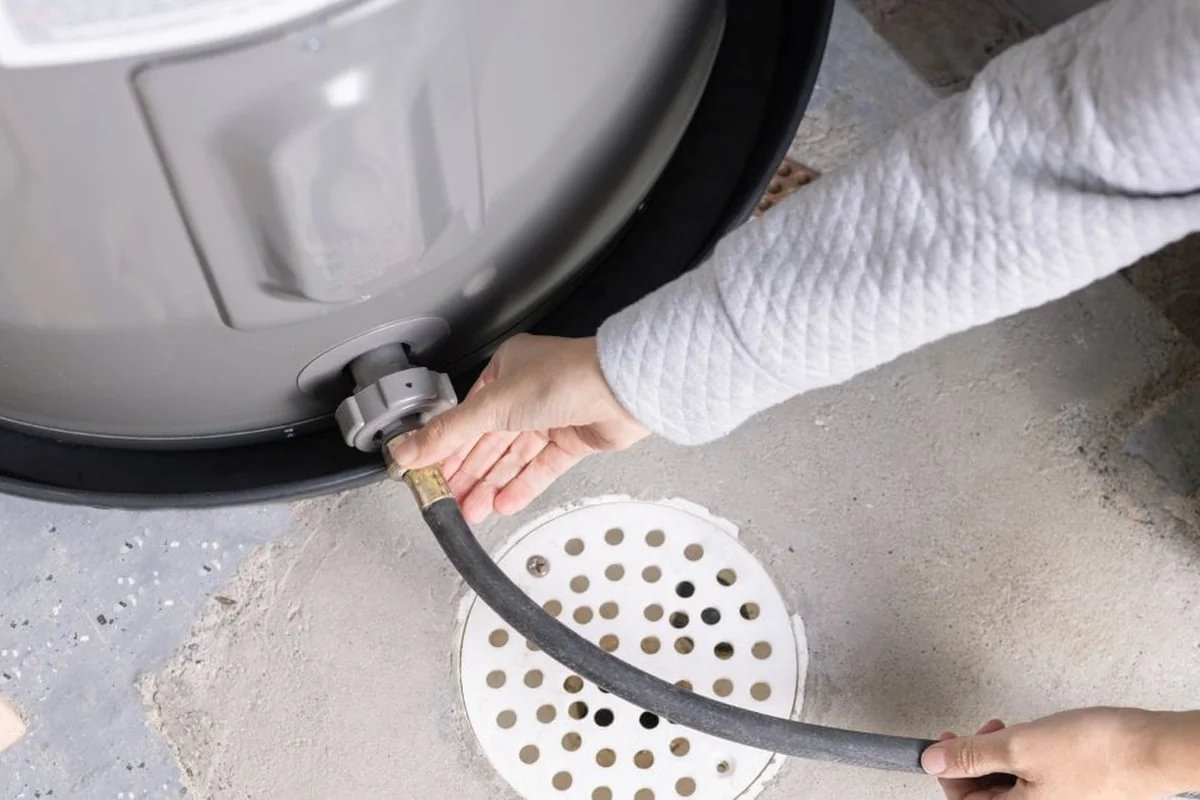
The drain valve is the small spigot near the bottom of your tank water heater — the one you are supposed to use for annual flushing and the one most homeowners never touch until something goes wrong. In Goose Creek, where mineral content in the water leaves sediment behind with every heating cycle, that neglect has consequences. Factory-installed plastic drain valves clog with calcium, crack with age, and start weeping at the worst possible moment.
A failing drain valve is more than a nuisance. It is the fitting that lets you flush sediment, drain the tank for repairs, and control water during an emergency. When it will not open, will not close, or drips constantly, you lose control of the tank. Worse, a valve that breaks off during a DIY flush attempt can turn a routine maintenance job into an uncontrolled flood in your garage or utility closet.
When you call (833) 713-2101, we diagnose whether the valve itself is the problem or just the messenger — sometimes a dripping valve signals sediment damage or tank pressure issues. We replace failed valves with full-port brass units that actually let sediment pass through, so your next flush works the way it is supposed to. Serving all of Goose Creek, from Crowfield Plantation to the neighborhoods along Highway 52, we bring the right fittings and get your tank draining properly again.
Signs Your Drain Valve Is Failing
The most common symptom is a valve that drips and will not stop. You flush the tank or test the valve, and afterward it weeps constantly — a slow drip from the spout that fills a bucket overnight. This usually means sediment has scored the valve seat or the plastic internals have warped. In Goose Creek's mineral-heavy water, this happens sooner than most manuals suggest, because calcium granules grind against the seal every time the valve moves.
The second classic failure is a valve that will not open at all. You attach the hose, turn the handle, and nothing comes out — or the handle snaps off in your hand. Factory plastic valves narrow with sediment buildup until the passage is choked, and aged plastic becomes brittle. Forcing it risks breaking the valve body off at the tank threads, which is exactly the scenario that floods garages.
Other warning signs: white or green crust forming around the valve threads (mineral seepage past a failing seal), a valve that opens but only trickles while the tank is full (internal blockage), and corrosion eating at the valve body on older tanks. Lowcountry humidity accelerates exterior corrosion on metal valve components, so a valve that looks crusty on the outside is often worse on the inside. If you see any of these, do not force the valve — call and let us handle it under controlled conditions.
Our Drain Valve Replacement Process
Replacing a drain valve sounds simple, but doing it without flooding the room takes discipline. We start by shutting off power or gas and the cold-water inlet, then we relieve pressure through a hot tap. Before the old valve comes out, we position a large drain pan and connect a hose, because once that valve is removed, the tank is open to the room.
The old valve is unthreaded carefully. On older tanks, the original valve may be seized or the plastic body may crumble — this is the moment DIY jobs go wrong, and it is why we carry extraction tools and backup plugs. If the tank threads are damaged, we assess honestly whether the tank itself is still serviceable; a tank that cannot hold a fitting is a tank on borrowed time.
The replacement is a full-port brass ball valve, not another plastic replica of the one that failed. Full-port means the opening is the same diameter as the pipe — sediment, calcium granules, and flush water actually pass through instead of clogging. We wrap the threads with proper sealant, torque it to spec, and then refill the tank while checking the new valve under full pressure. Finally, we demonstrate the valve for you: open, flowing, closed, sealed — so you know exactly how it behaves before your next flush. The whole job typically takes under an hour, and your hot water is back the same day.
Why We Install Full-Port Brass Valves
The valve that came with your heater was chosen for cost, not performance. Most factory drain valves are plastic gate or globe designs with a narrow, winding water path. That narrow path is the root cause of nearly every drain valve failure: sediment cannot pass through it, so it accumulates, packs the valve, and either jams it shut or destroys the seal.
A full-port brass ball valve changes the equation. Brass resists the mineral corrosion that eats cheaper metals in Goose Creek water, and the ball mechanism opens to a straight, full-diameter passage. When you flush the tank, sediment actually leaves the tank instead of wedging into the valve. The quarter-turn handle gives positive open/closed action — no more guessing whether a multi-turn plastic knob is really shut.
We also fit the valve to your situation. If your heater sits in a tight utility closet, we use a compact valve and hose adapter that you can actually reach. If the tank is elevated on a stand in the garage, we make sure the discharge path is practical. And while we are there, we check the water heater pan and discharge piping, because a valve job is a natural moment to confirm the whole drainage setup is ready for real use. The equipment costs more than a plastic replacement, but it is a one-time upgrade that makes every future flush effective.
Goose Creek Water, Climate, and Your Drain Valve
Goose Creek's water supply, drawn largely from Lake Moultrie through Berkeley County Water & Sanitation, carries a moderate mineral load. Every heating cycle precipitates a little calcium out of that water, and it all settles to the bottom of the tank — right where the drain valve lives. Over years, that sediment is what clogs, scores, and ultimately destroys factory valves. Homes on older wells around the outskirts can see even heavier mineral content, and their valves fail faster still.
The Lowcountry climate adds its own stress. Year-round humidity corrodes metal valve bodies and threads from the outside, especially on garage-installed heaters where condensation is constant in summer. We see valves whose exteriors look merely weathered but whose threads are fused with corrosion. Freezing is rare here, but the occasional hard freeze snaps attention to outdoor-adjacent installations — a valve in an unconditioned garage that froze even once may have cracked internally.
Then there is the housing stock. Goose Creek grew fast from the 1970s onward, and many homes still run their original-era heaters or early replacements with original plastic valves. Newer subdivisions often place heaters in attics or tight closets where a failed valve is harder to reach and a leak does more damage. Whatever the setup, the local lesson is the same: do not wait for the valve to fail before you care about it. An annual flush through a working brass valve is the cheapest maintenance a tank heater gets.