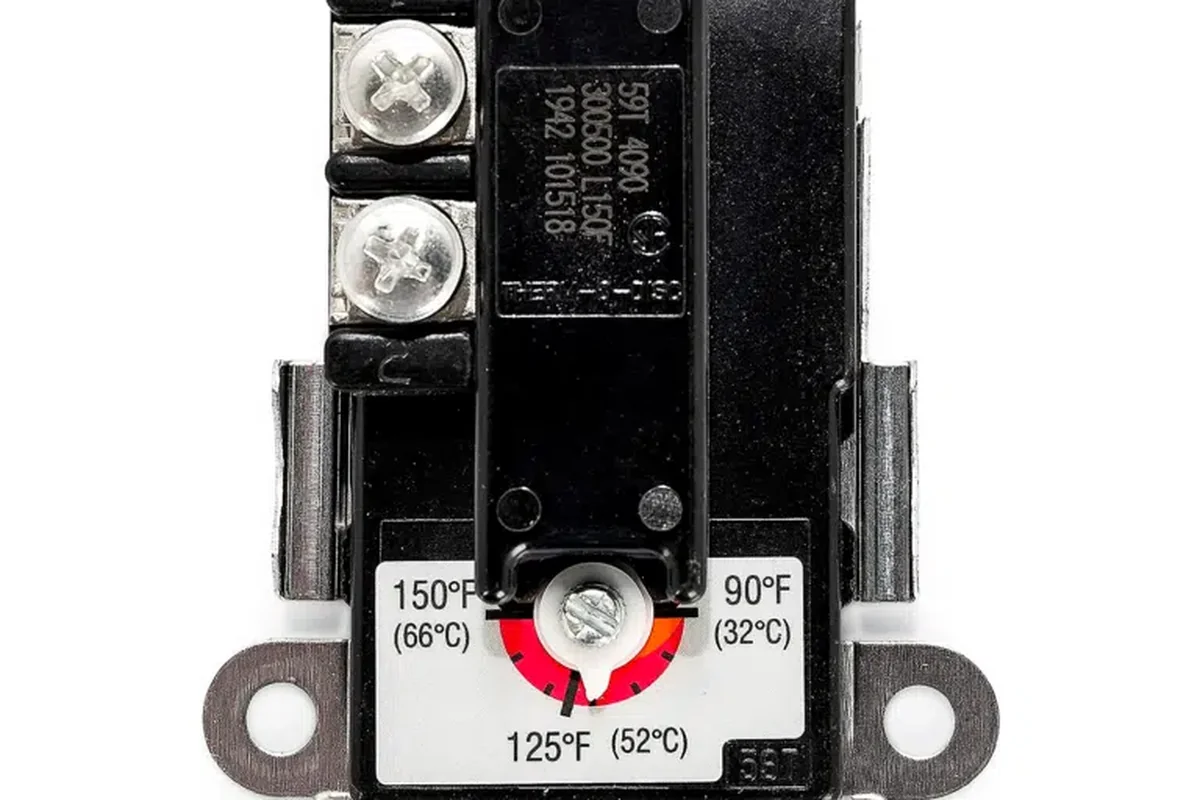
Your water heater's thermostat is its decision-maker: the component that senses water temperature and tells the heating system when to fire and when to stop. When it fails, the symptoms are maddening — water that is scalding one day and lukewarm the next, hot water that runs out too fast, or a heater that seems to have a mind of its own. Homeowners often blame the heating elements or assume the whole unit is dying, when the actual culprit is a small control behind an access panel.
Electric tank heaters have two thermostats (upper and lower) working as a team, and gas heaters regulate temperature through the gas control valve's thermostat section. Either way, accurate temperature control is both a comfort issue and a safety issue — a thermostat stuck in the "heat" position can push water toward scalding temperatures and overpressure conditions.
When you call (833) 713-2101, we test before we replace. Thermostat symptoms overlap heavily with element failures, sediment problems, and dip tube issues, and we use meters — not guesses — to identify the real fault. We install correctly rated thermostats, calibrate temperature settings for your household, and verify stable operation through a full heating cycle. Serving Goose Creek homes of every age, from 1970s originals to new construction, gas and electric alike.
Signs Your Thermostat Is Failing
The hallmark of thermostat failure is inconsistency. Water that is properly hot on Monday, lukewarm on Tuesday, and scalding on Wednesday — with no change in your usage — points to a control that has lost its calibration. A thermostat's internal contacts wear and its temperature sensing drifts, so it fires the heater at the wrong times or for the wrong durations.
Water that is always too hot, regardless of the dial setting, is the dangerous variant. If you turn the thermostat down and the tap water stays scalding, the thermostat is stuck calling for heat. Check with a thermometer: water above 140 degrees at the tap after the heater has cycled is a red flag for both scalding risk and excess pressure. In homes with children or elderly residents, this deserves immediate attention.
On electric heaters, the upper thermostat does double duty — it also houses the high-limit safety switch. A high-limit button that keeps tripping after you reset it often means the thermostat is allowing overheating, though a shorted element can cause the same symptom. Short hot-water supply is the subtler sign: a failed lower thermostat leaves the lower element idle, so only the top of the tank heats. Because these symptoms mirror element failure and sediment buildup, professional testing is the only way to know which part your money should go toward.
Our Thermostat Diagnosis and Replacement Process
We never replace a thermostat on symptoms alone. The visit starts with electrical safety — breaker off and meter-verified dead for electric units, gas control secured for gas models — then systematic testing. On electric heaters, we test both thermostats for proper switching at temperature and both elements for continuity, because the two failures disguise each other. We also check the high-limit switch and inspect for sediment load, which can mimic thermostat problems by insulating the tank.
When testing confirms a failed thermostat, we drain nothing — thermostats mount against the outside of the tank under the access panels, so replacement does not require opening the water side at all. The old thermostat is removed, the tank surface is cleaned for good thermal contact, and the new unit is installed and wired exactly to the heater's diagram. Wiring errors here cause cross-feeding between elements or constant-on heating, so we verify every connection.
Calibration is the step that separates a proper job from a parts swap. We set both thermostats (upper slightly higher than lower, per standard practice) to a safe, practical temperature for your household — typically 120 degrees unless your situation calls for different — and then verify through a full heating cycle that the elements or burner engage and disengage at the right points. We confirm stable tap temperatures and check that the high-limit safety functions. You get consistent hot water at a safe temperature, and you know exactly what was wrong and what we did about it.
Thermostat Types and What We Install
Electric tank heaters use surface-mount thermostats in upper and lower positions. The upper thermostat includes the high-limit reset — a critical safety device that cuts power if the tank overheats. We install thermostats rated for your heater's voltage and configured for its wiring scheme (simultaneous vs. non-simultaneous element operation). Using the wrong type causes elements to fight each other or run constantly, so specification matters.
For gas heaters, temperature regulation lives inside the gas control valve, and thermostat failure there means valve replacement — a different service with its own safety protocols. We diagnose which system you have and route the repair correctly rather than forcing an electric-thermostat solution onto a gas problem.
We also address the root causes that kill thermostats prematurely. Chronic overheating from sediment-insulated tanks cooks thermostat contacts; we check sediment load and recommend flushing when it is a factor. Loose or corroded wiring connections create resistance heating at the terminals that damages thermostats over time — we inspect and correct wiring condition as part of the job. In Goose Creek's humid garages, we see corroded terminals more often than in drier climates, and cleaning or replacing damaged wiring is part of doing the job once, properly.
Temperature Safety and Goose Creek Homes
Thermostat failure is a safety issue before it is a comfort issue. Water at 140 degrees scalds in seconds; at 150 degrees, in under two seconds. Children and older adults are most vulnerable because they react slower and have thinner skin. A thermostat stuck on high turns every hot tap in the house into a hazard. This is why we treat "water too hot" calls with urgency and why we verify safe temperatures before leaving every thermostat job.
The standard recommendation of 120 degrees balances safety, comfort, and energy use for most households. Some situations — homes with certain medical needs or dishwashers without booster heaters — call for different settings, and we discuss your household's needs rather than applying a blanket number. We also check mixing and tempering where relevant, because the safest systems control temperature at both the tank and the tap.
Goose Creek's housing mix shapes what we find. Older homes often have original thermostats with decades of contact wear and drifted calibration — they "work" in the sense that water gets hot, but temperatures swing wildly. Newer homes with electronic controls can suffer from power-event damage after storm-season surges, producing erratic behavior that mimics mechanical failure. Whatever the vintage, our approach is the same: test with instruments, replace with correct-spec parts, calibrate to your household, and verify safe, stable operation. A thermostat is a small part with an outsized role — it deserves to be done right.