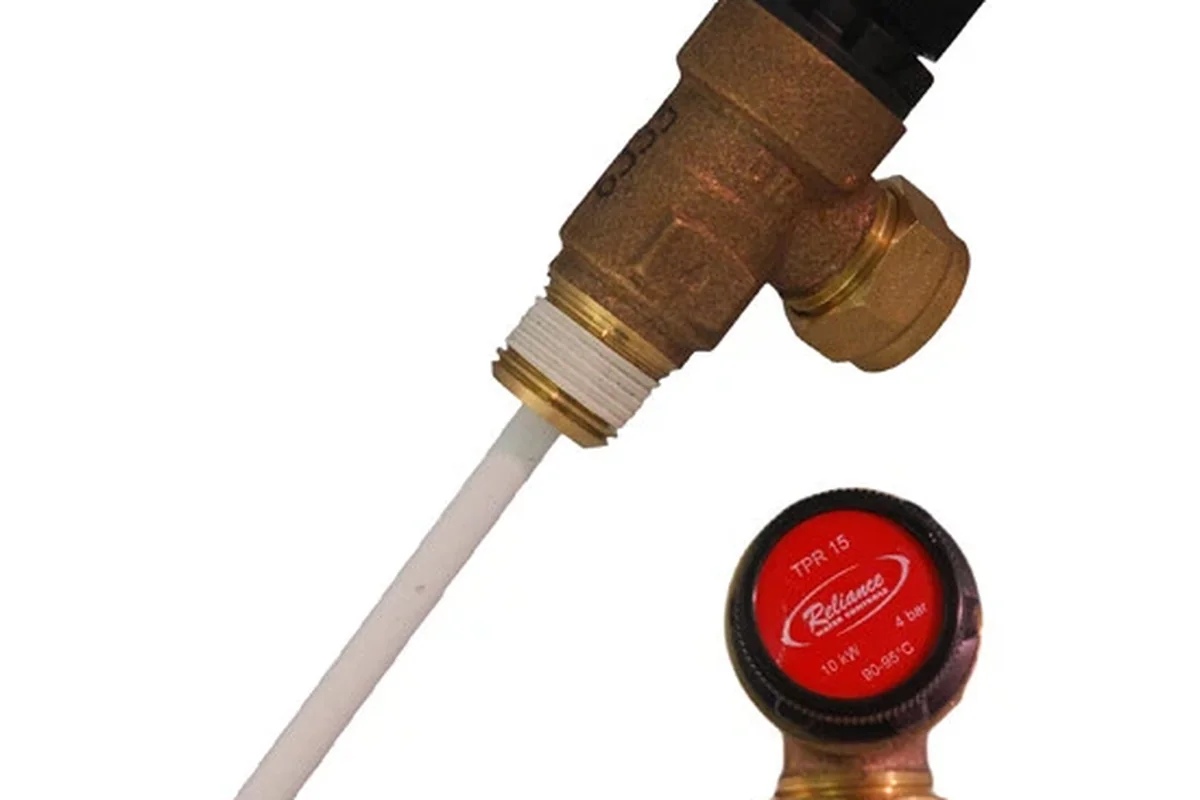
The temperature-and-pressure relief valve — the TPR valve — is the single most important safety device on your water heater. It is the brass valve on the side or top of the tank with a small lever and a discharge pipe running down toward the floor. Its entire job is to open and release water if the tank ever overheats or over-pressurizes, preventing the kind of catastrophic tank rupture that makes headlines. When it fails, you lose that protection — or you get a valve that drips endlessly and will not stop.
A dripping TPR valve is one of the most common service calls we get in Goose Creek, and it is also one of the most misunderstood. Homeowners assume the valve itself is broken, and sometimes it is. But often the valve is doing its job — relieving genuine excess pressure — and the real problem is high house water pressure or a failed expansion tank. Replacing the valve without finding the cause just buys a few months before the new one drips too.
When you call (833) 713-2101, we test the whole pressure picture: house pressure, expansion control, and the valve itself. If the valve has failed, we replace it with the correctly rated unit. If something else is driving the discharge, we fix that too. Either way, you get a water heater that is actually safe, not just quiet. Serving all of Goose Creek with safety-first diagnostics.
Signs Your TPR Valve Needs Attention
The obvious sign is water dripping or running from the discharge pipe — the pipe running from the valve down toward the floor or outside. A occasional drop after a heavy hot-water use cycle can be normal thermal expansion. A steady drip, a puddle that keeps reappearing, or a pipe that runs warm constantly is not normal and needs diagnosis.
Water stains or mineral crust on the discharge pipe's end tell the story of intermittent discharge you may never have witnessed. If the pipe terminates outside, check it after the heater has run a full cycle. Corrosion on the valve body itself, a lever that is frozen and will not lift, or a valve that is visibly aged and crusty all suggest the valve can no longer be trusted to open in a real emergency — which is its entire reason for existing.
The symptom homeowners misread most is a valve that discharges strongly after the water utility does work in the area or after a pressure spike. That is the valve working correctly against abnormal pressure. The fix is not a new valve — it is pressure regulation. This is why our first step is always testing: we measure your house water pressure and check expansion control before we touch the valve. Replacing a working safety device while ignoring the pressure behind it is the most common mistake in this repair, and we do not make it.
Our TPR Valve Service Process
Every TPR call starts with pressure testing, not parts. We attach a gauge and measure your static house water pressure, then check for thermal expansion pressure rise during a heating cycle. We inspect the expansion tank if one is present — pressing the Schrader valve to check for waterlogging, which means the bladder has failed. Only with that picture complete do we evaluate the valve itself.
If the valve is the problem — stuck, weeping from a failed seat, corroded beyond trust — replacement is straightforward but specification-critical. TPR valves carry specific temperature and pressure ratings matched to the tank, and the replacement must match. We shut down the heater, drain below the valve port, remove the old valve, clean the tank threads, and install the correctly rated new valve with proper sealant. The discharge pipe is checked for correct sizing, routing, and termination — it must run downward, be properly sized, and terminate where discharge is visible and safe.
If pressure is the problem, we address it at the source: pressure regulation for high municipal pressure, expansion tank replacement for waterlogged bladders, or both. Then we verify — running the heater through full cycles and confirming the new (or original) valve stays shut under normal conditions. The job is done when the valve is silent during normal operation and capable of opening in a real emergency. We test the new valve's lever operation before leaving so you know it moves freely.
Valves, Ratings, and Discharge Piping
TPR valves are not interchangeable commodities. Each carries a temperature rating (typically 210 degrees) and a pressure rating matched to the tank's working limits, plus a BTU discharge capacity that must meet or exceed the heater's input. Installing an under-rated valve is dangerous; installing a valve with the wrong thread or probe length means it cannot sense tank conditions properly. We match the replacement to your specific heater's requirements.
The discharge piping matters as much as the valve. Code requires it to be full-size (never reduced), to run downward by gravity, to terminate within inches of the floor or outside, and to have no valve, cap, or threaded end that could block it. We routinely find discharge pipes that are capped, reduced, run uphill, or terminated where nobody would ever see discharge — every one of those defeats the safety device. During TPR service we correct piping deficiencies we find, because a perfect valve on a blocked pipe protects nothing.
We also stock quality valves rather than the cheapest available. The difference is small and the reliability difference is real — a safety device is the wrong place to economize. Our service includes verifying the new valve's certification markings and documenting the rating for your records, so you know the protection on your tank is genuine and correctly specified.
Pressure, Expansion, and Goose Creek Water Systems
Goose Creek's water infrastructure shapes TPR problems here. Municipal supply pressure varies by zone and elevation, and we measure pressures in local homes that run well above the 80 PSI threshold where problems begin — sometimes following utility work or supply changes. High static pressure alone stresses the TPR valve; combined with thermal expansion in a closed system (where a check valve or pressure-reducing valve prevents backflow to the main), pressure spikes during every heating cycle and the TPR valve becomes the system's pressure outlet.
That is why expansion tanks matter so much here. Many Goose Creek homes have them, but the tanks fail silently — the internal bladder ruptures, the tank waterlogs, and suddenly there is no cushion for thermal expansion. The TPR valve starts dripping, the homeowner replaces the valve, and the dripping resumes because the expansion tank is still dead. We check expansion tanks on every TPR call and replace failed ones; it is frequently the actual fix.
Safety framing matters: the TPR valve exists because water heaters can, in rare runaway conditions, become genuinely dangerous. A working valve and correct discharge piping are non-negotiable protections, and we treat them that way. We also educate: we show you where your valve is, what its discharge pipe looks like, and what dripping means — so you can catch the next pressure problem early instead of discovering it as a puddle. In a humid climate where discharge pipes terminate outside and crust over unnoticed, that awareness is worth real protection.