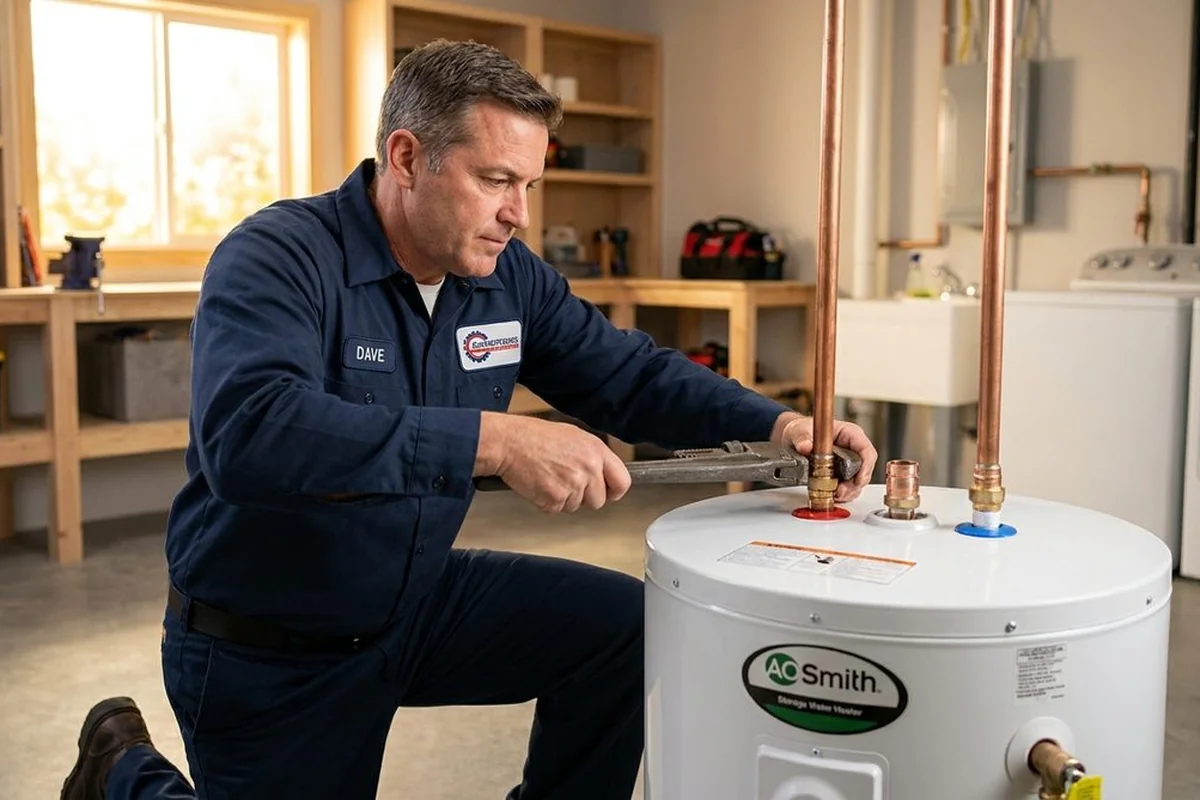
Every water heater reaches the end. The tank rusts through, the heat exchanger cracks beyond repair, or the unit becomes a patchwork of replaced parts still delivering unreliable hot water. When that day comes in Goose Creek, replacement is not just swapping a box — it is the moment to correct everything that shortened the old unit's life and set the new one up for its longest possible service.
Too many replacements repeat the sins of the original installation: the same excessive water pressure, the same missing expansion control, the same undersized gas line, the same absent drain pan. A new heater installed into the conditions that killed the old one inherits its fate. Our replacement service treats the installation as a system — the heater, the water supply, the pressure, the venting, the drainage — so the new unit starts life in better conditions than the old one ended it.
When you call (833) 713-2101, we assess your household's hot water needs, your fuel options, and your installation space, then recommend the right unit — tank or tankless, gas or electric — without steering you toward what is easiest for us. We handle removal of the old unit, professional installation to current standards, and thorough testing before we leave. Serving Goose Creek homes from first-time replacements to planned upgrades.
When Replacement Beats Repair
The honest answer starts with the tank shell. A leaking tank cannot be repaired safely — full stop. Once the steel is breached, replacement is the only option, and delaying it risks a burst that turns a planned installation into an emergency with water damage. If your tank is leaking from the shell, the decision is made.
Age plus condition is the next test. A heater past 10 to 12 years with a major component failure — dead gas valve, cracked heat exchanger, heavily corroded tank — is rarely worth a large repair. The math is simple: putting significant money into a unit with a few years of structural life left buys you those few years at best, while a new unit buys a decade or more. We show you the tank's actual condition — rust, sediment, corrosion — so the call is based on evidence, not salesmanship.
Then there is the reliability pattern. A heater that needs its third repair in two years is telling you something: the system is wearing out comprehensively, not failing in one part. Chasing individual failures on a dying unit costs more over time than replacement, and it leaves you with unreliable hot water in between. We also flag efficiency and capacity mismatches — a household that has outgrown its 40-gallon tank, or an ancient unit costing a fortune to run. Replacement is sometimes the right call even when repair is possible, and we will tell you when the numbers favor it.
Our Replacement Process, Start to Finish
Replacement starts with sizing and selection, not with a wrench. We assess your household: number of occupants, bathrooms, simultaneous hot-water demands, and fuel availability. A family of five with two teenagers needs different capacity than a retired couple. We discuss tank vs. tankless honestly — tankless excels for endless hot water and space savings but demands proper gas sizing and committed descaling maintenance in our water; tanks are simpler, more forgiving, and easier to service. The recommendation follows your needs, not our preferences.
Installation day follows a strict sequence. We shut down and drain the old unit, disconnect water, fuel, and venting with full safety protocol, and remove it from your home — you do not deal with disposal. The installation area is prepared: pan with drain where appropriate, water connections updated, gas line verified for adequate sizing, venting brought to current standards. The new unit is set, connected, and filled.
Commissioning is where professional installation shows. We purge all air, verify gas connections with leak detection, confirm proper venting and draft, set and verify temperature controls, test the T&P valve and discharge piping, check house water pressure and expansion control, and run the unit through full heating cycles under real load. We walk you through the new unit's operation and maintenance needs — including the descaling schedule for tankless models in Goose Creek water — and leave the area clean. The job is not done until hot water flows reliably and every safety system checks out.
Choosing Your New Water Heater
Tank heaters remain the practical choice for most Goose Creek homes. They are affordable, simple to maintain, and every technician can service them. Modern tanks are better insulated than the units they replace, and choosing the right capacity — 40 vs. 50 gallons for most families — matters more than most people think. Too small and you run out; too large and you heat water you never use. We size from your actual household, not a rule of thumb.
Tankless units suit households that value endless hot water and have the infrastructure to support them: adequate gas supply (often requiring a line upgrade in retrofits), proper venting routes, and a commitment to annual descaling in our mineral water. They cost more upfront and demand more maintenance discipline, but they last longer when maintained and free up significant space. We install tankless only where the fundamentals check out — selling a tankless into an undersized gas line is a disservice we will not perform.
Fuel choice follows your home: gas where gas service exists and the venting works, electric where it does not. Heat pump water heaters deserve mention for suitable installations — they are highly efficient in warm climates like ours, though they need adequate space and produce cool exhaust air. We discuss all viable options with their real trade-offs for your specific home, and we install what you choose with the same thorough commissioning regardless of type.
Installation Standards and Goose Creek Conditions
Every replacement we perform corrects the conditions that kill heaters early. Water pressure is checked and regulated — excessive pressure is rampant in some local zones and destroys tanks, valves, and fittings alike. Expansion control is installed or renewed so thermal expansion has somewhere to go besides the T&P valve. A drain pan with proper drainage goes under every installation where location warrants it, which in Goose Creek means nearly all of them.
Venting and combustion air get full attention on gas installations. We verify flue sizing, slope, and termination, and confirm adequate combustion air — sealed closets in newer homes are a common deficiency that causes sooting and erratic operation. Gas lines are checked for adequate sizing, particularly in tank-to-tankless conversions where demand jumps dramatically. Electrical circuits are verified for correct breaker and wire sizing on electric models.
Local code compliance is built in, not bolted on. Berkeley County requirements for shutoff valves, sediment traps on gas lines, T&P discharge piping, pan drainage, and seismic strapping where applicable are all part of our standard installation — not upgrades, not options. We also consider the Lowcountry environment: corrosion-resistant components where humidity attacks, proper exterior terminations that stay clear, and placement advice when the old location was part of the problem. A replacement should be a fresh start in every sense, and we install it that way.