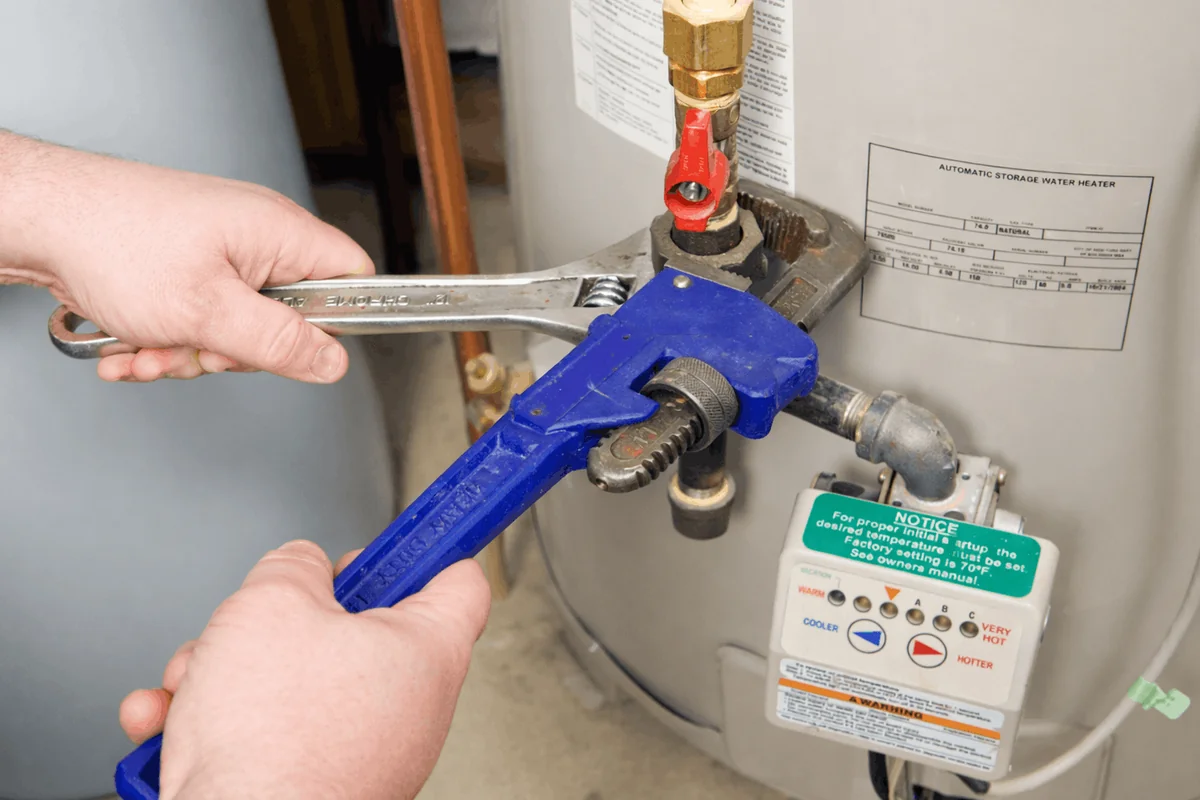
The traditional tank water heater — 40 or 50 gallons of hot water standing by in a steel tank — remains the most common type in Goose Creek homes. It is also the type most likely to leak, simply because there are more of them and they age in predictable ways. When a tank heater leaks, the first question is always the same: is this a fitting that can be fixed, or a tank that has reached the end?
That distinction is the entire job. A leak from a supply connection, drain valve, T&P relief valve, or element gasket is repairable — often quickly and affordably. A leak from the tank shell itself, where the steel has rusted through, is not. No sealant, patch, or fitting will safely hold a pressurized tank together, and anyone who tells you otherwise is selling you a future flood. Our role is to find the true source, fix what is fixable, and give you a straight answer when replacement is the only safe option.
When you call (833) 713-2101, we start with your symptoms: where the water appears, how much there is, the heater's age, and whether the leak is constant or intermittent. That phone triage tells us what to bring and what to expect. We service tank heaters throughout Goose Creek — gas and electric, garage and closet and attic installations — and we diagnose before we quote, so you always know exactly what you are dealing with.
Where Tank Leaks Come From
Tank water heater leaks fall into two families, and telling them apart is the most important diagnostic skill in this business. Repairable leaks come from components: the cold-water inlet and hot-water outlet connections on top, the temperature-and-pressure relief valve on the side, the drain valve at the base, heating element gaskets on electric models, and the gas control valve threads on gas models. These leak at joints and fittings. They drip, weep, or spray from a specific point, and they respond to proper repair.
Tank-shell leaks are different. They come from the steel itself — a rusted-through weld seam, pinholes in the tank bottom, or corrosion around the base. The telltale sign is water appearing from under the tank with no visible fitting above it leaking, or moisture seeping from the tank's outer jacket. Condensation can mimic this on humid days, which is why we dry and watch rather than guess. But once we confirm the shell is breached, the conversation changes: the tank must be replaced.
In Goose Creek, the usual suspects skew toward corrosion. Mineral-rich water attacks from the inside — depleting anode rods, then eating the steel — while Lowcountry humidity corrodes fittings and jackets from the outside. Heaters in garages and crawl spaces suffer both at once. Age is the multiplier: tanks past year ten are in the failure window, and tanks past year twelve with no maintenance history are living on borrowed time. When we diagnose, we show you exactly what we find so the repairable-vs-replaceable call is transparent.
Our Leak Diagnosis and Repair Process
Every tank leak call starts the same way: we dry the area and watch. Water travels — a leak at a top fitting can run down the jacket and pool at the base, looking exactly like a tank failure. So we shut down the unit safely, dry every surface, and observe where moisture reappears. This patient step prevents the most common misdiagnosis in the trade.
Once the source is confirmed, the path splits. For fitting and component leaks, we repair properly: re-seating supply connections with new dielectric unions where dissimilar metals meet, replacing failed drain valves with full-port brass, swapping T&P valves that are weeping or stuck, and re-gasketing elements on electric models. Each repair is pressure-tested under full operating conditions before we call it done — a fitting that holds at rest but weeps at temperature is not fixed.
For tank-shell failures, we shift to replacement planning. We drain the failed tank safely, disconnect it, and discuss your new-unit options: same-size direct replacement or an upgrade in efficiency or capacity. We also diagnose why the tank failed — dead anode rod, excessive pressure, sediment damage, failed expansion control — and correct those conditions with the new installation so history does not repeat. Throughout, we keep you informed: what failed, why it failed, what we are doing about it, and what it means for the rest of your plumbing. No jargon, no pressure.
Equipment and Parts for Tank Repairs
Tank leak repair calls for a stocked truck, because the source is not always what the phone description suggested. We carry full-port brass drain valves, T&P relief valves in the common ratings, dielectric unions and supply connectors, element gasket kits, thermocouples and pilot assemblies for gas models, and the thread sealants and fittings to re-make any joint on the tank. That inventory means most repairable leaks are fixed in a single visit.
Our diagnostic equipment matters as much as the parts. Moisture meters trace water paths through drywall and subflooring to distinguish active leaks from old stains. Inspection mirrors and lights reach the tight spaces behind closet-installed heaters. Pressure gauges verify house water pressure — excessive pressure is a silent killer of tanks and fittings alike, and Goose Creek homes on certain supply zones see pressure spikes that accelerate every failure mode. When we find high pressure, we address it with proper regulation rather than just fixing its latest victim.
For replacements, we install current-spec tank heaters matched to your home's needs: correct fuel type, capacity for your household, and venting appropriate to the installation location. We do not upsell capacity you do not need, and we do not install a new tank into the conditions that killed the old one — expansion control, pressure regulation, and pan drainage are part of the conversation, not afterthoughts.
Goose Creek Factors That Kill Tanks Early
Three local realities shorten tank life in Goose Creek. First, water chemistry. The area's moderately mineralized supply drives internal corrosion once the anode rod depletes — and most local tanks have never had their rod checked. Sediment blankets the tank bottom, insulating the burner or lower element, overheating the steel, and accelerating failure from below. Tanks here die from the bottom up more often than homeowners expect.
Second, installation environment. The typical Goose Creek heater lives in a garage, where summer heat bakes it for months and humidity condenses on every cool surface. That moisture corrodes the jacket, fittings, and base from the outside while minerals work from the inside. Attic installations in newer subdivisions trade garage heat for a different risk: when they leak, water goes straight through ceilings. Crawl-space and closet units are hard to inspect, so leaks run longer before discovery.
Third, the age wave. Goose Creek's major growth decades mean thousands of homes are now running heaters in the 10-to-15-year failure window simultaneously — many of them original builder-grade units that received zero maintenance. If your tank is in that range and you have never flushed it or checked the anode rod, assume it is closer to failure than to its prime. A preventive inspection now, while the tank still holds, is the cheapest service we offer relative to what it prevents: a flooded garage, ruined flooring, and an emergency replacement on the worst possible day.