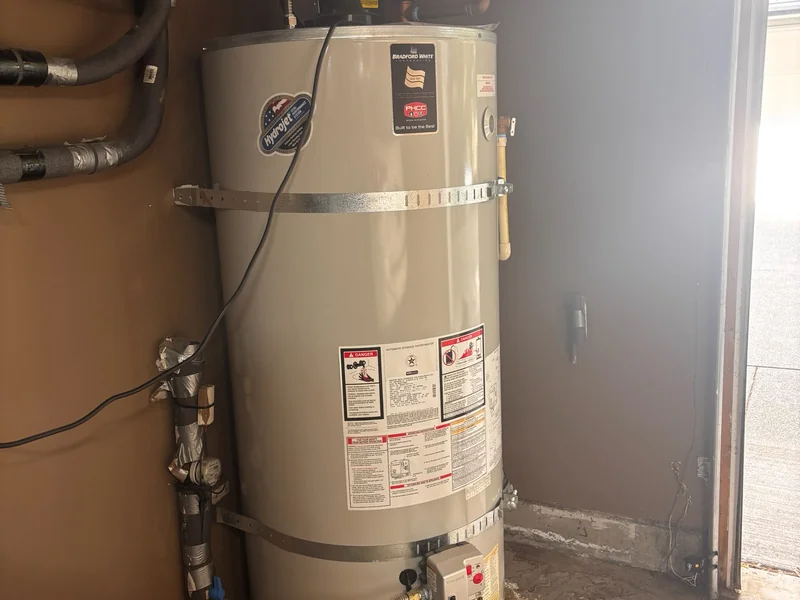
Tucked along the US-17 corridor between Mount Pleasant and McClellanville, Awendaw is classic Lowcountry countryside: tall pines, tidal creeks, and the Francis Marion National Forest pressing in from the west. This small Charleston County town of roughly 1,400 residents is known for the ancient Sewee Shell Ring, the Garris Landing boat ramp at Bulls Bay, and wide-open tracts where homes sit on wooded acreage rather than tight subdivision lots. Life here moves slower, but the demands on a water heater are anything but gentle.
Most Awendaw properties run on private wells and septic systems once you leave the highway corridor, and that well water shapes everything about water heater ownership here. Iron and sulfur in the groundwater eat anode rods, clog drain valves with sediment, and burn out heating elements far ahead of schedule. Add in outdoor sheds, manufactured-home compartments, and crawl-space installations exposed to hard winter freezes, and a small drip can turn into a failed tank faster than most homeowners expect. Our technicians work this corridor every week and know exactly how Awendaw's water and housing stock treat water heaters.
Water Heater Challenges in Awendaw, SC 29429
Awendaw's water heaters fail in patterns you rarely see in the city, and almost all of them trace back to water chemistry and placement. Private well water here frequently carries dissolved iron, sulfur compounds, and fine sediment. Iron feeds rust-colored water and stains; sulfur feeds the rotten-egg smell that shows up in hot water first; sediment settles into a thick layer at the tank bottom. That sediment blanket insulates the burner or lower element from the water, so the tank overheats at the bottom, rumbles and pops during heating cycles, and burns through heating elements and gas control parts years early.
Well water eats the parts that prevent leaks
The anode rod is the tank's internal corrosion shield, and Awendaw well water dissolves standard magnesium rods in two to three years. Once the rod is gone, corrosion attacks the tank lining itself, and the first sign is often a damp patch under the heater or rusty water at the tap. Because many Awendaw heaters live in sheds or crawl spaces nobody inspects regularly, that early warning goes unnoticed until the tank is actively leaking. We see this cycle constantly: skipped maintenance on well water, then a tank that fails at eight or nine years instead of lasting twelve or more.
Placement and weather add their own risks
Rural Awendaw homes put water heaters in places city plumbers rarely see. Exterior sheds and carport closets expose tanks and supply lines to freezing air during hard cold snaps, and a frozen inlet pipe can split and flood the compartment on the thaw. Manufactured homes tuck heaters into tight compartments with minimal clearance, which complicates anode rod service and pan drainage. Crawl-space installations sit inches above a high water table, so a leaking TPR valve or drain valve can run for weeks before anyone notices. Hurricane-season power outages knock out well pumps too, and electric elements that energize against a partially drained tank after service is restored can burn out in minutes.
- Sediment-heavy well water shortens element, burner, and anode rod life.
- Outdoor and crawl-space placement raises freeze and corrosion risk.
- Infrequent inspection lets small leaks become tank failures.
- Older rural housing stock often runs original or second-generation tanks past their prime.
The fix is straightforward but it has to match the setting: annual flushing on well water, anode rod checks every couple of years, freeze protection on exposed piping, and honest replacement advice when a tank's lining is already breached. That is the service pattern we follow on every Awendaw call.
Our Water Heater Services in Awendaw, SC 29429
Every one of our twelve services adapts to Awendaw's well-water and rural-housing reality. Water heater leak detection matters here because crawl-space and shed installations hide slow leaks; we trace moisture to failed fittings, weeping TPR valves, and tank-bottom corrosion before guessing at replacements. Tank water heater leak repair covers the conventional 30-to-50-gallon units most Awendaw homes rely on, and emergency water heater leak repair handles the active failures: burst supply lines after a freeze, split tanks, and flooded compartments that cannot wait until morning.
Component work is where well water shows its teeth. Anode rod replacement is the single highest-value service on Awendaw well water, swapping depleted magnesium rods for zinc-aluminum alloy rods that resist sulfur odor and last longer in mineral-heavy water. Heating element replacement restores electric tanks whose lower elements have burned out under sediment blankets, and thermostat replacement fixes the lukewarm-or-scalding swings that follow. Gas control valve replacement gets propane and natural gas units firing reliably again, and drain valve replacement swaps the cheap factory plastic valves that crack and clog with sediment for full-port brass valves that actually drain a tank for flushing.
Safety and prevention round out the list. TPR valve replacement keeps the temperature-and-pressure relief valve the safety device it is meant to be rather than a chronic drip. Water heater pan installation is close to mandatory in Awendaw's sheds and crawl spaces, giving leaks somewhere visible to go instead of soaking floors and framing. Tankless water heater leak repair serves the newer builds and upgrades appearing along US-17, where descaling and condensate-line service keep high-efficiency units healthy on mineral-bearing water. And when a tank is genuinely done, water heater replacement sizes the new unit to the household, the well system, and the installation space, with code-current venting, expansion control, and freeze protection built in from day one.
Local Water Quality and Your Water Heater in Awendaw
Awendaw essentially has two water supplies, and your water heater feels the difference every day. Properties along the US-17 corridor served by Mount Pleasant Waterworks get reverse-osmosis-treated groundwater drawn from the Middendorf Aquifer, 1,800 to 2,000 feet down, with supplemental surface water purchased from Charleston Water System. That treated water is low in dissolved minerals and consistent, which is comparatively gentle on tanks, elements, and valves. Flush intervals can follow the standard annual schedule, and anode rods last closer to their rated life.
Step off the corridor onto a private well and the chemistry changes. Awendaw-area groundwater commonly carries iron, manganese, sulfur compounds, and fine sand or silt, and it varies well to well and even seasonally. Iron shows up as rusty or orange-tinged hot water and staining at fixtures. Sulfur-reducing bacteria reacting with a magnesium anode rod produce the classic rotten-egg smell in hot water only. Hardness and sediment coat heating elements and tank bottoms, cutting efficiency and overheating steel. Acidic or aggressive water goes further, attacking copper fittings and accelerating tank corrosion from the inside out.
What this means in practice: well-water homes in Awendaw should flush tanks at least annually, check the anode rod every two years, and consider alloy rods and sediment filtration where testing shows it is warranted. If your hot water smells, runs rusty, or your heater rumbles, that is the water chemistry talking. Call (833) 713-2101 and we will match the fix to the actual water coming out of your well.
| City | Awendaw, SC |
| ZIP Code | 29429 |
| Housing | Older ranch-style homes, manufactured homes, and cottages on large wooded lots dominate, with newer construction filling in along the US-17 corridor. Many water heaters sit in outdoor sheds, carports, or low crawl spaces rather than conditioned utility rooms. |
| Water | Private wells are common off the highway corridor and often carry iron, sulfur, and sediment. Mount Pleasant Waterworks serves properties along the US-17 corridor with reverse-osmosis-treated groundwater from the deep Middendorf Aquifer. |
| Landmarks | Francis Marion National Forest borders the town to the west; the Sewee Shell Ring and Sewee Visitor & Environmental Education Center sit just south; Garris Landing provides Bulls Bay access; US-17 is the main corridor. |