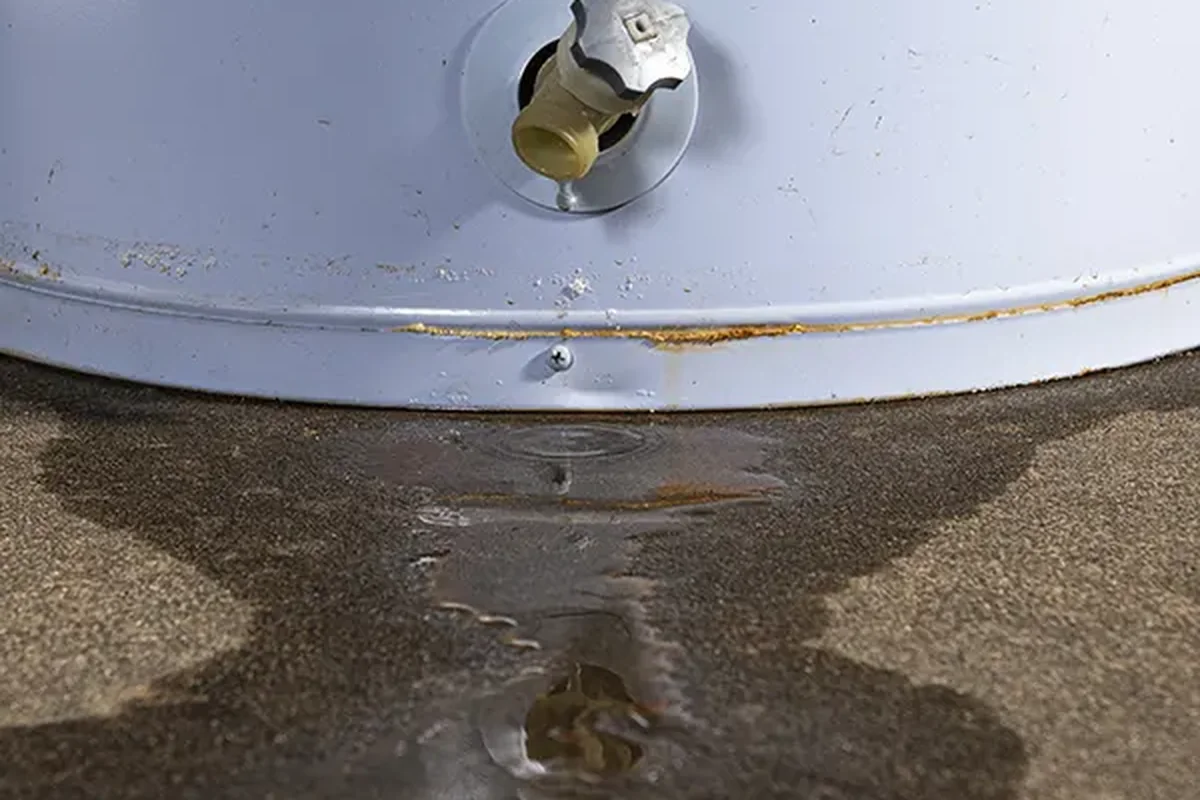
A water heater does not leak politely. It splits a seam at 2 a.m., floods the garage by breakfast, and soaks through drywall before you have finished your coffee. When that happens in Goose Creek, you do not need an appointment next week — you need someone who picks up the phone now and knows exactly what to do when they arrive.
Our emergency water heater leak repair service exists for the worst-case moments: burst tanks, ruptured supply lines, T&P valves discharging uncontrollably, and leaks that have already reached flooring or walls. The first call takes minutes. We walk you through shutting off water and power over the phone so the damage stops growing before we even roll, then we get to your door, stop the leak, and stabilize the situation.
Goose Creek homes face their own emergency patterns. Summer heat and humidity push older tanks hard, and the late-summer storm season brings pressure fluctuations and power events that stress aging fittings. Many local heaters sit in garages or attics, where a leak can run for hours unnoticed. When you call (833) 713-2101, day or night, you reach people who handle water heater emergencies across Goose Creek — from the Crowfield area to the new builds near Liberty Hall — and who treat your flooded morning like the urgent problem it is.
Water Heater Emergencies We Handle
Not every drip is an emergency, but some situations cannot wait. A burst tank — a split seam or ruptured weld dumping gallons across the floor — is the most urgent call we get. The tank holds 40 to 50 gallons, and a full breach empties fast. If water is spreading across your garage floor, seeping under walls, or dripping through a ceiling from an attic unit, that is an emergency.
Ruptured supply lines and failed connections run second. The flexible connectors and shutoff valves feeding your heater are under full house pressure around the clock. When one lets go, it is effectively an open pipe. A temperature-and-pressure relief valve discharging continuously is another red flag — it means the tank is overheating or over-pressurized, and that is a safety issue, not just a water issue.
Then there are the quiet emergencies: a slow leak you just discovered has been soaking subflooring for weeks, visible bulging or rust-through at the tank base, or a gas control area that smells of gas near a leaking heater. Gas plus water is a combination we take extremely seriously. If you smell gas, leave the area and call your gas utility first, then call us at (833) 713-2101. We will tell you honestly on the phone whether your situation needs an immediate visit or can be safely managed until morning — no pressure, just straight guidance.
What to Do in the First Ten Minutes
The damage from a water heater emergency is measured in minutes, so what you do before we arrive matters enormously. First, shut off the water to the heater. There is usually a cold-water shutoff valve on the pipe entering the top of the tank — turn it clockwise until it stops. If you cannot find it or it is seized, shut off the main water valve to the whole house. In most Goose Creek homes the main shutoff is near the water meter or where the line enters the house.
Second, kill the energy. For an electric heater, switch off its breaker in the electrical panel — a breaker labeled "water heater" or similar. For a gas heater, turn the gas control knob on the unit to the "off" or "pilot" position. Never work around standing water and electricity together; if water has reached the panel area or outlets, stay clear and wait for us.
Third, contain what you can. Move valuables, electronics, and anything that cannot get wet away from the water. If water is coming through a ceiling, place a bucket and poke a small drainage hole in the sagging drywall to control where it falls — this prevents a larger ceiling collapse. Then call (833) 713-2101. We will confirm your shutdown steps, ask a few diagnostic questions, and dispatch. The most important thing: do not try to repair a burst tank yourself. There is no patch, sealant, or clamp that safely holds a pressurized, heated tank together.
How Our Emergency Visit Works
When we arrive, the first job is stabilization, not salesmanship. We verify your shutdown, confirm the energy is safely off, and assess exactly where the water is coming from — tank shell, fittings, supply lines, drain valve, or T&P discharge. That diagnosis determines everything that follows, and we explain it to you in plain terms before any work begins.
If the tank itself has failed, the honest answer is replacement — a burst tank cannot be repaired safely, and we will not pretend otherwise. In that case we secure the area, drain the failed tank fully, and discuss your replacement options on the spot, including getting a new unit installed. If the leak is from a fitting, valve, or connection, we repair or replace that component, pressure-test the repair, and bring the system back online.
We also look beyond the immediate leak. Emergency calls reveal the conditions that caused the failure — excessive pressure, a failed expansion tank, sediment damage, a dead T&P valve — and we address those root causes so the new repair does not fail the same way. Before we leave, the area is left as dry as we found it possible to make it, your hot water is restored or a clear plan is in place, and you know exactly what happened and why. Our emergency equipment is stocked for the common failures, so most emergency visits resolve in a single trip.
Why Emergencies Hit Goose Creek Homes Hard
Goose Creek's housing and climate create a specific emergency profile. A huge share of local water heaters live in garages, where Lowcountry summer heat keeps tank water hotter and tank components under more thermal stress for months at a time. Garage units also leak unnoticed longer — nobody checks the garage at midnight — so by the time water is discovered, the damage has had a head start.
Newer subdivisions add a different risk: attic installations. Builders love attics because they free up living space, but a leaking attic heater drips straight through ceilings, insulation, and light fixtures. An attic leak discovered in the morning may have been running all night. We see the worst ceiling damage from these setups, which is why we always check the drain pan and overflow piping on attic units during any visit.
Storm season matters too. Late summer and fall bring tropical systems through the Lowcountry, and the associated pressure fluctuations, power surges, and outages stress aging electrical components and gas controls. An older heater that was "fine" in May can fail in September. And the area's growth means many homes are hitting the 10-to-15-year mark on original builder-grade heaters simultaneously — the exact age when tanks start bursting. If your heater is in that range and has never been serviced, an emergency is not a question of if but when. A preventive check now is far cheaper than a flooded garage later.