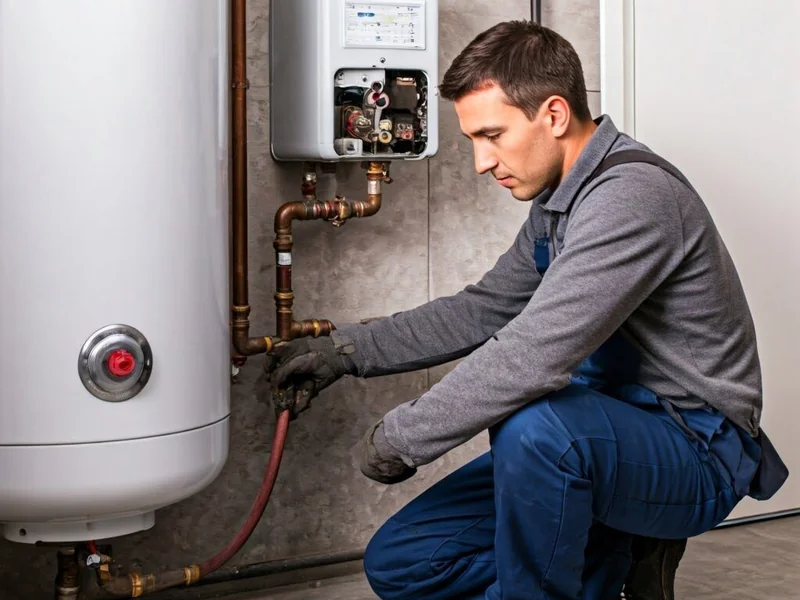
The 29401 ZIP is Charleston's beating heart: the Battery's mansions, Rainbow Row's pastel facades, King Street's shops, and the City Market's bustle, all packed onto a low peninsula between the Ashley and Cooper Rivers. These are some of the oldest continuously occupied homes in America, and behind the historic plaster and heart-pine floors, the plumbing tells the building's age. Galvanized supply lines, cast-iron drains, and water heaters shoehorned into closets, carriage-house lofts, and crawl spaces are the downtown norm.
Water heater work here is a specialty trade. Tight clearances rule out standard approaches, flood exposure from king tides and tropical systems demands smart placement and protection, and every replacement has to satisfy modern code inside a structure built when indoor plumbing was a novelty. We handle downtown Charleston's water heaters with that reality in mind: careful diagnostics, replacements that fit the building, and leak repairs that protect irreplaceable interiors.
Water Heater Challenges in Charleston, SC 29401
Downtown water heaters fail differently than suburban ones, and the peninsula's age, density, and geography explain why. The leading challenge is simply access. Heaters tucked into under-stair closets, narrow carriage-house utility nooks, and low crawl spaces make routine maintenance difficult, so anode rods go unchecked for a decade, TPR valves drip unnoticed, and small fitting leaks soak framing for months. By the time a downtown homeowner calls, a repair that would have been minor in an open garage has often become a replacement.
Old plumbing meets aging tanks
Many 29401 homes still carry galvanized steel supply piping, which corrodes internally over decades. The corrosion restricts flow, flakes rust into the water, and weakens the threaded connections at the top of the water heater, which is why top-of-tank drips are so common downtown. Dielectric unions between dissimilar metals fail and become leak points. Tanks themselves are frequently second or third-generation units installed with minimal attention to venting or expansion control, and in buildings where the water service enters through a cramped basement or crawl space, pressure fluctuations stress every joint.
Water, water everywhere
The peninsula floods. King tides push water into low streets several times a year, tropical systems bring storm surge and sheet flooding, and summer cloudbursts overwhelm old drainage. Ground-floor and crawl-space heaters sit in the splash zone. A submerged electric heater is a total loss from a safety standpoint, and even near-miss flooding accelerates corrosion of burner assemblies, gas valves, and electrical connections. Salt air adds a slower attack, pitting exposed metal on exterior and semi-exterior installations. Winter brings the occasional hard freeze that finds uninsulated pipes in old crawl spaces and carriage houses, splitting supply lines that then flood on the thaw.
- Tight historic installations make maintenance rare and repairs intricate.
- Galvanized and aging supply piping corrodes at heater connections.
- King tides and storm flooding threaten low-lying heaters.
- Salt air corrodes burners, flues, and exterior fittings.
Successful downtown work means diagnosing precisely, fitting modern equipment into historic footprints, and building in flood and corrosion protection from the start.
Our Water Heater Services in Charleston, SC 29401
All twelve of our services adapt to the peninsula's realities. Water heater leak detection is the essential first step downtown, where water travels along old framing and appears far from its source; we trace moisture to failed galvanized unions, weeping valves, or tank corrosion before recommending anything. Tank water heater leak repair fixes what is fixable in the 30-to-50-gallon units common here, and emergency water heater leak repair answers the calls that cannot wait: burst lines in multi-story buildings, flooded crawl spaces, and leaks threatening historic plaster and hardwoods.
Component repairs keep aging downtown systems running. Anode rod replacement with flexible segmented rods reaches tanks in closets no rigid rod could ever fit, extending tank life in buildings where replacement is a major project. Heating element replacement and thermostat replacement restore electric units suffering the short-hot-water and temperature-swing complaints common in older installations. Gas control valve replacement gets vintage gas units firing reliably again, and drain valve replacement swaps clogged factory valves for full-port brass so tanks can actually be flushed despite tight access.
Safety and modernization finish the job. TPR valve replacement keeps the relief valve a true safety device in systems where pressure runs high. Water heater pan installation with a plumbed drain or alarm is close to essential in downtown's finished and historic spaces, catching leaks before they reach irreplaceable interiors. Tankless water heater leak repair serves the compact high-efficiency units increasingly chosen for tight downtown footprints, and water heater replacement installs right-sized modern tanks or tankless units with code-current venting, expansion tanks, and flood-aware placement that respects the building.
Local Water Quality and Your Water Heater in Charleston
Downtown Charleston runs on Charleston Water System retail service, one of the region's most established utilities. The raw water comes from the Edisto River, impounded in the utility's reservoir near Hanahan and treated at the Hanahan Water Treatment Plant. It is a treated surface-water supply, generally soft to moderately hard, disinfected with chloramine. For water heaters, that is a forgiving profile: mineral scale builds slowly, and anode rods last closer to their rated life than they do on Lowcountry well water.
The water-quality challenges in 29401 come from the buildings, not the utility. Water sits in old galvanized service lines and interior piping, picking up iron and rust that show as discolored hot water. In buildings with long, little-used hot-water runs, the first draw can run brown until the line clears. Low-use vacation and rental properties let water stagnate in tanks, which accelerates anode consumption and bacterial growth. And in mixed-use buildings, pressure fluctuations from shared services stress heater connections and relief valves.
What downtown owners should do: flush tanks annually even though the water is soft, because sediment still accumulates and old piping sheds rust into the tank. Check anode rods on schedule, since replacement is far cheaper than opening up a historic wall for a new tank. And if hot water runs discolored, call (833) 713-2101 so we can determine whether the issue is the building's piping, the tank, or both.
| City | Charleston, SC |
| ZIP Code | 29401 |
| Housing | 18th and 19th-century single and double houses, converted carriage houses, and historic apartment buildings on narrow lots. Water heaters squeeze into tiny closets, under-stair nooks, and crawl spaces, often with original or decades-old plumbing. |
| Water | Charleston Water System retail service. Treated surface water from the Edisto River, stored in the utility's reservoir and treated at the Hanahan Water Treatment Plant. Generally soft to moderately hard with chloramine disinfection. |
| Landmarks | The Battery and White Point Garden, Rainbow Row, King Street shopping district, Charleston City Market, and the historic district's church steeples and cobblestone streets. |