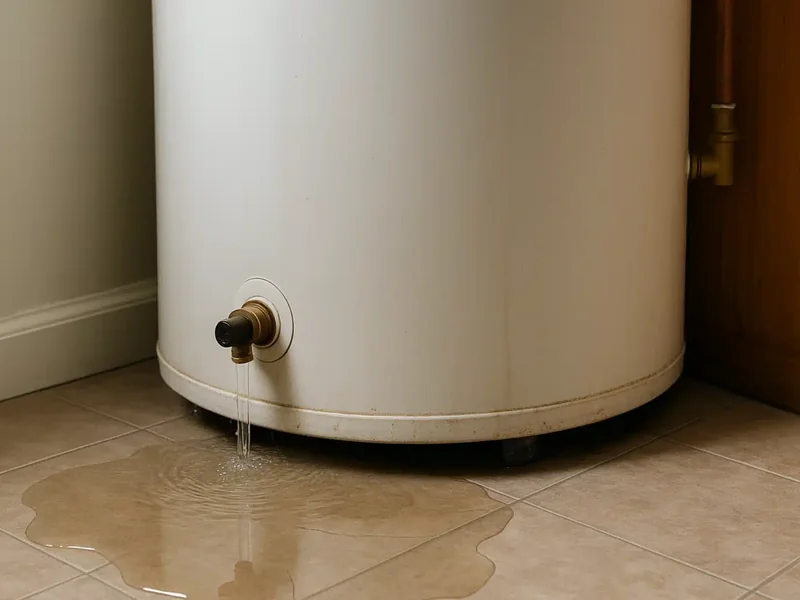
When your water heater starts leaking, the minutes before help arrives matter more than anything else. Water spreads fast — across garage floors, through ceilings from attic installations, into finished living space — and every gallon you stop now is a gallon you don't remediate later. Knowing exactly how to shut off the water supply, the electrical power, and the gas to your unit can be the difference between a mop-up and a flooded home. Yet most homeowners meet their shutoff valves for the first time during the emergency itself, discovering too late that the valve is seized, the breaker is unlabeled, or nobody knows where the main shutoff is. This guide gives Goose Creek homeowners a clear, step-by-step emergency shutoff procedure for both electric and gas water heaters — plus what to do after the flow stops, what never to do, and how hurricane season changes the equation. Read it now, while everything is dry. In an actual emergency, you won't have time to learn it.
Step 1: Shut Off the Water Supply
Every water heater has a cold-water inlet valve on the pipe feeding into the top of the tank. In most Goose Creek homes it's a lever-style ball valve (quarter-turn to close) or a round gate-valve handle (turn clockwise to close). Closing this valve stops new water from entering the tank, which stops the leak from being continuously fed.
If you can't find the heater's inlet valve or it won't budge, go to the main water shutoff for the whole house — usually near the water meter, in the garage, or where the main line enters the home. Every adult in the household should know where this is. If you're reading this during calm weather, go find both valves right now and make sure they actually turn. Seized valves are discovered at the worst possible moment.
Step 2: Shut Off the Power or Gas
Electric heaters: Go to your breaker panel and switch off the breaker labeled for the water heater. If it isn't labeled (common in older panels), switch off breakers until the heater's indicator light goes out — or kill the main breaker if you're unsure. Never work around a leaking electric heater with the power on: water and electricity are a dangerous combination, and a shorted element can keep heating an empty tank.
Gas heaters: Find the gas control valve on the front of the unit — it's the box with the dial. Turn the dial to PILOT or OFF. This stops the burner from firing. If you smell gas (rotten-egg odor) at any point, don't touch anything electrical — leave the house and call the gas utility's emergency line from outside.
Step 3: Relieve Pressure and Drain (If Safe)
Once water and energy are off, open a hot-water tap somewhere in the house to relieve pressure. If the leak is slow and the area around the heater is safe to work in, you can attach a garden hose to the drain valve at the tank's base and run it to a floor drain or outside, then open the valve to start draining. This reduces the total water that can escape.
Skip this step if water is near any electrical equipment, if the tank is visibly bulging or making alarming noises, or if the floor is already deeply flooded. Your safety comes first — property is replaceable.
Step 4: Protect What You Can, Then Call
Move valuables, electronics, and anything absorbent away from the water. If water is spreading toward living areas, towels and a wet-dry vacuum buy time. Take photos of the leak and any damage for insurance purposes. Then call (833) 713-2101 — describe what you see (where the water is coming from, how fast, gas or electric) so the technician arrives prepared. Our emergency water heater repair team handles exactly this situation across Goose Creek and the Lowcountry.
Know Your Heater Before the Emergency
The best emergency plan is made on a dry Tuesday, not during a flood. Take five minutes this week to:
- Locate the cold-water inlet valve on your heater and confirm it turns.
- Locate your home's main water shutoff and confirm it turns.
- Identify whether your heater is gas or electric, and find the breaker or gas control dial.
- Check that the temperature-and-pressure relief valve discharge pipe runs to a safe drain point.
- Make sure there's a clear path to the heater — not blocked by storage.
- Save (833) 713-2101 in your phone under "water heater emergency."
If your heater sits in an attic, garage, or second-floor closet — common in Lowcountry construction — a leak can damage ceilings and rooms below before you even notice. Consider having a drain pan installed under the unit with a proper drain line; it's cheap insurance that catches slow leaks before they become ceiling collapses.
Hurricane Season: A Special Note for Goose Creek
From June through November, storms add a wrinkle: extended power outages and the possibility of flooding around ground-level installations. If you're evacuating ahead of a major storm, shutting off the water heater's water supply and power/gas is a sensible precaution — a leak that starts while you're gone can run for days. When you return, check the area around the heater before restoring power, especially if there was any flooding. Never re-energize a heater that sat in floodwater without a professional inspection.
What NOT to Do
- Don't keep using hot water "until it gets worse" — a small leak can rupture suddenly.
- Don't cap or plug the TPR valve discharge pipe to stop a drip — that valve is a critical safety device.
- Don't try to seal a tank-body leak with epoxy or tape and call it fixed — tank leaks mean the steel has failed.
- Don't wade into standing water near an electric heater until the breaker is off.
Goose Creek Emergency Contacts Worth Saving
Two more numbers belong in every Goose Creek homeowner's phone alongside ours. If water is surging from the service line at the meter, or your curb stop will not budge, Berkeley County Water & Sanitation controls the street-side equipment and can shut off service at the meter while you handle the house side. If you smell gas around a gas water heater, get everyone out first, then call Dominion Energy's gas emergency line and 911 from a safe distance — never hunt for a gas leak yourself or keep working the gas control dial hoping the odor fades.
Learn your home's valve locations before you need them. Across Crowfield Plantation, Liberty Hall, and Sedgefield, the main shutoff is commonly in the garage or a utility closet, while newer builds near Carnes Crossroads often place it in an exterior wall box by the hose bib. Walk your property once, tag both the heater inlet valve and the main shutoff, and show every adult in the household. The family that knows where the valves are loses gallons at 2 a.m.; the family that doesn't loses rooms. Save (833) 713-2101 next to those utility numbers so help is one tap away.