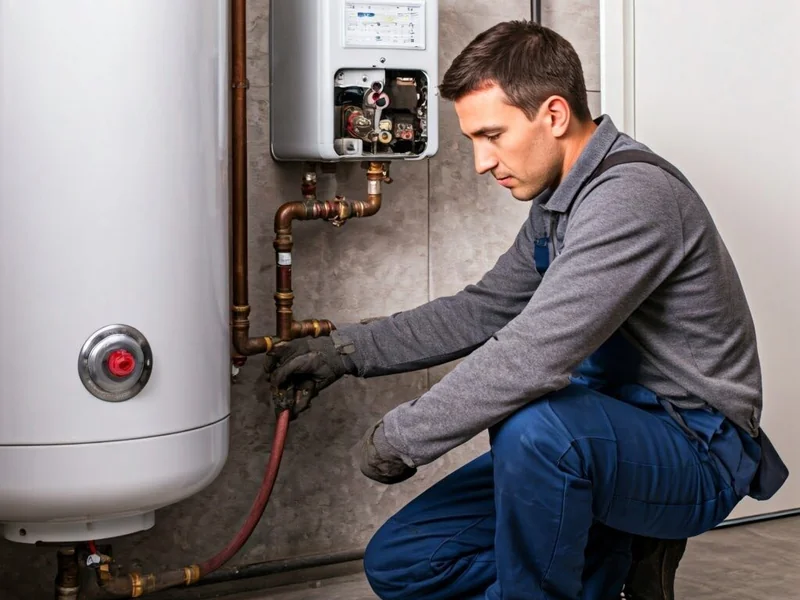
Nobody moves to Goose Creek for the winter weather — and most years, you barely need a heavy coat. But every few winters, an arctic air mass slides down the East Coast and the Lowcountry wakes up to temperatures in the teens or low 20s, wind whipping under houses, and a plumbing emergency unfolding in thousands of homes at once. These are the mornings our phones ring nonstop: burst pipes in crawl spaces, frozen water lines feeding water heaters, split outdoor spigots, and heaters that worked fine yesterday but have no hot water today. The pattern is always the same — homes built for mild weather, with plumbing routed through vented crawl spaces and unconditioned garages, meeting a cold snap they were never designed for. The frustrating part is that nearly all of it is preventable with a few hours of preparation each fall. This guide covers how cold actually damages water heaters and their piping in a Lowcountry home, the crawl-space problem that makes South Carolina houses uniquely vulnerable, a complete winter-prep checklist, what to do with vacation homes and holiday travel, special notes for tankless units, and exactly what to do when a pipe freezes.
How Cold Hurts a Water Heater (It's Mostly the Pipes)
Here is the thing most homeowners miss: the water heater tank itself almost never freezes. It sits in a garage, closet, or utility room, full of warm water, often with a pilot light or standby heating keeping it well above freezing. What freezes are the pipes connected to it — the cold-water inlet, the hot-water outlet, and the distribution lines running through the crawl space or along exterior walls. When water freezes inside a pipe, it expands with enormous force, splitting copper, cracking PEX fittings, and bursting pipe joints. The cruel twist is that you often do not discover the burst until the ice thaws: the frozen blockage was acting as a plug, and once it melts, water pours out of the split. For the water heater specifically, winter causes three secondary problems. First, incoming groundwater gets significantly colder in winter — a heater that received 70°F water in August might receive 50°F water in January, which means longer recovery times, higher energy bills, and the feeling that the heater "isn't keeping up." Second, thermal contraction during cold snaps stresses old, corroded fittings and tank seams; marginal connections that held all summer can start weeping after a hard freeze. Third, power outages during winter storms shut down electric heaters and the controls on gas units, leaving the whole system cold and vulnerable until power returns.
The Crawl-Space Problem (Very Common in SC Homes)
A huge share of Goose Creek homes — especially ranch-style houses built from the 1960s through the 2000s — sit on vented crawl spaces with water lines running underneath, exposed to outside air. In summer this is harmless. In a January cold snap with wind, those pipes are essentially outdoors. Wind chill does not technically apply to inanimate objects the way it does to skin, but moving frigid air strips heat from pipes dramatically faster than still air, which is why crawl-space pipes freeze while pipes inside walls survive the same night. Foundation vents, installed to ventilate moisture in summer, become wind tunnels in winter. Gaps where plumbing and electrical lines penetrate the foundation let in direct blasts of cold air. And because crawl spaces are out of sight, homeowners never notice the missing insulation, the disconnected vent cover, or the pipe run hanging inches from a vent opening — until the freeze finds it. If your home has a crawl space, that space deserves more of your winter-prep attention than the water heater itself. Everything in the checklist below about insulation and vent sealing exists because of crawl spaces.
Your Fall Winter-Prep Checklist
Do this in October or November, before the first freeze warning — not the night before one.
- Insulate exposed pipes. Slip foam pipe insulation sleeves over every exposed hot and cold water line you can reach — in the crawl space, garage, attic, and along exterior walls. Pay special attention to the cold-water inlet and hot-water outlet pipes at the heater itself; insulating the first several feet of hot outlet reduces standby heat loss all winter. Foam sleeves are cheap, split lengthwise, and press on in minutes.
- Seal crawl-space vents and gaps. Close or cover foundation vents for the winter (reopen them in spring for moisture ventilation). Stuff obvious gaps around pipe penetrations with insulation or caulk. The goal is not to hermetically seal the crawl space — it is to stop wind from blowing directly across bare pipes.
- Consider heat tape on the most exposed runs. Self-regulating heat tape (heat cable) on pipes that have frozen before, or that run near vent openings, is the belt-and-suspenders solution. Use only listed, self-regulating tape, follow the manufacturer's instructions exactly, and never overlap it on itself. This is the single most effective freeze protection for problem pipe runs.
- Flush sediment before heating season. A tank with a heavy sediment layer recovers slower — exactly when winter's colder inlet water demands faster recovery. A fall flush, following our sediment flushing guide, means the heater enters winter at peak efficiency.
- Test the TPR valve. Lift the test lever briefly and let it snap shut; it should discharge water, then stop completely. A valve that dribbles afterward needs replacement. Cold-weather pressure fluctuations make a failing relief valve more likely to cause trouble.
- Keep the thermostat at 120°F. Do not crank it up "for winter." 120°F is the efficient, safe setting year-round. Higher settings waste energy, accelerate sediment buildup, and raise scalding risk — without meaningfully improving freeze protection.
- Check the anode rod if it is due. Winter is when you least want a tank failure. If the rod has not been checked in a few years, a fall inspection is cheap peace of mind — see our anode rod guide.
- Locate and label your main water shutoff. Every adult in the house should know where it is and how to turn it. In a burst-pipe emergency, the minutes spent hunting for the shutoff are the minutes the flooding spreads. While you are at it, confirm the heater's own cold-water shutoff and energy shutoff work.
- Disconnect and drain outdoor hoses; cover spigots. A hose left connected traps water in the spigot and the pipe behind it — one of the most common burst points in Lowcountry freezes. Install insulated faucet covers on exterior spigots.
- Inspect the area around the heater. Clear clutter from around the unit, check the drain pan and its drain line for blockages, and look for any moisture at fittings — small weeps that are harmless in October can become burst-adjacent failures under freeze stress.
Vacation Homes and Holiday Travel
Goose Creek has its share of snowbirds, military families on deployment, and folks who spend the holidays with relatives up north — and an empty house during a freeze is the highest-risk scenario of all, because nobody is there to notice the problem. For trips of a week or two: set the water heater to VACATION mode (or its lowest thermostat setting), keep the home's heat on at no lower than 55°F, and strongly consider shutting off the main water supply — an empty house cannot flood from a burst pipe if the water is off. Ask a neighbor or friend to check in during any freeze warning; a five-minute walkthrough catches what no thermostat can. For seasonal homes that sit empty for months: a full winterization is the right call — drain the water heater, blow out or drain the supply lines, add antifreeze to drain traps, and leave the heat at a safe minimum or winterize completely per a professional's guidance. The cost of professional winterization is trivial compared to discovering in March that a pipe burst in January and ran for weeks. And whatever you do, do not just turn the water heater "off" and leave — an electric heater with the breaker off and a full tank is fine, but make absolutely sure nobody can accidentally restore power to a drained electric tank, which destroys the elements in seconds.
Tankless Units Need Winter Attention Too
Outdoor-mounted tankless water heaters are increasingly common in the Lowcountry, and they have a specific winter vulnerability: most have built-in freeze protection (small internal heaters that kick on near freezing), but that protection requires electrical power. A winter storm power outage disables it — and a tankless heat exchanger full of standing water can crack if temperatures drop hard while the power is out. If you have an outdoor tankless unit, know how to drain it: most have hot and cold drain plugs or service valves specifically for this. During an outage with freezing temperatures forecast, draining the unit is the safe move. Indoor tankless units in unconditioned garages deserve pipe insulation on their supply lines just like tank heaters. And keep up with descaling — a scaled heat exchanger is less efficient at exactly the moment winter demands peak performance. If your tankless unit throws freeze-related error codes or stops producing hot water after a cold night, do not keep resetting it blindly; call (833) 713-2101 and let a technician check for freeze damage before the next cold snap.
When Pipes Freeze: What to Do (and Not Do)
Despite best efforts, it happens — you turn on a tap on a bitter morning and get a trickle or nothing. Stay calm and work the problem:
- Open the affected faucet slightly. A small stream (or even a drip) relieves pressure in the line and gives melting water somewhere to go. This is the single most important step.
- Warm the frozen section gradually. Use a hair dryer, heating pad, or towels soaked in hot water, working from the faucet end back toward the frozen blockage. Never use an open flame, propane torch, or heat gun on high — you will damage the pipe, start a fire, or both. In a crawl space, this means suiting up and getting under there; it is miserable work, which is why prevention beats cure.
- Check the rest of the house. If one pipe froze, others are at risk. Open cabinet doors under sinks on exterior walls to let warm air circulate, and let vulnerable faucets drip until temperatures rise.
- Watch for bursts as things thaw. The freeze itself rarely floods; the thaw does. As ice melts, inspect the previously frozen sections for spraying or dripping. If you find a burst, shut off the main water supply immediately.
- Call for help when it is beyond a simple freeze. A burst pipe, a freeze you cannot locate, no water throughout the house, or a water heater that stopped working after the cold — these are emergency repair situations. Our crews run 24/7 through cold snaps across Goose Creek, Hanahan, and Moncks Corner, because freeze damage does not keep business hours.
One more "do not": do not crank the water heater thermostat to maximum hoping to "push through" a freeze. It does not thaw pipes, it wastes energy, and it creates a scalding hazard the moment flow is restored. Fix the frozen pipe; leave the thermostat at 120°F.
After the Cold Snap: The Inspection Most People Skip
When temperatures rebound into the 50s and everything seems fine, do a ten-minute walkthrough. Check the crawl space for new puddles or dripping pipes. Look at every exterior spigot and hose bibb for cracks. Inspect the water heater's fittings and TPR discharge pipe for fresh moisture — thermal contraction during the freeze can open marginal connections that held all fall. Run every hot tap and confirm normal flow and temperature; a tap that is suddenly weak may have a partially blocked or damaged line. And glance at your next water bill for unexplained usage — a slow leak from freeze-stressed piping often announces itself there first. Catching freeze damage in the days after a cold snap, while it is still a small repair, is the difference between a service call and a remediation project. Pair this with your regular seasonal maintenance routine and your system will be ready for whatever the next January brings — mild or otherwise.