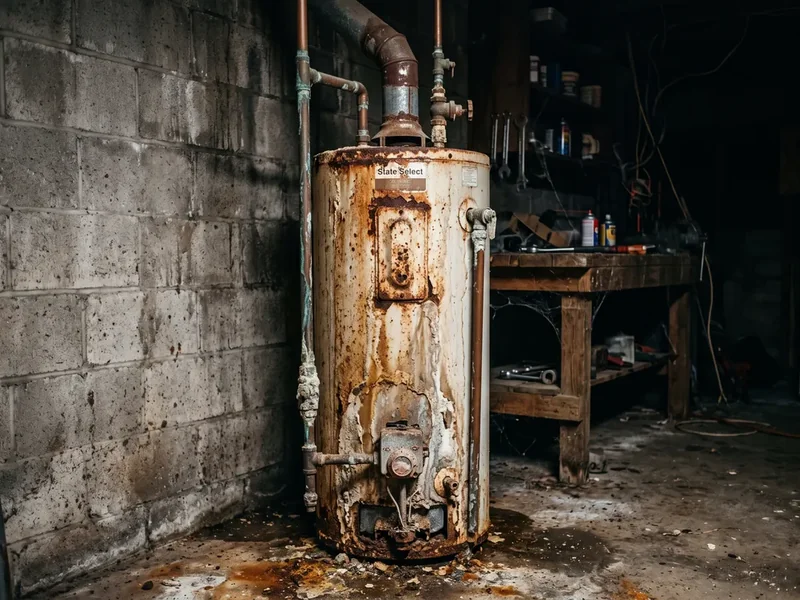
Every water heater in Goose Creek is fighting a slow, invisible battle against the minerals dissolved in the water supply. As cold water enters the tank and gets heated, dissolved calcium and magnesium fall out of solution and settle on the tank floor as sediment — a gritty, sand-like layer that insulates the water from the burner or heating elements, forcing the unit to work harder and longer to produce the same hot water. Left alone, that sediment bakes into a hardened crust, traps heat against the steel tank bottom, and accelerates the corrosion that eventually causes leaks and tank failure. The good news: a simple annual flush removes most of it, costs nothing but an hour of your time, and is one of the highest-value maintenance tasks a homeowner can do. This guide walks through exactly what sediment is, why Goose Creek homes — especially those on well water in rural Berkeley County — accumulate it faster, the warning signs that a flush is overdue, and a complete step-by-step flushing procedure for both tank and tankless units.
What Is Water Heater Sediment, Anyway?
Sediment is mostly mineral scale — calcium carbonate and magnesium compounds — that precipitate out when water is heated. Think of the white crust inside a kettle after a few months of use; the same process happens inside your water heater, just on a much larger scale. In a 50-gallon tank, several years without flushing can leave inches of sediment packed across the bottom. Homes on private wells add a second ingredient: fine sand and silt drawn up with the groundwater, which settles into the tank along with the minerals. Neither is dangerous to your health in the tank itself, but both are rough on equipment. The sediment layer acts as insulation between the heat source and the water. On a gas heater, the burner ends up superheating the steel tank bottom under the sediment blanket, creating the rumbling and popping sounds homeowners describe as "the heater sounds like it's boiling rocks." On electric models, the lower heating element gets buried in sediment and burns out prematurely. Either way, efficiency drops, recovery slows, and the tank's lifespan shrinks — sometimes by years.
Why Goose Creek Homes Build Up Sediment Faster
Water chemistry varies across Berkeley County, and where you live determines how fast sediment accumulates. Homes inside Goose Creek on the municipal supply (sourced through the Charleston Water System) receive treated surface water that is moderately hard — not extreme, but hard enough that annual flushing matters. The real sediment champions are the rural parts of the county: properties around Cross, Bonneau, and St. Stephen that run on private wells pull groundwater that is noticeably harder and carries fine sand. Well owners often notice scale crusting on faucets, cloudy water right after the pump kicks on, and water heaters that start rumbling within a year or two of installation. Even within Goose Creek proper, newer developments sometimes stir up extra particulate from construction-era water main work, and older galvanized plumbing can shed rust flakes that settle into the tank alongside mineral scale. If your water leaves spots on glassware, crusts around showerheads, or your fixtures clog with white scale, your heater is collecting that same material internally — just faster than a home on softer water. That is why our general guidance is annual flushing for city-water homes and twice a year for well-water homes in the county.
7 Signs Your Water Heater Needs Flushing Now
- Rumbling, popping, or banging sounds. The classic symptom. Steam bubbles form under the sediment layer and force their way up through it — the sound is unmistakable once you know it. Our noise diagnosis guide covers this in detail.
- Hot water runs out faster than it used to. Sediment physically displaces water in the tank. A 50-gallon tank with three gallons of sediment is effectively a 47-gallon tank, and the buried heating elements recover slower too.
- Longer recovery time. The shower is fine until someone else uses hot water, then it takes forever to come back. Sediment between the heat source and the water slows every heating cycle.
- Rusty or sandy water from hot taps only. Grit or discoloration that appears only on the hot side usually comes from the tank — sediment, rust scale, or a failing anode rod. (Cold-side-only issues are supply-side.)
- Higher energy bills with no other explanation. An insulated tank bottom can push a gas heater to burn noticeably more fuel per month; electric units show it on the power bill.
- The drain valve is clogged or dribbles. If opening the drain valve produces only a weak trickle, sediment is packed around it — which also means the tank is overdue.
- Visible scale on fixtures and appliances. Heavy scale on showerheads and faucet aerators means heavy scale inside the heater. The fixtures are just the part you can see.
Notice several of these at once and the flush is overdue, not optional. A single rumbling episode after years of quiet is the heater asking for maintenance; rumbling plus sandy hot water is the heater warning you.
How Often Should You Flush?
| Water source | Homes on Goose Creek municipal water — annual flush |
| Well water | Rural Berkeley County wells (Cross, Bonneau, St. Stephen) — every 6 months |
| Tank age | Units under 5 years — straightforward; 8+ years — flush gently, inspect first |
| Tankless units | Descale annually; every 6 months on hard well water |
| Softened water | Can stretch to 12–18 months, but still inspect the anode rod yearly |
The honest answer is that "once a year" is the floor for most Goose Creek homes, not the ceiling. Well-water households that skip the spring flush often notice the difference by fall — rumbling returns, recovery slows. The best habit is pairing the flush with an easy calendar anchor: flush every October before heating season, and if you are on a well, add a second flush in April. Mark it the way you mark smoke-detector battery changes. And whatever schedule you follow, combine the flush with a quick maintenance checklist pass — testing the TPR valve, glancing at the anode rod, and checking the pan and fittings for moisture takes fifteen extra minutes and catches problems while they are small.
What You Will Need
- A standard garden hose long enough to reach from the heater's drain valve to a safe drainage point (floor drain, utility sink, sump, or outside downhill — never onto a neighbor's property or a septic drain field)
- An adjustable wrench or channel-lock pliers
- A bucket for catching the first flush of water (useful for judging how much sediment is coming out)
- Work gloves and eye protection — the first water out is very hot
- For gas heaters: no tools needed for the gas valve, but know where your gas shutoff is
- For electric heaters: access to the breaker panel
- Optional: a wet/dry vacuum for cleaning up splashes, and Teflon tape if you plan to replace an old plastic drain valve with a brass one
Step-by-Step: Flushing a Tank Water Heater
Plan about an hour, and pick a time when nobody needs hot water for a while. The water coming out is scalding at first, so keep kids and pets clear of the drainage path.
- Shut off the energy source. For electric heaters, switch the water heater breaker OFF at the panel — not just the thermostat. Running an electric element in an empty or partially empty tank will burn it out in seconds. For gas heaters, turn the gas control valve to PILOT or OFF per the label on your unit.
- Shut off the cold-water inlet. The cold supply valve sits on the pipe entering the top of the tank. Turn it clockwise to close. This stops new water from entering while you drain.
- Let the water cool. Give the tank at least an hour — ideally a few hours — to cool. Draining 140-degree water is dangerous and can damage PVC drain piping. Run a hot tap briefly to confirm the water is merely warm, not scalding, before continuing.
- Attach the garden hose. Thread the hose onto the drain valve (the spigot near the tank's base). Run the other end to your drainage point. Make sure the hose lies flat without kinks that could cause back-pressure.
- Open a hot-water faucet somewhere in the house. Open a hot tap at a sink or tub and leave it open. This breaks the vacuum and lets the tank drain freely. You will hear air entering the system — that is normal.
- Open the drain valve. Turn the drain valve counterclockwise slowly. On plastic valves, be gentle — they get brittle with age. The water will start dark, rusty, or cloudy with grit. That is the sediment you came for. Let the tank drain substantially.
- Stir the sediment loose with cold-water bursts. Here is the step most people skip. With the drain valve still open, briefly open the cold-water inlet valve for 20–30 seconds, then close it. The incoming rush of cold water stirs up sediment settled on the tank floor and carries it out the drain. Repeat this 3–5 times until the water running from the hose is clear. If your hose end is in a bucket, you will literally see the difference between the first and last bucketfuls.
- Close the drain valve and disconnect the hose. Close the drain valve firmly but do not over-torque a plastic valve — snug is enough. Remove the hose. Double-check the valve is fully closed; a weeping drain valve is one of the most common post-flush callbacks we see.
- Refill the tank completely. Open the cold-water inlet valve fully. Leave the open hot-water faucet running until water flows steadily without sputtering — that tells you the tank is full and air is purged. Then close the faucet.
- Restore power or gas. For electric: only after the tank is confirmed full, switch the breaker back ON. For gas: turn the control back to its previous setting and relight the pilot if your unit requires it (most modern units have electronic ignition — just turn the dial back).
- Check for leaks. Inspect the drain valve, the TPR valve, and all fittings for drips over the next hour. A fitting that weeps after a flush usually just needs a quarter-turn, but anything more than a slow weep deserves a call.
- Test the TPR valve. While you are there, lift the TPR valve's test lever briefly and let it snap shut. Water should discharge, then stop completely. If it keeps dripping, the valve may need replacement — a cheap fix that prevents a dangerous pressure problem.
Flushing a Tankless Water Heater Is Different
Tankless units do not accumulate a sediment bed, but minerals plate directly onto the heat exchanger, narrowing the passages and reducing efficiency — the tankless version of the same problem. Descaling a tankless heater means isolating the unit with its service valves, connecting a small submersible pump to circulate food-grade white vinegar (or a commercial descaler) through the heat exchanger for 30–45 minutes, then flushing with clean water. If your unit has the isolation valves installed, a handy homeowner can do this; if not, installing them is a plumber's job anyway. Because the procedure involves opening the cabinet, handling electrical or gas connections, and working around very hot components, many Goose Creek homeowners simply fold tankless descaling into an annual professional maintenance visit. Given how hard Lowcountry water is on heat exchangers, that visit pays for itself in efficiency alone. If your tankless unit is showing error codes, fluctuating temperatures, or reduced flow, scale on the exchanger is the first suspect — see our tankless repair guide for the full symptom list.
Mistakes That Turn a Flush Into a Leak
Flushing is safe when done carefully, but three mistakes cause most of the damage we get called to fix:
- Forcing an old plastic drain valve. After years of heat, plastic drain valves become brittle. Cranking one with pliers can snap the stem, leaving you with a gushing tank and no way to stop it except the main water shutoff. If the valve resists, stop — a technician can replace it with a full-port brass valve, which also drains faster on every future flush.
- Flushing an ancient, never-maintained tank aggressively. On a 12-year-old tank that has never been flushed, the sediment may be the only thing sealing small areas of corrosion. A vigorous first flush can dislodge that seal and reveal leaks that were "held together" by scale. If your tank is past 8–10 years and has no maintenance history, have it inspected before flushing — sometimes the right call is planning a replacement instead.
- Restoring power before the tank is full. Worth repeating: an electric element exposed to air burns out in seconds. Always confirm steady, sputter-free flow at the hot tap before flipping the breaker back on.
When to Call a Pro Instead
DIY flushing covers routine maintenance, not repairs. Call (833) 713-2101 if the drain valve is clogged solid or snaps, if water keeps coming out discolored after multiple stir-and-drain cycles (that suggests heavy scale or a failing anode), if you find active leaks at fittings or the tank base during the flush, if the TPR valve will not reseat after testing, or if the tank is old enough that you are unsure it will survive the procedure. Our technicians flush heaters daily across Goose Creek, Hanahan, and Moncks Corner — a professional flush includes the valve inspection, anode check, and fitting torque-down that turn a simple drain into genuine preventive maintenance. And if the flush reveals that the tank is on its last legs, you will get a straight answer about repair versus replacement, not a sales pitch.
Keeping Sediment from Coming Back So Fast
Flushing removes sediment; a few habits slow its return. Keep the thermostat at 120°F — hotter water precipitates minerals faster and wastes energy. Have the anode rod checked every couple of years; a healthy anode slows the corrosion that contributes rust scale to the sediment bed. If your fixtures crust over with white scale, consider a water softener — softened water still needs periodic flushing, but the accumulation rate drops dramatically. And for well-water homes in Cross, Bonneau, and St. Stephen, a whole-house sediment pre-filter catches sand before it ever reaches the heater, which is the single best upgrade a well owner can make for water heater longevity. Pair the filter with your twice-yearly flushes and your heater will run quieter, recover faster, and last years longer than a neglected one.