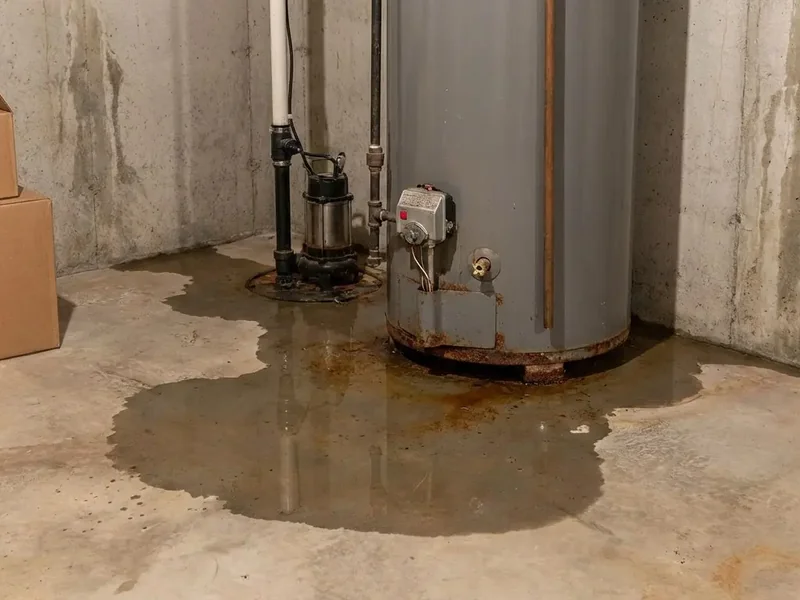
Water is pooling near your water heater and you're asking the question every homeowner asks: is this a middle-of-the-night emergency, or can it wait until morning? It's one of the most common calls we get from Goose Creek homeowners — and the answer genuinely matters. Wait on a real emergency and you're looking at significant water damage; panic over condensation and you've spent money and stress for nothing. The trouble is that leaks don't come labeled — a "small" puddle can be a weeping seam hours from rupturing, or it can be August humidity condensing on a cold tank jacket. This guide draws a clear, practical line: the specific situations that demand immediate emergency service, the ones that can safely wait for a scheduled visit, what to do in the uncertain gray zone between them, and the seasonal patterns that drive most local emergencies.
When It IS an Emergency
Call for emergency service right away — and shut off water and power/gas first — if you see any of these:
- Water pouring or spraying from the tank. A ruptured tank or burst connection can flood a home in minutes. This is the clearest emergency.
- Gas odor near a gas heater. Leave the house and call the gas utility's emergency line from outside. Then call (833) 713-2101.
- Water near electrical components. Water pooling around an electric heater's wiring compartment or reaching outlets is a shock and fire risk — kill the breaker if you can do so safely.
- Scalding-hot water from taps. A failed thermostat or gas valve overheating the tank is dangerous, especially with children or elderly in the home.
- A bulging or deformed tank, or loud booming/banging. Extreme pressure events are rare but serious — keep your distance and call.
- Active flooding reaching living spaces. If water is spreading across floors or dripping through ceilings (common with attic installations in Lowcountry homes), every minute counts.
When It Can Wait for a Scheduled Visit
Not every leak needs a middle-of-the-night call. These situations are urgent but not emergencies — shut things down if needed and schedule a prompt visit:
- A slow drip from the drain valve or a fitting. Contain it with a bucket and towels, shut off the inlet valve, and book a repair.
- Condensation on the tank or pipes. In Goose Creek's humid summers, sweating on cold-water pipes and even the tank jacket is normal — wipe it and watch; if it dries between cycles, it's condensation, not a leak.
- A TPR valve that drips occasionally. Worth diagnosing soon (often an expansion tank issue), but a slow intermittent drip isn't a flood risk.
- Rusty water or odd smells with no visible leak. These signal internal problems — anode rod, sediment — that need attention within days, not minutes.
- Reduced hot water or strange noises. Performance issues, not emergencies. Schedule a maintenance visit before they become emergencies.
The Gray Zone: When You're Not Sure
Here's the honest rule we give Goose Creek homeowners: if you can't tell where the water is coming from, treat it as urgent. A "small" puddle under the tank could be a weeping seam that ruptures overnight, or it could be condensation. The cost of an emergency visit is trivial compared to waking up to inches of water. When in doubt, shut off the water supply to the heater, put down towels, and call (833) 713-2101 — we'd rather talk you through it and find it's minor than have you wait on something major.
What to Do While You Wait
Whether it's an emergency call or a next-day appointment:
- Shut off the cold-water inlet to the heater (or the house main if needed).
- Kill power at the breaker (electric) or set gas to pilot/off (gas).
- Move valuables and electronics away from the water.
- Contain spreading water with towels; a wet-dry vacuum helps.
- Take photos for insurance.
- Don't use hot water — you'll feed the leak.
Our full step-by-step is in the emergency shutoff guide — worth reading before you need it.
Seasonal Patterns in Goose Creek
True water heater emergencies cluster around two Lowcountry seasons. Summer brings peak demand and peak heat — garage and attic installations run hardest, sediment-baked tanks fail under load, and hurricane-season power surges damage electric components. Winter cold snaps (brief but real in the Lowcountry) burst pipes connected to heaters in unconditioned spaces and expose marginal tanks to thermal shock. The shoulder seasons — spring and fall — are when preventive maintenance pays off, catching the problems that become summer or winter emergencies.
The Bottom Line
Active flooding, gas odor, electrical danger, scalding water, or a deformed tank = emergency, call now. Slow drips, condensation, intermittent TPR weeping, performance issues = prompt scheduled service. Uncertain = call and ask — a two-minute conversation with our emergency repair team costs nothing and can save you thousands in water damage.
The Real Cost of Waiting
Homeowners hesitate to call for emergency service for understandable reasons — nobody wants to overreact or pay for an urgent visit that wasn't needed. But weigh that against what waiting actually risks. A weeping tank seam doesn't stay a weep; steel fatigue progresses, and seams let go suddenly, often at night when nobody notices for hours. In that time, a 50-gallon tank can release most of its contents — across floors, into drywall, down through ceilings from attic installations. Water damage remediation routinely dwarfs the cost of the service call you were trying to avoid, and Lowcountry humidity means mold gets a head start within days. There's also the safety dimension: a leak dripping onto electrical components or a gas valve misbehaving doesn't improve with time. Our guidance to Goose Creek homeowners is simple and honest: if you can positively identify a minor fitting drip and you've shut off the water, a scheduled visit is fine. If you can't tell where the water is coming from, or the tank itself is the source, don't gamble the night — call (833) 713-2101. We'd far rather arrive to find a minor issue than arrive a day late to a major one, and the phone consultation itself costs nothing.
Lowcountry Home Layouts That Turn Small Leaks Into Emergencies
In Goose Creek, where the water heater sits often matters more than how much it is leaking. Attic installations — common in two-story homes across Crowfield Plantation and Liberty Hall — let a slow drip soak insulation and drywall for weeks before anyone notices a ceiling stain, and by then the repair involves far more than the heater. Garage slab installs are more forgiving, but water still migrates under walls into adjacent rooms. Second-floor laundry closets in townhomes concentrate the risk directly above living space.
Crawlspace homes add a different hazard: leaks disappear into the dark, feeding mold and wood rot silently while the water bill climbs. That is why our emergency guidance leans toward calling sooner rather than later — a ten-minute phone assessment at (833) 713-2101 costs nothing and tells you whether you are looking at a drip-pan nuisance or a ceiling-collapse timeline. If the tank body itself is leaking, or water is spreading toward electrical equipment, treat it as an emergency every time: shut off water and power, then call.