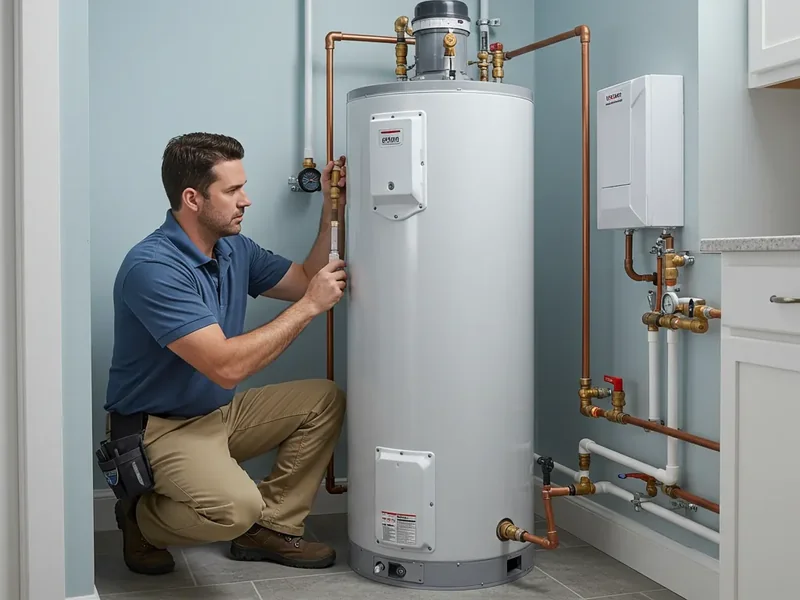
The 29406 ZIP covers the southern and central neighborhoods of North Charleston, from established residential streets to the busy Rivers Avenue commercial corridor, and its water heaters reflect decades of working-household life. Mid-century homes, 1970s and 80s subdivisions and newer infill all mix here, and a large share of the area's heaters are now at or past their design life. Garages, utility rooms and carports hold most units, and the humid climate plus moderately hard water shape how they age. This page covers the repair-versus-replace decision for 29406 homes, sizing for real household demand, fuel and technology options, and what a permitted installation involves. If your heater is leaking, loud or just old, call (833) 713-2101 and we will get you scheduled.
Reading the Replacement Signs in 29406 Homes
The 29406 housing stock makes the replacement decision straightforward to read. Mid-century ranch homes and 1970s and 80s subdivisions dominate, and their water heaters were typically installed or last replaced 10 to 20 years ago. That puts a large share of the installed base at or past the 10 to 12 year design life of a conventional tank. If your heater's rating plate shows a 2000s birthday and it is acting up, replacement is the practical call, not another repair.
The replacement triggers are definitive. Water leaking from the tank shell or base means the pressure vessel has failed. Rusty hot water means internal corrosion has broken through the lining. Loud rumbling or popping means sediment has caked the tank bottom, a given for heaters that went years without flushing on our moderately hard water. Any of these on a heater past year ten means replacement.
Younger units are worth repairing. A failed element or thermostat, a dripping relief valve, a worn drain valve or gas control issues on a heater under eight years old are economical fixes with years of service behind them. For landlords in the area's rental-heavy blocks, the math is simple: a young heater with a part failure gets repaired, an old heater gets replaced before it floods a unit and creates a bigger bill.
Sizing for Busy Households and Choosing the Fuel
Working-household schedules drive sizing in 29406. The baseline is 40 gallons for one to two people and 50 for three to four, but homes here should size for the real morning: multiple adults showering before shifts, teenagers, laundry running every evening. The first-hour rating is what keeps everyone comfortable, and undersizing is the most common regret. Rental properties should be sized for tenant turnover realities, not best-case occupancy.
Fuel is a genuine choice in the area. Dominion Energy natural gas serves many 29406 neighborhoods, and gas heaters recover much faster than electric after heavy use. All-electric homes are common too, and modern electric tanks are dependable and simple to service. Heat-pump water heaters deserve a quote: they use far less electricity than standard electric tanks, thrive in warm Lowcountry garages, and dehumidify the garage while they work.
Tankless systems appeal to households that keep running out of hot water, delivering endless hot water from a wall-mounted unit. Gas tankless needs venting routes and gas line capacity; electric whole-house models need substantial panel capacity. We verify fuel, panel and venting at your home before recommending, so the quote reflects the real job.
Permits, Code and Installation Day in 29406
The City of North Charleston requires a permit for water heater replacement in the 29406 area, with an inspection confirming the installation meets South Carolina plumbing code. The inspection verifies the details that matter: correct venting and clearances on gas units, proper electrical connections, dedicated relief-valve discharge piping, drain pans with real drain lines where leaks could damage finished space, and seismic bracing against tipping, the Lowcountry's code legacy of the 1886 Charleston earthquake.
Garage, utility-room and carport installations get the standard code attention: pan and drain to guard against slow leaks, combustion air and venting rules for gas units, and an expansion tank where a pressure-reducing valve creates a closed system. Older homes in the area sometimes need aging shutoff valves replaced as part of the job, which we identify during the assessment rather than discovering mid-installation.
Installation day is typically a single-day job: water off for a few hours while the old tank is drained, disconnected and hauled away, the new unit set, connected, filled and tested, then left ready for inspection. Most like-for-like swaps finish with hot water back by evening. We pull the permit and schedule the inspection, closing out the job completely.
Maintenance, Storms and the Old Tank's Final Trip
A new 29406 heater should serve 10 to 15 years with simple care. Flush sediment annually to protect efficiency and the tank lining. Check the anode rod every few years and replace it when depleted. Keep the area around the heater clear for service, and make sure the household knows where the water shutoff is before an emergency.
Storm season deserves a note. Summer thunderstorms knock power out regularly, and tropical systems can push water into low-lying garages and carports. A gas heater that has been submerged should be professionally evaluated before relighting, since floodwater damages controls and burners invisibly. If the heater sits low in a flood-prone spot, elevating the replacement or adding a properly drained pan is sensible preventive work.
The old tank leaves as scrap metal, hauled away with the installation, and Charleston County recycling facilities accept scrap from residents as well. From permit to inspection to haul-away, a 29406 replacement is one coordinated visit, sized for the way your household actually lives.
Local Insight
The 29406 ZIP is North Charleston's southern half, a patchwork of established neighborhoods, apartment communities and the Rivers Avenue commercial spine that runs the city's length. Landmarks like the North Charleston Coliseum and the convention center sit nearby, Charleston Southern University anchors the educational side, and the area blends long-time homeowners with a large rental population serving the region's industrial and logistics employers. Housing runs from mid-century brick ranch homes to 1980s subdivisions to newer infill and multifamily buildings.
That mix means replacement work here spans straightforward garage swaps in ranch homes to trickier jobs in older properties with tight utility spaces and aging valves. Charleston Water System serves the area with moderately hard water, so sediment flushing matters for heater longevity. The rental density in parts of 29406 means many heaters serve back-to-back tenants and get replaced on failure rather than maintained, which is all the more reason to size correctly and install to code when the time comes. Practical, no-nonsense work is what this ZIP rewards.
The area's mix of owner-occupied homes and rentals means many 29406 heaters serve hard and get maintained lightly. If yours is past a decade with no service history, assume the tank is living on borrowed time and plan the replacement before it plans itself. A planned job is always calmer and cleaner than an emergency one.
From the Rivers Avenue corridor to the quiet residential streets behind it, 29406 rewards straightforward work done well: sized for real demand, installed to code, and backed by honest guidance rather than sales pressure.