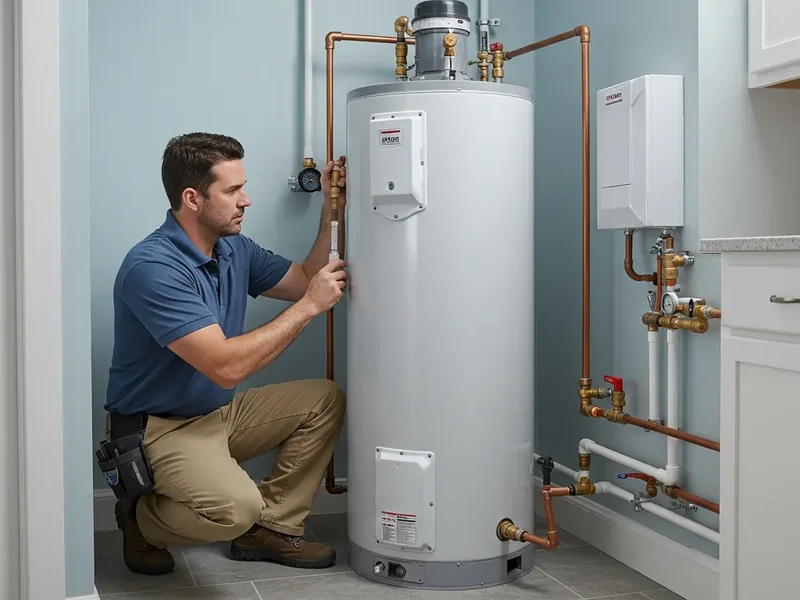
Huger's 29450 ZIP is quiet Berkeley County country at the edge of the Francis Marion National Forest, where homes sit on wooded lots, wells and septic systems are standard, and water heaters often live in garages or utility rooms far from town services. Heaters here contend with sediment-heavy well water, humid summers and long intervals between professional attention. When hot water turns unreliable or the tank starts leaking, replacement is usually the smarter investment than another repair on a worn-out unit. This page covers the repair-versus-replace decision for Huger properties, sizing for rural households, fuel realities where gas is scarce, and what a permitted installation involves. For a failing heater anywhere in the 29450 area, call (833) 713-2101 and we will get you scheduled.
Repair or Replace in Forest-Country Homes
On a Huger property, the repair-versus-replace call starts with the tank's age and its water history. Well water in this part of Berkeley County carries meaningful sediment and mineral content, and tanks that were never flushed accumulate a thick mineral layer on the bottom. That layer forces burners and elements to overheat, wastes energy and eventually cracks the tank's lining. A heater past 10 to 12 years with that kind of history is a replacement candidate, not a repair project.
The definitive replacement signs need no interpretation. Water leaking from the tank shell or seams means the pressure vessel has failed. Rusty hot water means the glass lining has broken down and the steel is corroding through. Violent rumbling or a gas control fouled beyond cleaning on an old unit both say the same thing: the heater's service life is over.
Younger units are worth fixing. A failed element or thermostat, a weeping relief valve, a bad drain valve or a tired thermocouple on a heater under about eight years old are economical repairs that can add years of service. One caution for well-water homes: confirm the problem is actually the heater. A failing well pressure tank, a clogged sediment filter or a struggling well pump can all mimic water heater trouble, and we check the supply side before recommending equipment you may not need.
Sizing for Wooded Lots and Choosing Electric or Heat Pump
Sizing a Huger household begins with the familiar baseline, 40 gallons for one to two people, 50 for three to four, then adjusts for rural reality. Multi-generational households on acreage, weekend gatherings of extended family, big garden tubs and bathrooms added over the years all push peak demand above the headcount number. The first-hour rating is what keeps everyone comfortable when the house is full, so size for the busy times rather than the quiet ones.
Heater location matters on wooded lots. Units in detached garages or far utility rooms mean long pipe runs, and long runs mean waiting for hot water and running taps longer, which wastes water and works the heater harder. Correct sizing helps, and in some layouts a recirculation solution is worth discussing alongside the replacement. We look at the actual property layout during the assessment.
Fuel in the 29450 area is typically electric, since natural gas service is limited this far into rural Berkeley County. Modern electric tanks are dependable, straightforward to install and easy to service. Heat-pump water heaters are the efficiency standout: they move heat from the surrounding air instead of generating it, use far less electricity than standard electric tanks, and are perfectly at home in a warm Lowcountry garage. Tankless electric models need substantial panel capacity that older rural services may not have, which we verify before recommending.
Permits, Code and Installation Day in the 29450 ZIP
Berkeley County requires a permit for water heater replacement in the Huger area, with an inspection confirming the installation meets South Carolina plumbing code. The code checklist is the same one that keeps every installation safe: a drain pan under the heater wherever a leak could damage the structure, with a drain line to an approved termination; dedicated discharge piping for the temperature-and-pressure relief valve ending somewhere visible and safe; an expansion tank on closed systems; and seismic bracing against tipping, the Lowcountry's code legacy of the 1886 Charleston earthquake.
Rural installations add practical details. Heaters in unheated garages or outbuildings need freeze protection on exposed piping for those January nights when Berkeley County dips below freezing. Gas units need proper venting, clearances and combustion air. Well-system homes get a supply-side check during our assessment, since reliable hot water starts with steady pressure from the well system.
On installation day, expect the water off for several hours while the old tank is drained, disconnected and removed, and the new unit is set, connected, filled and tested. Most straightforward replacements finish in one day with hot water back by evening, and the inspection is scheduled after. We arrive equipped for rural jobs, because running back to a supply house costs everyone time.
Well-Water Maintenance, Storms and the Old Tank's Exit
Annual flushing is the single best habit for a Huger water heater. With well water's sediment load, draining the tank yearly prevents the mineral buildup that destroys efficiency and shortens tank life. A whole-house sediment filter on the well line is one of the highest-value upgrades a rural home can make, protecting the heater and every fixture downstream. The anode rod should be inspected every few years and replaced when depleted; it sacrifices itself so the tank does not have to.
Storms are part of life at the forest's edge. Summer thunderstorms knock power out, and tropical systems can drop trees and push water into low-lying yards and outbuildings. A gas heater that has been submerged should be professionally evaluated before relighting, since floodwater damages gas controls and burners invisibly. If the heater sits low in a flood-prone spot, elevating the replacement is worth discussing while the old unit is coming out.
Old tanks leave as scrap metal, hauled away with the installation, and Berkeley County convenience centers accept scrap from residents as well. From permit to inspection to haul-away, a Huger replacement is one coordinated visit, planned around rural drive times and done to code the first time.
Local Insight
Huger is a small, scattered rural community in Berkeley County, sitting along Highways 41 and 402 where the suburbs give way to the Francis Marion National Forest. The 29450 ZIP is defined by woods and water: pine forest, blackwater creeks, older rural homes, manufactured housing and newer homes on large wooded lots. It is the kind of place where the mail comes to a box on the highway and the water heater might be the oldest appliance in the house.
Rural utilities shape every job here. Private wells and septic systems are the norm, natural gas service is limited, and electric water heating dominates. Sediment from well water is the defining maintenance issue, making annual flushing more than a suggestion. Huger looks to Cainhoy and Wando for nearby services and to Moncks Corner or Mount Pleasant for bigger errands, and the forest itself, with its hunting, trails and the nearby Santee Coastal Reserve, defines the local way of life. Replacement work here goes best with a technician who arrives prepared and who understands wells, long driveways and rural access.