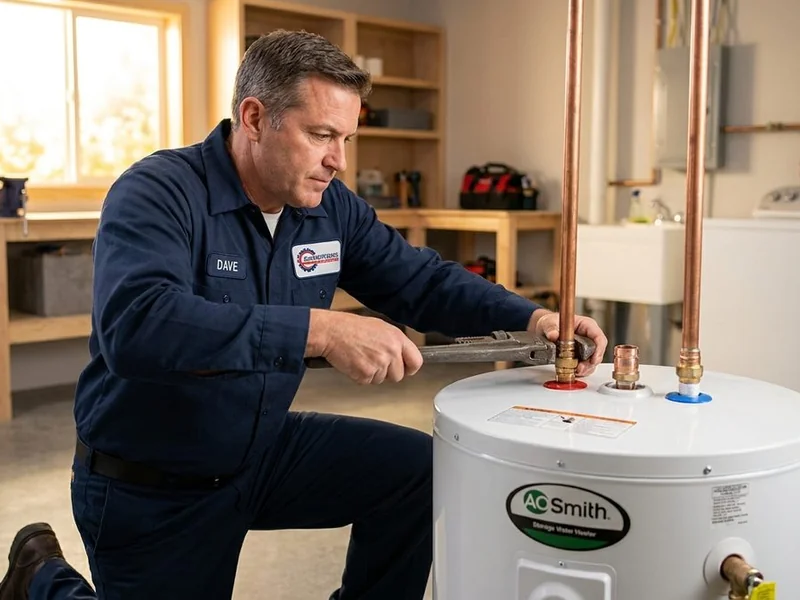
Hollywood's 29449 ZIP is rural Charleston County at its quietest, a small town along Highway 162 where properties come with acreage, wells and septic systems are the norm, and water heaters often live in carports, utility sheds or garage corners. The heaters here face heavy sediment from well water, humid summers and long service intervals on older rural homes. When hot water turns unreliable or the tank starts weeping, replacement is usually the better investment than another repair on a worn-out unit. This page covers the repair-versus-replace decision for Hollywood properties, sizing for rural households, fuel realities, and what a permitted installation involves. For a failing heater anywhere in the 29449 area, call (833) 713-2101 and we will get you scheduled.
Repair or Replace on a Hollywood Well-Water Property
On a Hollywood property, the repair-versus-replace decision starts with two facts: the tank's age and the water it has been living in. Well water in rural Charleston County carries more sediment and minerals than treated municipal supplies, and that material settles into tanks relentlessly. A heater that was never flushed can be running on inches of mineral sludge by year eight, which is why rumbling, popping and fading efficiency arrive early here. Past 10 to 12 years with that kind of water history, replacement is the practical call.
Some symptoms end the discussion. Water leaking from the tank shell or seams means the pressure vessel has failed, and no repair fixes that. Rusty hot water means the lining has broken down and the steel is corroding through. A tank that knocks violently or a gas control fouled beyond service on an ancient unit both say the same thing: stop investing in this heater.
Younger units are worth repairing. A failed element or thermostat, a weeping relief valve, a bad drain valve or a tired thermocouple on a heater under about eight years old are all economical fixes with years of service behind them. One rural note worth heeding: poor hot-water performance is not always the heater's fault. A struggling well pump, a waterlogged pressure tank or a clogged sediment filter can all mimic heater failure, and we check the supply side before recommending a replacement you might not need.
Sizing for Rural Households and Choosing the Fuel
Sizing a Hollywood household starts with the standard baseline, 40 gallons for one to two people, 50 for three to four, then adjusts for rural life. Multi-generational households are common on acreage properties, and when the house fills up on weekends and holidays, the heater needs to keep up. Big garden tubs, extra bathrooms added over the years and long pipe runs from a heater in a far utility shed all push demand above the headcount number. Size for the busy times.
Long pipe runs deserve their own thought. When the heater sits in a detached garage or a utility room at the far end of a sprawling ranch, hot water takes a while to arrive and people run taps longer waiting. That wastes water and works the heater harder. Correct sizing helps, and in some layouts a recirculation or point-of-use solution is worth discussing alongside the replacement.
Fuel in the 29449 area is usually electric by default, since natural gas service is limited in rural Charleston County. Modern electric tanks are dependable and straightforward to install and service. Heat-pump water heaters are the efficiency play: they harvest warmth from the surrounding air, sip electricity compared with standard electric tanks, and are right at home in a warm Lowcountry garage or utility room. Tankless electric models exist but demand substantial panel capacity that older rural services may lack. We verify panel, space and fuel before recommending.
Permits, Code and Installation Day in the 29449 ZIP
Charleston County requires a permit for water heater replacement in the Hollywood area, with an inspection confirming the installation meets South Carolina plumbing code. The code requirements are the same ones that keep every installation safe: a drain pan under the heater wherever a leak could damage the structure, with a drain line run to an approved termination; dedicated discharge piping for the temperature-and-pressure relief valve ending somewhere visible and safe; an expansion tank on closed systems; and seismic bracing against tipping, the Lowcountry's code legacy of the 1886 Charleston earthquake.
Rural properties add practical considerations. Heaters in unheated utility sheds or detached garages need freeze protection on exposed piping, because a hard January night in Hollywood can freeze a pipe solid. Gas units need proper venting, clearances and combustion air, plus sensible separation from stored fuel, paint and chemicals in a working outbuilding. Well-system homes get a supply check as part of our assessment, since steady pressure from the well system is part of reliable hot water.
On installation day, expect the water off for several hours while the old tank is drained, disconnected and removed, and the new unit is set, connected, filled and tested. Most straightforward replacements finish in one day with hot water back by evening, and we schedule the inspection after. We arrive prepared for rural jobs, because the supply house is not around the corner.
Well-Water Care, Storm Prep and Old-Tank Disposal
The best maintenance a Hollywood homeowner can do is flush the tank annually. With well water's sediment load, yearly flushing, or at least drawing several gallons from the drain valve, prevents the mineral concrete that kills efficiency and cracks tank linings. A whole-house sediment filter on the well line is one of the highest-value upgrades a rural home can make, protecting the heater and every fixture downstream. The anode rod should be checked every few years and replaced when it is depleted.
Weather is the other factor. Summer thunderstorms knock power out, and tropical systems can push water into low-lying yards and outbuildings near the creeks and marshes. A gas heater that has been submerged should be professionally evaluated before relighting, since floodwater damages gas controls and burners invisibly. If the heater sits low in a flood-prone spot, elevating the replacement is worth discussing while the old unit is coming out.
Old tanks leave as scrap. We drain, disconnect and haul away the old unit with every installation, and Charleston County recycling facilities accept scrap metal from residents doing their own cleanouts. From permit to inspection to haul-away, a Hollywood replacement is one coordinated visit, scheduled with rural drive times in mind and done to code the first time.
Local Insight
Hollywood is a small, unhurried town in rural Charleston County, centered on the Highway 162 corridor between Ravenel and Adams Run, with Rantowles Creek and the tidal marshes not far off. The 29449 ZIP is a mix of the town proper, with its modest homes and churches, and the surrounding countryside: farmland, timber tracts, older rural homes and manufactured housing on large lots. It is the kind of place where neighbors know each other and the water heater might be older than the car in the driveway.
Rural utilities define the work here. Private wells and septic systems serve most addresses outside the town core, natural gas is limited, and electric water heating dominates. That means sediment-heavy tanks, anode rods that work overtime, and heaters that benefit enormously from annual flushing. Day-to-day life looks toward Ravenel, Hollywood's larger neighbor on Highway 17, and toward West Ashley and Charleston for bigger errands. Service calls here reward technicians who arrive prepared, because the nearest supply house is a real drive away, and replacement work goes smoothest when the assessment accounts for wells, access and the property's actual layout.