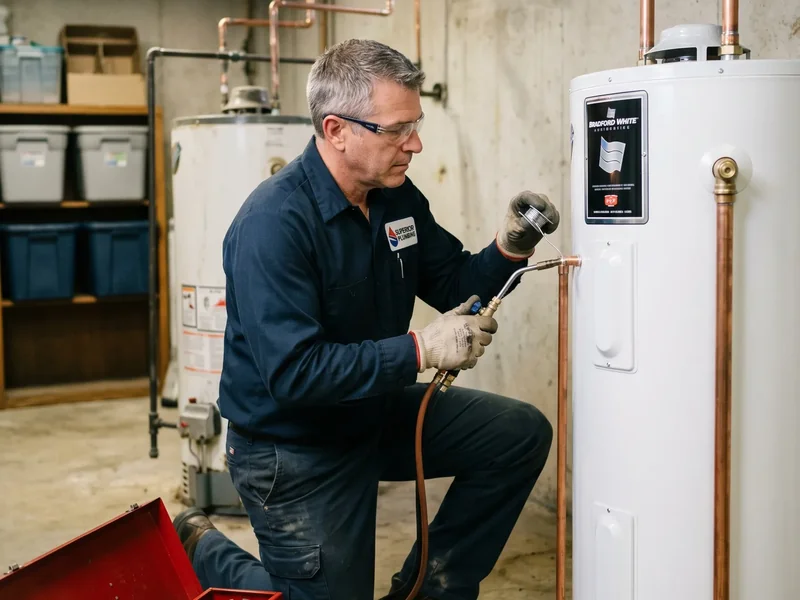
Hanahan's 29410 ZIP is a comfortable suburb wedged between North Charleston and Goose Creek, full of family neighborhoods like Tanner Plantation and the streets around Foster Creek where water heaters work hard every single morning. The housing stock runs from 1970s and 80s originals to 2000s builds, and a huge share of those heaters are now at or past the end of their design life. Garages and laundry rooms hold most of the units here, and the humid Lowcountry climate plus moderately hard water shape how they age. This page covers the repair-versus-replace decision for Hanahan homes, sizing for real family demand, fuel and technology options, and what a permitted installation involves. If your heater is leaking, loud or just old, call (833) 713-2101 and we will get you on the schedule.
Reading the Replacement Signs in Hanahan Homes
Hanahan's housing tells the replacement story. The 29410 ZIP is heavy with homes built from the 1970s through the 1990s, and the water heaters in them were typically replaced once, maybe twice, which puts a large share of the current installed base right at the 10 to 15 year mark. If your heater's rating plate shows a 2000s birthday and it is acting up, you are not nursing it back to health, you are deciding when to replace it.
The replacement triggers are straightforward. Water leaking from the tank shell or base means the pressure vessel has failed. Rusty or discolored hot water means internal corrosion has broken through the lining. Loud rumbling or popping means sediment has caked the tank bottom, a given in any heater that went years without flushing on our moderately hard water. Any of these on a heater past year ten means replacement, not repair.
Younger units are a different story. A failed heating element, a bad thermostat, a dripping temperature-and-pressure relief valve or a worn drain valve on a heater under eight years old are economical repairs that buy real additional life. Gas pilot and control issues on younger units are similarly fixable. Military families renting in the area should note: if the heater is the landlord's responsibility, document the failure and the unit's age before calling, because age plus symptoms usually settles the repair-versus-replace question quickly.
Sizing for Family Life and Choosing the Right Fuel
Family schedules drive sizing in 29410. The rule of thumb is 40 gallons for one to two people and 50 for three to four, but Hanahan households should size for the morning rush: multiple teenagers showering before school, laundry running every evening, dishwashers nightly. The first-hour rating is the number that prevents cold-shower complaints, and undersizing is the most common regret we see. When in doubt, size for the busiest hour of your week.
Fuel is a genuine choice in Hanahan. Dominion Energy natural gas serves many neighborhoods, and gas heaters recover much faster than electric after heavy use, a difference a busy family feels immediately. All-electric homes are common too, particularly where Berkeley Electric Cooperative provides power, and modern electric tanks are dependable and simple to service. Heat-pump water heaters deserve a quote: they use far less electricity than standard electric tanks, thrive in warm Lowcountry garages, and even dehumidify the garage while they work.
Tankless systems appeal to households that keep running out of hot water, delivering endless hot water from a wall-mounted unit with no tank to empty. Gas tankless needs adequate gas line capacity and proper venting; electric whole-house models need serious panel capacity. We verify fuel, panel and venting at your home before recommending anything, so the quote reflects the real job.
Permits, Code and a One-Day Installation in 29410
The City of Hanahan requires a permit for water heater replacement, with an inspection confirming the work meets South Carolina plumbing code. The inspection covers the details that matter: proper venting and clearances on gas units, correct electrical connections, dedicated discharge piping for the temperature-and-pressure relief valve, a drain pan with a real drain line where leaks could damage finished space, and seismic bracing against tipping, the Lowcountry's code legacy of the 1886 Charleston earthquake.
Garage installations, the Hanahan standard, get specific attention. The pan and drain protect against the slow leak that ruins stored belongings and flooring. Combustion air and venting rules govern gas units sharing the garage with the car and the lawn chemicals. Where a pressure-reducing valve on the water service creates a closed system, an expansion tank absorbs the pressure spikes of heated water. These are not upgrades, they are code, and they are included in every job we do.
Installation day is straightforward: water off for a few hours while the old tank is drained, disconnected and hauled away, the new unit set, connected, filled and tested, then left ready for inspection. Most like-for-like replacements finish the same day with hot water back by evening. We pull the permit and schedule the inspection, so the job is fully closed out without you chasing paperwork.
Maintenance, Storms and the Old Tank's Final Trip
A new Hanahan heater should give 10 to 15 years, and the care that gets you there is simple. Flush sediment from the tank annually; our moderately hard water leaves mineral deposits in every tank, and flushing is what keeps efficiency up and the tank bottom intact. Check the anode rod every few years and replace it when depleted. Keep the garage area around the heater clear for service access, and make sure everyone in the house knows where the water shutoff is.
Storm season deserves a plan. Summer thunderstorms knock power out regularly, and tropical systems can push water into low garages near Foster Creek and the Cooper River marshes. A gas heater that has been submerged should be professionally evaluated before relighting, since floodwater damages controls and burners invisibly. If your garage takes water in heavy storms, elevating the replacement or adding a properly drained pan is sensible preventive work to discuss during the job.
The old tank's last trip is to scrap recycling, hauled away with the installation, and Berkeley County convenience centers accept scrap metal from residents as well. From permit to inspection to haul-away, a Hanahan replacement is one coordinated visit, done to code and sized for the way your family actually lives.
Local Insight
The 29410 ZIP is Hanahan proper, a city of about 20,000 tucked into Berkeley County between North Charleston's southern edge and Goose Creek. Neighborhoods like Tanner Plantation, Foster Creek, the areas around North Rhett and Remount Road, and the newer infill near the Goose Creek border define the housing: mostly single-family suburbia from the 1970s through the 2000s, with mature trees, two-car garages and the water heater sitting in the garage or laundry room. Proximity to Joint Base Charleston means military families are a big part of the community, and rental turnover in some neighborhoods keeps heaters working through back-to-back tenants.
Berkeley County Water and Sanitation provides water and sewer across Hanahan, and daily life orbits the North Rhett and Remount Road corridors, with easy hops to North Charleston shopping, Goose Creek and the interstate. It is an unpretentious, practical suburb, and its plumbing reflects that: straightforward garage and laundry-room installations, slab construction, and heaters that get replaced when they fail rather than babied along. Replacement work here is about doing the standard job to a high standard, with correct sizing for family life and code details handled properly.