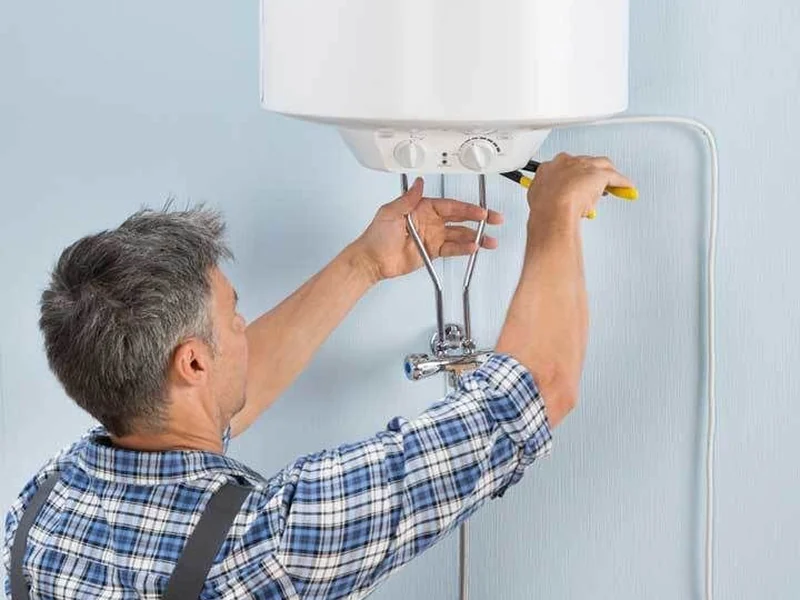
Daniel Island is hitting a milestone: the master-planned community that rose from the mid-1990s onward is now old enough that its first generation of water heaters is aging out all at once. Across the 29492 ZIP, original builder-grade tanks in garages and attics are crossing the 15 to 25 year mark, and replacement calls are clustering by neighborhood as whole streets of homes hit the same wall. These are modern homes with modern plumbing, but attic installations, two-story layouts and busy family schedules make correct sizing and code-compliant work matter. This page covers the repair-versus-replace call for island homes, sizing for real household demand, fuel and technology options, and what permitted installation looks like here. If your heater is original to the house, call (833) 713-2101 before it fails on its own schedule.
The Island's Heaters Are Aging Out Together
On Daniel Island, the repair-versus-replace question has a demographic answer. Homes built in the late 1990s and early 2000s are now 25-plus years into their original water heaters, far past the 10 to 12 year design life of a conventional tank. If your heater is original to a first-wave island home, you are not deciding whether to replace, you are deciding whether to do it on your schedule or the tank's. Planned replacement beats a 2 a.m. garage flood every time.
The classic failure signs still apply. Water weeping from the tank shell or base means the pressure vessel has failed and no repair will save it. Rusty hot water signals internal corrosion has won. Rumbling or popping means sediment has baked onto the tank bottom, forcing the burner or elements to overheat. Island water comes from Berkeley County Water and Sanitation with moderate mineral content, so sediment is a steady factor, and heaters that never got flushed fail right on schedule.
Repairs make sense on younger units. A failed element, thermostat, relief valve or gas control on a heater under eight years old is worth fixing, and the tank can serve for years more. But putting a new gas valve on a 20-year-old tank is throwing good money after bad. We check the rating plate, the tank's condition and the failure, then tell you plainly which side you are on. On an island full of aging first-generation heaters, honesty about that line is the whole job.
Sizing for Island Households, Attics and Garages
Daniel Island households run a lot of hot water. Two-story family homes with three or four bathrooms, teenagers, frequent guests and deep tubs need more than the builder's minimum. Start with the familiar baseline, 40 gallons for one to two people, 50 for three to four, then size up for reality: back-to-back morning showers across multiple baths can empty a marginal tank before everyone is dressed. The first-hour rating, not just the gallon number, is what keeps a busy island home comfortable.
Attic and garage placement shapes the choice. Many island homes hide the heater in the attic above the garage or in the garage itself. Attic installs demand a proper support platform, a full-size drain pan with a real drain line, and service clearances, all code requirements, all worth verifying on replacement day. Garages offer easier access and are ideal for heat-pump water heaters, which harvest warmth from the surrounding air and use far less electricity than standard electric tanks in our climate.
Fuel options are genuinely open on the island. Natural gas serves many neighborhoods, and gas heaters recover quickly after heavy use. Electric tanks are simple and dependable. Tankless units appeal to households tired of running out, heating water on demand from a wall-mounted box, but gas models need venting routes and gas line capacity, and electric models need panel capacity, all verified during assessment. We recommend based on your home's layout, fuel and habits, not a one-size pitch.
Permits, Pan Rules and Installation Day in 29492
Water heater replacement in the 29492 ZIP is permitted work through the City of Charleston, since Daniel Island sits inside city limits, with an inspection confirming the installation meets South Carolina plumbing code. The code details that matter most on the island are the ones protecting finished space: a drain pan with a dedicated drain line under every heater where a leak could damage the home, which on Daniel Island means nearly every attic and many garage installations. The drain must terminate at an approved point, not just dump into the attic.
Standard requirements apply alongside: dedicated discharge piping for the temperature-and-pressure relief valve ending in a visible, safe location; an expansion tank on closed systems where a pressure-reducing valve is present; correct venting, clearances and combustion air for gas units; and seismic bracing against tipping, a code legacy of the 1886 Charleston earthquake that applies across the Lowcountry. Attic jobs get extra attention to the support platform and safe service access.
Installation day on the island is usually smooth: water off for a few hours while the old tank is drained and removed, the new unit set and connected, everything filled, tested and left ready for inspection. Most like-for-like replacements finish the same day with hot water back by evening. We handle the permit and the inspection scheduling, and we leave the garage or attic cleaner than we found it.
Protecting Finished Space and Getting Years From the New Unit
A new heater on Daniel Island should deliver well over a decade, and the maintenance is straightforward. Flush sediment annually to protect efficiency and the tank lining. Have the anode rod checked every few years and replaced when it is consumed; it is the cheap sacrificial part that saves the expensive tank. Keep the area around a garage heater clear, and know where your main water shutoff is before an emergency makes you look for it.
Leak protection deserves special emphasis here because of where island heaters live. A slow leak in an attic can destroy ceilings in multiple rooms before anyone notices, and a garage leak can ruin stored belongings and flooring. Code requires the pan and drain; adding an electronic leak sensor with an automatic shutoff valve is the upgrade that actually prevents damage, and it is inexpensive relative to what it protects. For townhome owners, remember a leak can affect neighbors, which makes protection a community courtesy as well.
Old tanks go to scrap recycling, hauled away with the installation, and Charleston County facilities accept scrap metal from residents too. Between the permit, the pan and drain work, the inspection and the haul-away, an island replacement is a single coordinated visit. Given how many first-generation heaters are failing at once, the smartest move is scheduling yours before the tank schedules it for you.
Local Insight
Daniel Island is Charleston's master-planned island suburb, developed from the mid-1990s on former plantation and farmland between the Wando and Cooper rivers. The 29492 ZIP is a patchwork of villages, Daniel Island Park with its golf courses, Smythe Park, Codner's Ferry and the downtown district near the stadium, with housing that runs from townhomes and condos to large single-family homes. Because the community was built in waves, water heaters tend to age out in waves too, which is why whole neighborhoods start calling for replacements in the same season.
Island homes are overwhelmingly two-story or townhome construction, and water heaters commonly sit in garages or in attics above living space, exactly the locations where a leak does maximum damage and where code requires drain pans with real drain lines. Berkeley County Water and Sanitation provides water and sewer to the island. Daily life centers on the island's own commercial districts, the stadium and the trails, with commutes across the bridges to Mount Pleasant, downtown or North Charleston. For replacement work, attic access, HOA community standards and garage layouts are the local details that shape every job.