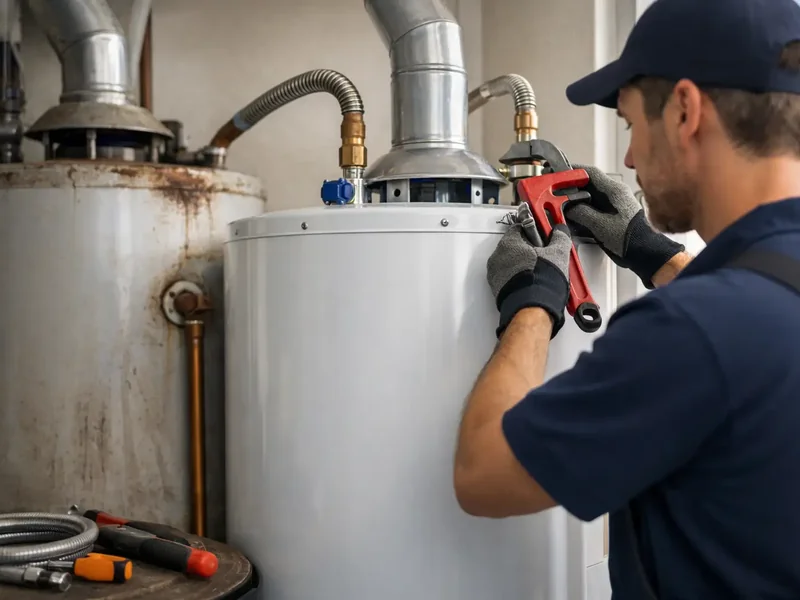
West Ashley's 29407 ZIP is classic post-war Charleston: brick ranch homes in St. Andrews, Avondale and Byrnes Downs, many built from the 1950s through the 1970s, now filled with families who run a lot of hot water. The water heaters in these homes are often original to a renovation done decades ago, or builder-grade units installed during the last remodel, and they are hitting the end of their service life right on cue. Garages, laundry rooms and the occasional attic hold the heaters here, and the humid Lowcountry air plus moderately hard Charleston Water System supply shape how they age. This page covers the repair-versus-replace decision for West Ashley homes, sizing for real family demand, fuel and technology choices, and what a permitted installation involves. If your heater is leaking, loud or just old, call (833) 713-2101 and we will get you scheduled.
Knowing When a West Ashley Heater Is Done
In West Ashley, the decision usually starts with the calendar. The 29407 housing stock is full of water heaters installed during renovations in the 1990s and early 2000s, which puts a huge number of them at or past the 10 to 12 year design life of a conventional tank right now. If your heater's rating plate shows a birthday from that era and it is acting up, replacement is almost always the right call rather than another repair.
The non-negotiable replacement signs are the same everywhere: water leaking from the tank shell or base, rusty hot water, and a tank that rumbles or pops from baked-on sediment. Charleston Water System's moderately hard supply leaves mineral sediment in every tank, and heaters that were never flushed accumulate a thick layer that overheats the bottom, wastes energy and eventually cracks the tank lining. A garage heater that starts leaving a damp ring on the concrete is telling you the end is near.
Younger units deserve repair instead. Failed heating elements, bad thermostats, a dripping temperature-and-pressure relief valve or a worn drain valve on a heater under eight years old are all economical fixes. Gas control or pilot issues on younger gas units are similarly routine. We check the unit's age, the failure mode and the condition of the tank itself, then give you a straight recommendation. West Ashley homeowners get a lot of sales pitches; a straight answer about repair versus replace is worth more.
Sizing for Busy Households and Picking the Right Technology
Family life defines sizing in 29407. Start with the headcount rule: 40 gallons for one to two people, 50 gallons for three to four, and think bigger for five or more. Then adjust for reality. Teenagers taking long showers, a dishwasher and washing machine running every evening, and a deep tub in the primary bath all push first-hour demand above what the gallon rating suggests. An undersized heater in a busy West Ashley ranch means cold showers by 7 a.m., every a.m.
Fuel choice is a real decision here. Dominion Energy natural gas serves much of West Ashley, and gas heaters recover much faster than electric, a difference families feel immediately on heavy-use mornings. All-electric homes are common too, and modern electric tanks are reliable and simple. The option more people should consider is the heat-pump water heater: it moves heat from the surrounding air rather than generating it, uses a fraction of the electricity of a standard electric tank, and loves a warm West Ashley garage. It also dehumidifies the garage as a bonus.
Tankless systems appeal to households that keep running out of hot water, since they heat on demand with no tank to empty. Gas tankless needs adequate gas line capacity and proper venting; electric whole-house models need significant panel capacity. Both need honest retrofit quotes that include those upgrades. We size and quote based on your home's actual fuel, panel and venting situation, not on a brochure.
Permits, Code Details and Installation Day in 29407
Water heater replacement in the 29407 ZIP is permitted work through the City of Charleston, with an inspection to confirm the installation meets the South Carolina plumbing code. The permit is not red tape for its own sake: it verifies the venting, gas and electrical connections, relief-valve discharge piping and seismic bracing were all done to code, which protects your home and keeps everything clean for future resale.
Expect the standard Lowcountry code details on every replacement. A drain pan with a dedicated drain line goes under any heater where a leak could damage finished space, and the drain must terminate at an approved point, not just spill onto the garage floor. The temperature-and-pressure relief valve gets its own discharge pipe ending somewhere visible and safe. Homes with a pressure-reducing valve on the water service have a closed plumbing system, which requires an expansion tank to absorb pressure from heated water.
Attic installations, found in some two-story West Ashley homes, get extra scrutiny: a proper support platform, a full-size pan with a drain, and safe service access are all required, because an attic leak can destroy ceilings across multiple rooms before anyone notices. Gas units need correct vent materials, clearances and combustion air, and every heater in our seismic zone gets anchored or braced against tipping, a code legacy of the 1886 Charleston earthquake. Most like-for-like swaps finish in a single day with hot water back by evening.
Maintenance, Storms and the Old Tank's Last Ride
A new heater in West Ashley should serve 10 to 15 years, and the maintenance that gets you there is simple. Flush sediment from the tank annually, more of a priority here given the moderately hard municipal water. Check the anode rod every few years and replace it when it is depleted; it is the sacrificial part that keeps the tank itself from rusting. Keep the area around the heater clear so it can be serviced, and know where your water shutoff is before you need it in a hurry.
Storm season is worth planning around. Summer thunderstorms and the occasional tropical system can knock out power, and low-lying streets near the Ashley River and its tidal creeks can take on water. A gas heater that has been submerged should be professionally evaluated before relighting, because floodwater damages controls and burners invisibly. If your heater sits low in a flood-prone garage, elevating the replacement or adding a properly drained pan is smart preventive work.
When the old unit comes out, it leaves as scrap, not trash. Steel tanks are recyclable, and we haul the old heater away with the installation. Charleston County recycling facilities accept scrap metal from residents as well. From permit to inspection to haul-away, a professional replacement is one coordinated visit, and your only job is to enjoy hot water that does not run out.
Local Insight
The 29407 ZIP covers West Ashley west of the Ashley River, one of Charleston's most established suburban corridors. Neighborhoods like St. Andrews, Avondale, Byrnes Downs, Westwood and the streets off Savannah Highway and Sam Rittenberg Boulevard are dominated by mid-century brick ranch homes on generous lots, many with mature live oaks and original or lightly updated systems. It is the kind of housing stock where a water heater installed during a 1990s renovation is now 30 years old and still limping along, which makes replacement one of the most common plumbing jobs in the ZIP.
West Ashley life runs along its commercial corridors: the shops and restaurants of Avondale, the Savannah Highway retail strip, easy access to downtown over the Ashley River bridges, and weekend trips to James Island County Park or the beaches. Charleston Water System serves the area with moderately hard water, so sediment management is part of heater ownership here. Homes are overwhelmingly slab or crawlspace construction, and garages double as the mechanical hub of the house, holding the water heater, the HVAC air handler and everything else. Replacement work here is straightforward but benefits from someone who knows these ranch-house layouts and their quirks.