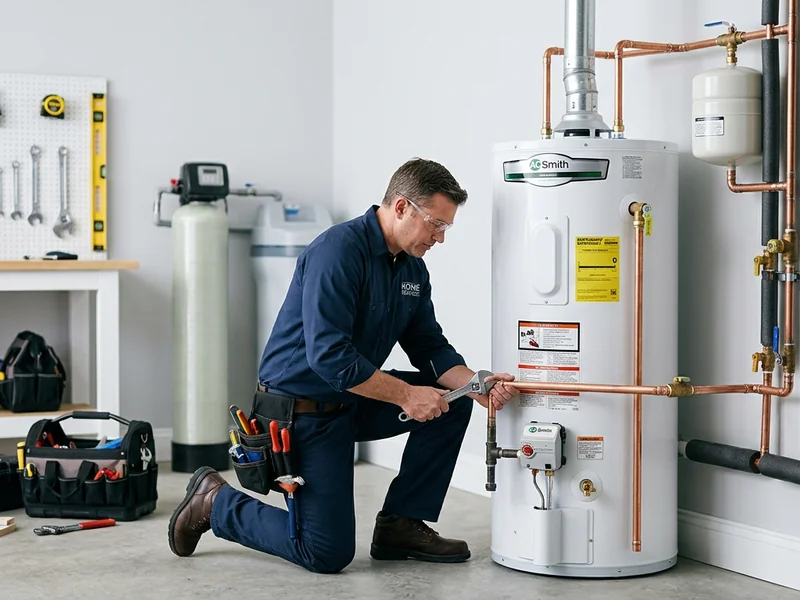
Bonneau sits on the eastern shore of Lake Moultrie, a quiet lake town where cottages, ranch homes and rural properties make up most of the 29431 ZIP. Water heaters here lead hard lives: lake-area humidity, well water with heavy sediment on many properties, and older homes whose original heaters are long past their prime. When the shower runs cold halfway through, the tank rumbles like a freight train, or you spot water pooling at the base, it is time to think replacement rather than another patch. This guide covers the repair-versus-replace decision, sizing a new unit for your household, fuel options that fit rural Berkeley County, and what a permitted, code-compliant installation involves. For a leaking or failing heater anywhere around Bonneau, call (833) 713-2101 and we will get you on the schedule quickly.
When Replacement Beats Repair in Bonneau Homes
The math on repair versus replace starts with the birth date on the heater's rating plate. Conventional tank heaters are generally designed for about a decade of service, sometimes a little more with good maintenance. Past year ten, every dollar you spend fixing parts is a dollar bet against a steel tank that is corroding from the inside. In Bonneau, where many homes still run their original builder-grade heater from the 1990s or 2000s, age alone settles most decisions.
Certain symptoms end the debate immediately. Water leaking from the tank shell or a seam means the pressure vessel has failed, and no part swap fixes that. Hot water that runs rusty or smells metallic signals the glass lining has broken down and the steel is rusting through. A tank that rumbles, pops or knocks is boiling water trapped under a thick blanket of sediment, a common sight on well-water properties around Lake Moultrie, where sediment loads run heavier than on treated municipal supplies.
Repairs still make sense on younger equipment. A dead upper or lower element, a faulty thermostat, a weeping drain valve or a tired temperature-and-pressure relief valve on a heater under eight years old are all fixable at a fraction of replacement cost, and the tank can go on for years. Pilot and thermocouple issues on gas units are similarly routine. Our approach is simple: we look at the actual unit, its age and the failure, and tell you plainly which side of the line you are on. No pressure toward replacement when a repair is the smarter spend.
Getting the Size and Fuel Type Right for Lake-Country Living
An undersized heater is a daily annoyance, so sizing starts with honest questions about your household. The rough rule is 40 gallons for one or two occupants and 50 gallons for three or four, but fixture count matters as much as people: a home with two full baths, a big soaking tub and a dishwasher running nightly needs more first-hour capacity than the gallon rating alone suggests. Lake houses that fill up with family on summer weekends should be sized for the crowd, not the quiet weeks.
Fuel options in the 29431 area follow the rural pattern. Natural gas from Dominion Energy reaches some addresses but far from all, so many Bonneau homes heat water electrically. Electric tanks are straightforward, dependable and easy to service. Where gas is available, gas units recover noticeably faster, which matters when the whole house showers before a day on the lake. Heat-pump water heaters are worth pricing out: they pull warmth from the surrounding air, and in an unconditioned Lowcountry garage or utility room they operate in ideal conditions, using far less electricity than a standard electric tank.
Tankless systems have their fans around the lake, especially in cottages where space is tight and hot-water demand comes in bursts. They eliminate standby heat loss entirely. The trade-off is installation complexity: gas tankless units need upgraded gas lines and special venting, electric whole-house models need substantial electrical capacity. A retrofit quote should spell out those extras honestly so you can compare true costs, and we will walk you through it before you decide.
What Code-Compliant Installation Looks Like in the 29431 ZIP
Berkeley County requires permits for water heater replacement, and the finished job must meet the South Carolina plumbing code before it passes inspection. That is good news for homeowners, because the code requirements are exactly the details that separate a safe, long-lived installation from a risky one. We pull the permit, perform the work to code and coordinate the inspection, so there is nothing for you to chase.
Expect several code-driven upgrades on a typical Bonneau replacement. A drain pan goes under the heater anywhere a leak could damage floors or belongings, connected to a drain line that terminates at an approved point outside or at an indirect receptor. The temperature-and-pressure relief valve gets dedicated discharge piping that ends in a visible, safe location. If your home has a pressure-reducing valve on the water service, which is common where municipal pressure runs high, the system is closed and an expansion tank is required to absorb thermal expansion.
Gas installations add venting rules: proper flue materials, correct clearances from combustibles and adequate combustion air. And because the Lowcountry lies in a recognized seismic zone, a legacy of the 1886 Charleston earthquake, heaters must be anchored or braced so they cannot topple. On the day itself, plan on the water being off for several hours while we drain the old tank, set and connect the new one, fill and test it. Most replacements wrap up the same day with hot water back by evening.
Sediment, Storms and Saying Goodbye to the Old Tank
The best thing a Bonneau homeowner can do for a new water heater is flush it annually. Draining a few gallons from the tank valve, or a full flush once a year, clears the sediment that otherwise bakes onto the bottom, kills efficiency and shortens tank life. Well-water homes should be especially diligent, and a whole-house sediment filter on the incoming line helps both the heater and every fixture in the house. The sacrificial anode rod deserves a check every few years; replacing a depleted rod is one of the cheapest ways to add years to a tank.
Lake-country weather is the other factor. Summer thunderstorms knock power out regularly, and hurricane season can push Lake Moultrie water into low-lying yards and garages. A gas water heater that has sat in floodwater should be evaluated before anyone relights it, since water damages gas controls, burners and safety devices in ways that are not always visible. If your heater sits low in a flood-prone spot, talk to us about elevating the replacement or adding a pan with a proper drain as part of the job.
Disposal is handled for you. Old steel tanks go to scrap recycling rather than the landfill, and we haul the unit away when we install the new one. Berkeley County convenience centers also take scrap metal from residents doing their own cleanouts. Between permitting, code upgrades, haul-away and inspection, a professional replacement is a single coordinated visit, not a project you have to manage.
Local Insight
Bonneau is lake-town South Carolina at its most unhurried. The town sits along the eastern rim of Lake Moultrie, the 60,000-acre reservoir built in the 1940s as part of the Santee Cooper project, and fishing, boating and lakeside weekends define the local rhythm. Housing in the 29431 ZIP leans toward modest ranch homes, older lake cottages, manufactured homes and rural properties with acreage, much of it built from the 1960s through the 1990s. That era of construction means a lot of original water heaters are still soldiering on well past their expected life, which is why replacement calls here are so common.
Utilities follow the rural pattern. Many Bonneau addresses run on private wells and septic systems rather than municipal service, and Berkeley County Water and Sanitation serves others. Well water's extra sediment is the defining local wrinkle for water heater longevity, making annual flushing more than a suggestion here. Day to day, Bonneau looks to Moncks Corner, about fifteen minutes west on Highway 52, for groceries, hardware and services, and the lake itself, Bonneau Beach and the surrounding pine woods give the town its identity. Homes here work hard through humid summers, and their water heaters feel every bit of it.