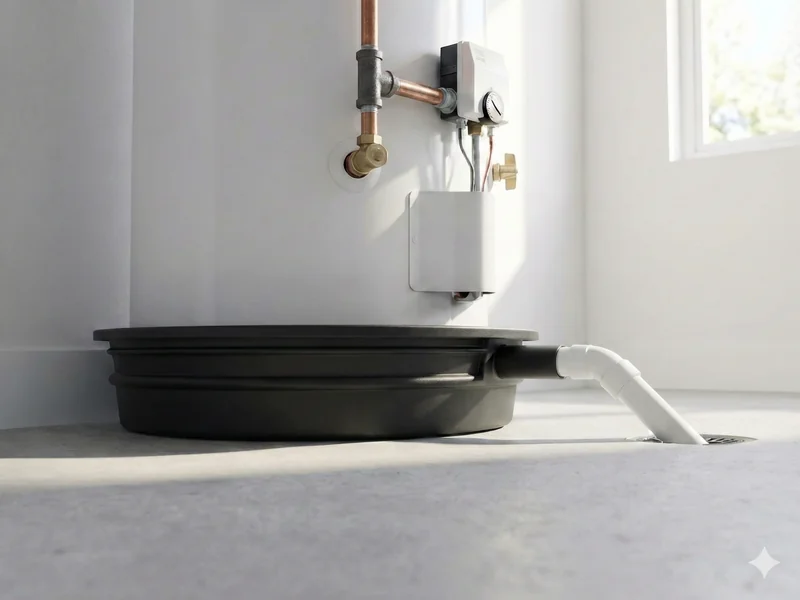
The 29406 ZIP's mix of established neighborhoods and rental-heavy blocks makes water heater leaks a particular risk: heaters in garages, utility rooms and carports fail the quiet way, a slow weep at a seam or a dripping fitting, soaking floors, drywall and belongings for weeks. In rental properties, where nobody may inspect between tenants, that slow leak can run for months. A drain pan with a proper drain line is the code-required defense that catches the leak and carries the water somewhere harmless. This page explains when pans are required, what correct installation looks like, the upgrades worth adding, and when to schedule the work. For pan installation anywhere in 29406, call (833) 713-2101.
What a Drain Pan Does and Where Code Requires One
A drain pan has one job: catch water escaping from the heater and route it somewhere harmless. Tank failures rarely start dramatically; they start with a weep at a seam, a drip at a fitting, or a relief valve letting by intermittently. Without a pan, that water goes into drywall, subflooring, flooring and stored belongings. With a pan and a working drain line, the same failure is a service call instead of a renovation, or in a rental, instead of a dispute.
Code requires pans where leaks can cause damage. Under the South Carolina plumbing code, a water heater in a location where leakage would damage the structure must sit in a corrosion-resistant pan drained to an approved termination point. In 29406, that covers garages with finished walls, utility rooms, laundry closets, interior spaces and any attic unit. New installations must include them.
The rental reality makes the case strongest. An owner-occupied garage gets glanced at daily; a rental garage might not be seen for months. A pan with a drain line works whether anyone is watching or not, silently protecting the property for decades. For landlords, it is inexpensive protection against the most common water damage claim a water heater produces.
Anatomy of a Code-Correct Pan Installation
Four elements make a pan installation correct. The pan must be corrosion-resistant and sized to sit fully under the heater, catching drips from fittings and the relief valve as well as tank leaks. It needs a drain outlet. A drain line must run from that outlet to an approved termination point, sloped to flow and sized to carry a real leak. The termination must be somewhere harmless and visible, the building exterior or an indirect waste receptor, never a wall cavity.
The most common defect is the pan with no drain: a tray set under the heater with nothing connected, which fills, overflows and hides the leak longer than no pan would. Second is the drain line to nowhere, ending in a crawlspace or behind the heater. We verify the full drain path on every installation.
Garage and utility-room conditions punish cheap pans. Thin metal rusts through in humid Lowcountry garages within years; we install pans rated for the environment, set level so water reaches the drain outlet. The relief valve keeps its own separate discharge piping, since pan drain and relief discharge are distinct systems under code.
Leak Sensors, Auto Shutoff and Drain Upkeep
The pan catches water; accessories limit damage. A leak sensor in the pan alerts you the moment water appears, turning a leak discovered in months into one discovered in minutes. For rental properties, where inspections are infrequent, a sensor is the highest-value addition available, and models with remote alerts notify the owner, not just whoever happens to be home.
An automatic shutoff valve on the heater's cold-water supply goes further: when the sensor detects water, the valve closes and the tank cannot keep refilling through the leak. For landlords, this combination means a leak between tenant visits never becomes a flood. For owner-occupants with garages full of belongings, it means a mid-day leak never becomes an evening disaster.
Pan drains need occasional verification. In our climate, drain lines clog with sediment, algae and debris, and a clogged pan drain fails silently. We recommend checking flow periodically, and we clear and test the line on every pan visit. A pan you never check is a pan you cannot trust.
Best Timing: Replacement Day, Retrofits and Failed-Pan Swaps
Replacement day is the natural moment for a pan: the old heater is out, the new one is going in, and the pan, drain line, sensor and shutoff install as one coordinated job. If your heater is due for replacement and lacks a pan, combining them is the economical choice, and landlords can standardize the protection across every unit they own.
Retrofitting under an existing heater is routine: shut off the water, drain the tank enough to lighten it, lift the heater onto the pan, and run the drain line to an approved termination, usually a single visit. We also replace failed pans, rusted metal, cracked plastic and never-drained trays are all common finds in 29406, and a proper pan with a real drain restores the protection.
Every pan visit includes checking the surrounding installation: relief valve discharge piping, shutoff valve condition and general code compliance. Small issues caught during a pan job stay small, which is the entire philosophy behind the pan.
Local Insight
The 29406 ZIP is North Charleston's southern half: established residential streets, apartment communities, the Rivers Avenue commercial corridor, and a large rental population serving the region's industrial and logistics employers. Water heaters here live in garages, utility rooms, laundry closets and carports, and in rental units they often go years without anyone looking at them. That is the exact scenario a drain pan is built for.
Landlords in 29406 face the sharpest version of the risk. A slow tank leak in a rental garage can destroy a tenant's stored belongings and the unit's flooring before anyone reports it, and the liability conversation that follows is one every property owner wants to avoid. Charleston Water System's moderately hard water means sediment-stressed tanks are common, making the slow weep more likely over time. Pan work here is practical risk management for owner-occupants and landlords alike.
The 29406's rental density gives pan work here a property-management angle. Landlords with multiple units can standardize protection across every property: pan, drain line, sensor and shutoff valve on each heater, checked at every turnover. The cost per unit is small, and the protection covers the exact scenario landlords fear most, a leak running for weeks in an unvisited garage. For owner-occupants, the same package protects the garage full of belongings that every working household accumulates.