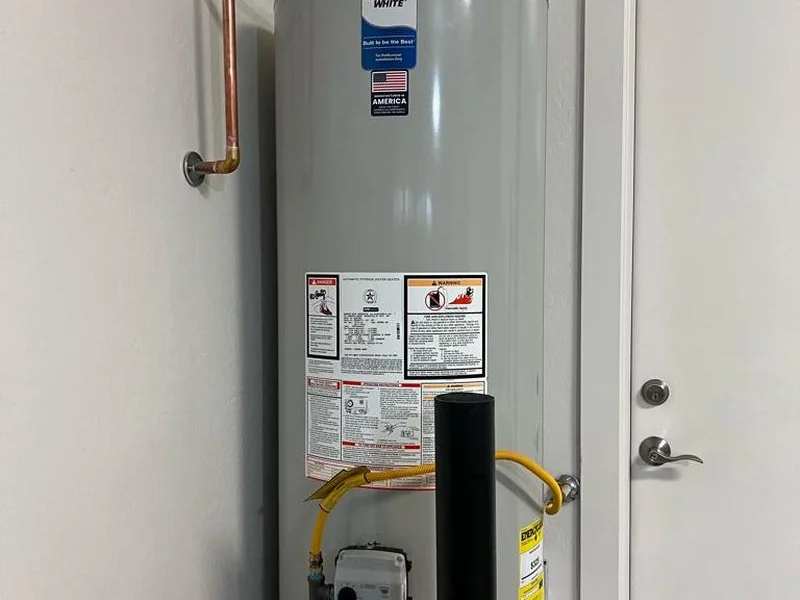
Mount Pleasant's 29464 ZIP is full of two-story homes with water heaters in the attic, and that combination makes drain pans non-negotiable. A slow leak from an attic heater does not puddle harmlessly, it rains through ceilings, insulation and drywall across multiple rooms, often for weeks before anyone looks up and notices the stain. A drain pan with a proper drain line is the code-required defense that catches the leak and carries it outside. This page explains when pans are required, what correct attic and garage installation looks like, the upgrades worth adding, and when to schedule the work. For pan installation anywhere in Mount Pleasant, call (833) 713-2101.
Why Attic Heaters Make Pans Non-Negotiable
A drain pan does one job: catch water escaping from the heater and route it somewhere harmless. In an attic, that job is critical, because there is no harmless place for water to go on its own. A weeping tank seam, a dripping fitting or a relief valve letting by sends water into insulation, drywall and framing, and the first visible sign is often a stained ceiling in the room below, by which time the damage is extensive. A pan with a working drain line turns that scenario into a service call.
Code requires pans where leaks can cause damage. Under the South Carolina plumbing code, a water heater in a location where leakage would damage the structure must sit in a corrosion-resistant pan drained to an approved termination point. In Mount Pleasant, that is nearly every heater: all attic units, garage installations with finished walls, laundry rooms and interior closets. New installations must include them, and the town's inspectors check.
The math is simple. A pan installation costs a small fraction of one ceiling repair, let alone the multi-room damage an attic leak causes. If your heater, especially an attic heater, lacks a pan with a real drain line, that is the most cost-effective protection you can add to the home.
Anatomy of a Correct Attic and Garage Pan Installation
Four parts make a pan installation correct. The pan must be corrosion-resistant and sized to sit fully under the heater, catching drips from fittings and the relief valve as well as tank leaks. It needs a drain outlet. A drain line must run from that outlet to an approved termination point, sloped to flow and sized to carry a real leak, which in an attic often means routing down through the house to the exterior. The termination must be somewhere harmless and visible, never into a wall cavity or the attic insulation.
Attic pan defects are depressingly common: pans with no drain line at all, drain lines that terminate into the attic, lines that were never sloped and hold standing water, and pans undersized for the heater. We find these on inspections regularly. Every installation we do gets the full drain path verified, because an attic pan is only as good as its drain.
Heat and humidity punish pan materials. Thin metal pans corrode and plastic pans grow brittle in hot attics, so we install pans rated for the environment, set level so water reaches the drain outlet. The relief valve keeps its own separate discharge piping; pan drain and relief discharge are distinct systems under code.
Sensors, Shutoff Valves and Attic Drain Maintenance
The pan catches water; accessories prevent disaster. A leak sensor in the pan alerts you the moment water appears, which for an attic heater is the difference between a minor fix and a major claim. Given that nobody visits the attic regularly, a sensor is arguably more important here than anywhere else in the house.
An automatic shutoff valve on the heater's cold-water supply completes the system: when the sensor detects water, the valve closes and the tank cannot keep refilling through the leak. Above finished living space, this is the protection package that actually works, pan plus sensor plus shutoff. For homeowners who travel, it is the answer to the away-from-home leak nightmare.
Attic pan drains need periodic checks. Lines running through hot attics can clog with sediment and algae, and a clogged pan drain fails silently until the pan overflows. We recommend verifying flow periodically, and we clear and test the line on every pan visit. We also confirm the support platform is sound while we are up there, since a full tank is heavy.
Best Timing: Replacement Day, Attic Retrofits and Failed Pans
Replacement day is the ideal moment for a pan: the old heater is out, the new one is going in, and the pan, drain line, sensor and shutoff install as one coordinated, permitted job. If your attic heater is due for replacement and the pan is missing or suspect, combining the work is the obvious move.
Retrofitting a pan under an existing attic heater is very doable but takes care: safe attic access, shutting off and partially draining the tank to lighten it, lifting it onto the pan, and routing the drain line down to an approved exterior termination. Most retrofits are completed in a single visit. We also replace failed pans, rusted, cracked or never-drained, which we find regularly in 29464 attics.
Every pan visit includes checking the surrounding installation: relief valve discharge piping, shutoff valve condition, support platform soundness and general code compliance. In a town where inspectors check the details, doing the details right is the whole job.
Local Insight
The 29464 ZIP is the heart of Mount Pleasant, from the historic Old Village and Shem Creek to the master-planned communities of Park West, Dunes West and Carolina Park. The dominant housing form in the newer areas is the two-story family home, and builders routinely placed the water heater in the attic above the garage to save ground-floor space. That single design decision is why pan work matters so much here: thousands of heaters sit directly above finished living space.
Attic conditions in the Lowcountry are punishing: summer heat bakes the space, humidity is constant, and access is often a pull-down stair into a dim, hot cavity nobody visits. A weeping tank up there can run for a season. The Town of Mount Pleasant enforces its building codes thoroughly, and permitted work here gets genuinely inspected, which is why correct pan sizing, real drain lines and proper terminations are not details to improvise. Pan installation in 29464 is really ceiling-insurance installation.
The Town of Mount Pleasant inspects permitted work thoroughly, and pan installations done under a replacement permit get that same scrutiny, which is good for homeowners. But many of the town's attic pans were installed decades ago under older enforcement, in attics that bake every summer. Heat, humidity and time degrade both plastic and metal pans, so the pan that passed inspection years ago may not be trustworthy today. A periodic look at the pan's condition and a test of the drain line are simple habits that protect a lot of finished space below.