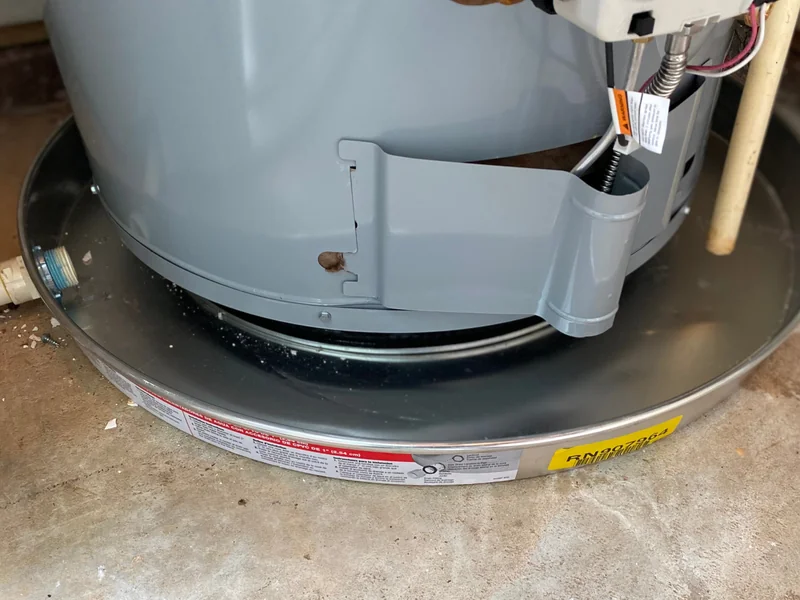
A water heater rarely fails dramatically. More often it weeps, a slow leak at a fitting, a pinhole in the tank bottom, a dripping relief valve, that soaks into flooring, framing or ceilings for weeks before anyone notices. On James Island, where heaters live in garages, laundry rooms, crawlspaces and attics across the 29412 ZIP, that slow leak is the expensive kind of failure. A drain pan with a proper drain line is the simple, code-required defense: it catches the leak and carries the water somewhere harmless. This page explains when pans are required, what a correct installation looks like, the smart upgrades worth adding, and when to have a pan installed. For pan installation anywhere on James Island, call (833) 713-2101.
What a Drain Pan Does and Where Code Requires One
A drain pan does one job: it catches water leaking from the heater and routes it somewhere harmless before it can damage your home. Tank leaks start small, a weep at a seam, a drip from a fitting, condensation overflowing, and they grow. Without a pan, that water goes straight into drywall, subflooring, framing, stored belongings or, in an attic, through the ceiling below. With a pan and a working drain line, the same leak becomes a minor service call instead of a renovation.
Plumbing code requires pans where they matter. Under the South Carolina plumbing code, a water heater installed where leakage could cause damage must sit in a corrosion-resistant pan with a drain line to an approved termination point. On James Island, that describes nearly every installation: garages with finished walls, laundry rooms, interior closets, crawlspaces above finished space, and every attic unit. New installations must include them, and existing heaters without pans are living without the protection code considers basic.
The island's housing makes the case vividly. Crawlspace heaters leak onto framing nobody inspects. Garage heaters leak onto concrete that wicks water into drywall. Attic heaters leak through ceilings. A pan costs a fraction of any of those repairs, and it works silently for decades. If your heater does not have one, or has a rusted relic of one, that is the gap to close.
Anatomy of a Code-Correct Pan Installation
A correct pan installation has four parts, and all four matter. First, the pan itself: corrosion-resistant metal or heavy plastic, sized to sit fully under the heater with room to catch drips from fittings and the relief valve. Second, the drain connection: the pan must have a drain outlet, not just be a tray. Third, the drain line: piping from the pan's outlet to an approved termination point, sloped so water actually flows, and sized to carry a real leak. Fourth, the termination: somewhere the water can go harmlessly and visibly, such as the building exterior or an indirect waste receptor, never into a wall cavity or just onto the floor nearby.
The most common defect we find is the pan with no drain. Someone set a pan under the heater years ago and never connected it, so it is just a shallow bowl that fills and overflows, arguably worse than nothing because it hides the leak longer. The second most common is the drain line that terminates somewhere useless: into the crawlspace dirt, behind the water heater, or into a line that was never connected at the other end. We test the drain path on every installation.
Material choice matters in the Lowcountry. Thin metal pans rust through in damp crawlspaces and humid garages within years. We use pans rated for the environment and the heater's size, set level so water reaches the drain outlet, and we keep the relief valve's separate discharge piping intact, the pan drain and the relief discharge are two different systems and code treats them that way.
Leak Sensors, Auto Shutoff and Keeping the Drain Clear
The pan is the foundation; smart accessories are the upgrade that actually prevents damage. A leak sensor sitting in the pan sounds an alarm, or sends an alert, the moment water appears, turning a leak discovered in weeks into a leak discovered in minutes. For heaters in attics, crawlspaces and anywhere leaks hide, a sensor is the highest-value addition you can make.
The next step up is an automatic shutoff valve on the cold-water line feeding the heater. When the sensor detects water, the valve closes and stops the supply, which means a failed tank cannot keep refilling itself and flooding the pan's capacity. For James Island's attic heaters and crawlspace units, this combination, pan plus sensor plus shutoff, is the complete protection package. It is also the right call for anyone who travels, since a leak while you are away is the nightmare scenario these devices prevent.
There is a maintenance side too. Pan drain lines can clog with sediment, algae and debris, especially lines terminating outside in our climate. A clogged pan drain is a silent failure, so we recommend checking that water flows freely through the pan drain periodically, and we clear and test the line on every pan service visit. A pan you never check is a pan you cannot trust.
When to Install: Replacement Day, Retrofits and Failed Pans
The best time to install a drain pan is during a water heater replacement, when the old unit is already out and the new one is going in. The pan, drain line, sensor and shutoff all go in as part of one coordinated job, with no extra water-off time beyond the replacement itself. If your heater is due for replacement and lacks a pan, combining the two is the obvious move.
Retrofitting a pan under an existing heater is very doable. It usually means shutting off the water, draining enough to lighten the tank, lifting the heater onto the pan, and running the drain line to an approved termination. Most retrofits are completed in a single visit. We also replace failed pans: rusted-through metal pans, cracked plastic pans and pans that were never drained are all common finds, and swapping in a proper pan with a real drain line restores the protection.
During any pan visit we also look at the bigger picture: the relief valve discharge piping, the condition of shutoff valves, and whether the installation meets current code in other respects. A pan installation is a natural moment to catch the small issues before they become big ones, which is exactly the point of the pan in the first place.
Local Insight
The 29412 ZIP is James Island proper, the sea island south of the Charleston peninsula with its mid-century ranch homes, growing infill construction and shady streets off Folly Road and Camp Road. Water heaters here live in the classic Lowcountry spots: garages that double as workshops, laundry rooms, vented crawlspaces under raised ranch homes, and attics in the two-story infill builds. Every one of those locations has the same vulnerability, a leak that goes unseen.
Crawlspace heaters are the island's special concern. A weeping tank in a vented crawlspace can soak floor framing for a season before anyone crawls under to look, and by then the repair involves far more than a water heater. Attic units in the newer two-story homes carry the same risk vertically: a slow leak rains through ceilings across multiple rooms. Charleston Water System's moderately hard water means sediment-related tank stress is a background factor island-wide. Pan work on James Island is really damage-prevention work, sized for the island's housing and its hiding places.