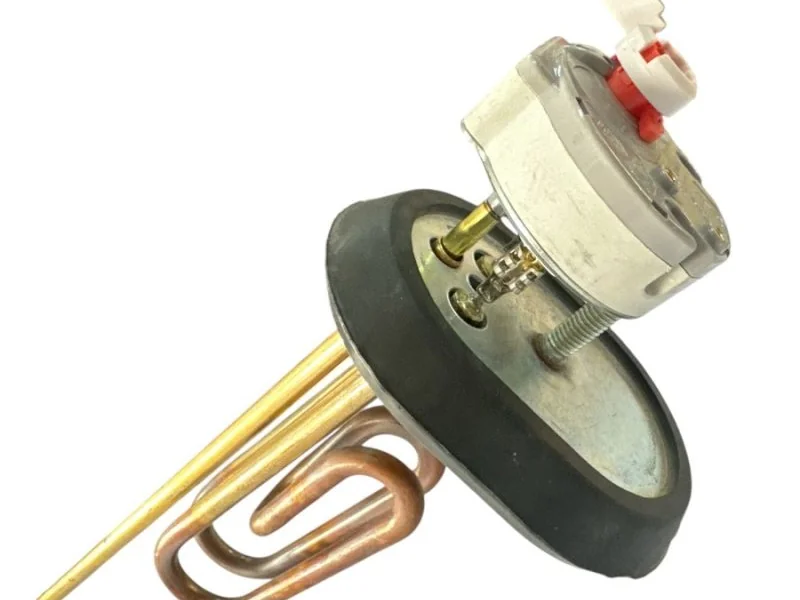
North Charleston's 29406 neighborhoods — the historic Park Circle and Olde North Charleston mill village streets, the post-war subdivisions, the corridors toward the old Navy Yard — hold some of the Charleston area's oldest working-class housing, and their water heaters show the mileage. Electric tanks in garages, carports, and crawlspaces, many 15 to 25 years old, run thermostats that have cycled hundreds of thousands of times through Lowcountry heat and humidity.
The 29406 thermostat failure is usually age, pure and simple: contacts pitted through, calibration drifted, high-limit resets tripping on smaller and smaller overshoots. Symptoms run the full catalog — lukewarm water, scalding spikes, tanks that empty in one shower. We diagnose and replace water heater thermostats across North Charleston's 29406 area in a single visit, with honest tank-age assessments so you never pay for controls on a tank that's finished.
How to Tell a Thermostat Problem From an Element Problem
Thermostats and heating elements fail with frustratingly similar symptoms — lukewarm water, short supply, slow recovery — which is why guessing wastes money. Here's how they differ. A failed lower thermostat leaves the lower element idle, so only the upper third of the tank heats; you get hot water briefly, then lukewarm. A failed lower element produces the identical symptom, because the result is the same: the bottom of the tank never heats. Only a meter test tells them apart.
A failed upper thermostat is more dramatic: the upper element does the heavy lifting on every electric tank, so when its thermostat quits, you may get little or no hot water at all — or the high-limit trips constantly. Scalding water, on the other hand, points squarely at the thermostat: elements either heat or they don't, but only a thermostat with stuck contacts or drifted calibration can overheat the tank.
Sediment complicates the diagnosis. A thick layer of mineral sediment on the tank floor buries the lower thermostat's sensing area and the lower element together, mimicking a controls failure while being a maintenance problem. That's why a proper service call tests everything: continuity across each thermostat, resistance across each element, voltage at the terminals, and a look at sediment depth. The meter doesn't guess — and neither should the repair. When we arrive for a thermostat call, that full electrical workup is the first thing we do, so the part we replace is the part that actually failed.
What Happens During Your Thermostat Service Visit
When our technician arrives, the first step is listening: when did the symptoms start, does the reset button trip, is the water too hot or not hot enough, how old is the tank. Those answers narrow the diagnosis before a panel comes off. Then power goes off at the breaker — verified dead with a meter, because water heater circuits carry 240 volts and there are no shortcuts with that.
Testing comes before replacing. We pull both access panels and check the full control circuit: each thermostat's continuity and calibration, each element's resistance (a healthy 4500-watt element reads around 13 ohms), terminal condition, and the high-limit switch. We also note sediment signs and the tank's overall condition — because a thermostat call on a tank with a rusting base gets an honest conversation, not just new parts.
The replacement itself is straightforward: failed thermostats unclipped, new ones clipped flush to the tank wall, wiring reconnected exactly to the diagram, insulation and safety covers restored. We replace upper and lower thermostats as a pair — they're the same age and fail on similar timelines, so doing both prevents the second service call three months later. Final steps: set both to 120°F, restore power, and verify through a live heating cycle — proper amperage draw, clean thermostat cut-off at setpoint, and safe, steady temperature at the nearest tap. You get a working water heater back the same visit, with the failed parts shown to you, not just described.
The Four Lowcountry Forces That Wear Out Thermostats
Ask why a thermostat failed here and the answer is usually a combination of four local forces. First, ambient heat. Water heaters in Lowcountry garages, carports, and utility sheds spend half the year in 95°F-plus air. The thermostat senses tank water, not room air — but the heat cooks wiring insulation, oxidizes terminals, and shortens the life of the high-limit mechanism sitting right beside the thermostat.
Second, mineral-laden water. Whether it's limestone hard water on municipal systems or sediment-heavy private well water, the Charleston area's water lays deposits on lower elements and lower thermostats. Deposits insulate the sensor, forcing the thermostat to misread tank temperature; they also make elements heat inefficiently, stretching cycles and piling wear onto contacts rated for a finite number of operations.
Third, electrical storms. The Lowcountry's summer lightning is among the most active in the country, and the surges trip high-limit safety switches and pit thermostat contacts. One surge-weakened thermostat may work for months before its calibration finally drifts into scalding territory — the delayed failure that surprises homeowners.
Fourth, humidity and salt air. Damp crawlspaces corrode terminals; barrier-island salt air attacks every electrical connection aggressively. Corroded terminals feed the thermostat erratic voltage, and erratic voltage produces erratic temperatures. Every professional thermostat replacement here should therefore include terminal cleaning and treatment — new thermostats on green-corroded terminals are a repair with a built-in expiration date.
North Charleston's 29406 housing stock means we work on some of the oldest electric tanks in the metro — units where the thermostats have been cycling since the 1990s or earlier. Cycle fatigue is the failure mode: bimetallic contacts pitted through, springs weakened, calibration drifted 15-20 degrees off. Garage and crawlspace installs add heat-aged wiring and corroded terminals. Our 29406 thermostat service is built for old tanks: full meter-testing of thermostats and elements, terminal service, and a straight answer on whether the tank deserves new controls or a replacement.
When New Thermostats Are the Right Call — and When They Aren't
Thermostats are designed to be replaced; tanks are designed to eventually be replaced. Knowing which one your situation calls for saves real money. New thermostats are the right call when the tank shell is sound — no rust streaks at the base, no damp fittings, no bulging — the unit is under roughly 12 years old (or older but well-maintained on treated water), and the symptoms match controls failure: erratic temperatures, short hot-water supply, tripping high-limit, scalding spikes. In those cases a same-day thermostat replacement returns full-tank performance at a fraction of replacement cost.
Replacement is the honest recommendation when the tank shows its age: rust at the base or around fittings, water staining down the shell, a tank past 15 years on hard or well water, or sediment so deep and hardened that the lower element is entombed. New thermostats can't fix a corroding shell or a scaled-solid tank bottom — and we'd rather talk you out of a repair than sell you one with a short horizon.
There's a middle ground worth knowing about: the aging-but-sound tank, say 12 to 15 years, no rust, moderate sediment. Here new thermostats plus a flush and an anode check can buy two to five more years — a perfectly rational bridge repair that lets you plan the eventual replacement on your schedule instead of during an emergency. We lay out all three paths with straight pricing: repair now, bridge repair, or full replacement. No pressure, no upsell — just the inspection findings and what we'd do in your position.
Local Insight
Age defines thermostat work in 29406. The mill village streets around Park Circle and Olde North Charleston, the post-war subdivisions, the neighborhoods that grew up with the Navy Yard — their water heaters are frequently 15- to 25-year-old electric tanks in garages, carports, and crawlspaces. Thermostats in these units fail from pure mechanical wear: contacts that have opened and closed hundreds of thousands of times, calibration springs that have lost their temper, high-limit mechanisms that trip on overshoots a new thermostat would ride through.
Install conditions accelerate the decline. Crawlspace and carport locations trap Lowcountry humidity against electrical connections year-round; garage installs bake through summer. We open 29406 access panels and find corroded terminals, brittle wire insulation, and heat-aged components as often as genuinely worn thermostats — so every replacement is a controls-system service: thermostats renewed, terminals cleaned and treated, wiring inspected, high-limit verified.
The repair-or-replace judgment matters most on old tanks. A 20-year-old 29406 tank with a sound shell can absolutely earn more years from new thermostats — but a tank with base rust, a failed anode, or heavy sediment is throwing good money after bad. We inspect honestly and say which one you're looking at. When controls are the problem, a same-day thermostat replacement restores full-tank performance for a fraction of a heater swap; when the tank is done, we'll tell you before you spend a dollar on parts.