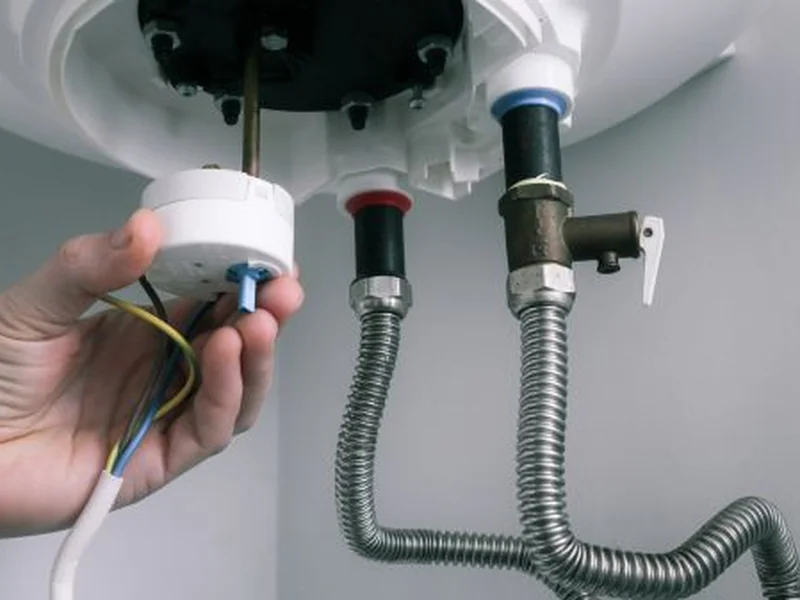
Isle of Palms — Wild Dunes resort, oceanfront estates, and a dense vacation-rental market — heats water under island conditions: salt air corroding every metal connection, elevated homes tucking heaters into vented space beneath the house, and rental duty cycles running controls far harder than residential use. The water heater thermostat is a wear item here more than a lifetime part: corroded terminals, pitted contacts, drifted calibration. In rentals, a failed thermostat is a guest-safety and business issue — scalding water with strangers in the shower, or no hot water in peak season. In second homes, failures get discovered between visits. This page explains island thermostat failures, temperature safety and calibration, diagnosis in corrosive air, and what replacement involves. For unsafe water temperatures now, call (833) 713-2101.
Island Wear: Why IOP Thermostats Fail Younger
Isle of Palms subjects thermostats to the same triple assault as every other island component: salt, cycling, and exposure. Marine chlorides corrode terminals, wire connections, and access-panel hardware — the green crust is the island's signature. Corroded connections create resistance and erratic signals; the control's accuracy degrades years ahead of inland schedules. Under-house installations in elevated homes maximize the exposure: wind-driven salt air circulating freely around the heater.
Rental duty cycles multiply the wear. A vacation rental's heater cycles far more than a residence's — guest showers, turnover laundry, constant demand — pitting the thermostat's internal contacts through sheer switching volume. Salt air plus heavy cycling is why island thermostats commonly need replacement in the 7-to-12-year window, and why rental owners should treat controls as scheduled-wear items.
The failure modes are standard, accelerated: stuck-on (scalding water, steam, tripping high-limit resets — a guest-safety emergency in a rental); stuck-off (no heat call, cold water, peak-season disaster); partial (failed lower means hot water runs out fast; failed upper often means none at all). In a rental, any of these is a business problem as well as a plumbing problem.
Second-home discovery is the island's special pattern: a thermostat that failed weeks ago, found at the season's first visit — or by the first guests. The prevention is scheduled service and local eyes on the property, not hope.
Guest-Safe Temperatures on the Island
The 120-degree Fahrenheit setting is the island's hospitality standard. At 140 degrees, a serious scald takes seconds; at 130, about half a minute; at 120, minutes. Rental guests — children included — use taps without knowing the heater's condition, and a drifted or stuck thermostat gives no warning. Every Isle of Palms rental should hold 120 degrees verified by thermometer: defensible, responsible, and non-negotiable.
Sudden scalding: dial down, warn occupants, call (833) 713-2101 — with a rental, mention the guest situation. Repeated high-limit trips confirm active failure; stop resetting. For second homes: an overheating tank discovered between visits has been stressing every component — the visit assesses the whole heater, not just the control.
Verify at every turnover or season start: hot tap nearest the heater, full minute running, fill a cup, measure with a kitchen thermometer, log the reading with the date. Dials run 5 to 10 degrees off normally; island drift runs larger. If temperature won't hold at the setting, the control needs replacement.
Property managers: put the thermometer check on the turnover checklist. Five minutes per property per turnover prevents the scalding incident — and the review mentioning it — that no amount of subsequent service can undo.
Diagnosis in Corrosive Air
Island diagnosis is corrosion-aware from the first panel removal. Power off at the breaker, verified dead. Upper panel off — noting the panel hardware's own condition — red reset checked. But the technician's eyes are on the connections as much as the components: green-crisped terminals, swollen insulation, rust-streaked panels. A thermostat can bench-test fine while its corroded connections fail in service; the honest island diagnosis treats connections as suspects, not bystanders.
- No hot water: upper thermostat, upper element, tripped reset — or corroded feed connections.
- Runs out fast: lower thermostat, lower element, sediment.
- Too hot / reset tripping: thermostat stuck on — guest-safety priority.
- Lukewarm: control not calling, element failed, or connection resistance.
Multimeter testing — thermostats for switching, elements for resistance, power off throughout — remains the decider, with terminal cleaning and evaluation alongside. Sometimes the "failed thermostat" is a corroded spade connector; cleaning and re-terminating fixes it without a new part. Knowing the difference is the value of island experience.
Gas units: the combined control valve/thermostat assembly, with salt air attacking its exterior and pilot components. Burner that won't stay lit, dial that won't hold — same corrosion-aware diagnosis, professional gas work, leak-tested connections.
Replacement for Island Homes and Rentals
Thermostat replacement on Isle of Palms is 240-volt professional work with island countermeasures: power off and verified dead, panels removed, both thermostats tested and replaced as a pair — the failed one's partner has endured identical salt air — terminals cleaned and treated, corroded hardware replaced with corrosion-resistant equivalents, new controls matched to voltage, range, and configuration, wiring transferred one wire at a time, thermostats seated firmly against the tank, 120 degrees set, full cycle run with tap verification.
For rentals, the visit also establishes the going-forward protocol: annual thermostat testing with corrosion inspection, temperature verification at every turnover, and a log per property. The controls are wear items in this environment; scheduled replacement at the first sign of drift beats emergency replacement mid-season.
Gas control valve replacement follows the same pattern — assembly as a unit, professional gas connections, leak testing, salt-air inspection of burner and pilot components included.
The tank-age call, island-adjusted: under 10 years with a sound tank, the control repair is worthwhile. Past 10 to 12 years with visible corrosion on tank and controls, whole-heater replacement with marine-aware materials is usually better money — and for rentals, the reliability math favors replacement sooner. The visit assesses and advises plainly. To schedule in 29451, call (833) 713-2101.
Local Insight
Isle of Palms is the Lowcountry's upscale island — Wild Dunes, oceanfront homes, and a vacation-rental market that runs the island's economy. Water heaters here are business infrastructure: they serve guests, protect reputations, and their failures have commercial consequences. Thermostats, as the controls governing guest safety, deserve the same scheduled attention as the pool chemistry and the HVAC filters.
Salt air separates island service from mainland service in kind, not just degree. Corrosion changes what the technician looks at — connections alongside components — and what the owner should expect: shorter control life, driftier calibration, and the occasional "clean the terminals" fix instead of a parts swap. It's the marine maintenance reality, and it's manageable once it's understood.
Second-home ownership completes the island picture: unoccupied luxury homes where a failed thermostat waits weeks for discovery. The prevention stack — annual service with corrosion inspection, 120-degree verification, a leak/temperature check by whoever watches the house — costs little against the property value at risk. Every island owner, resident or absentee, should have it in place.