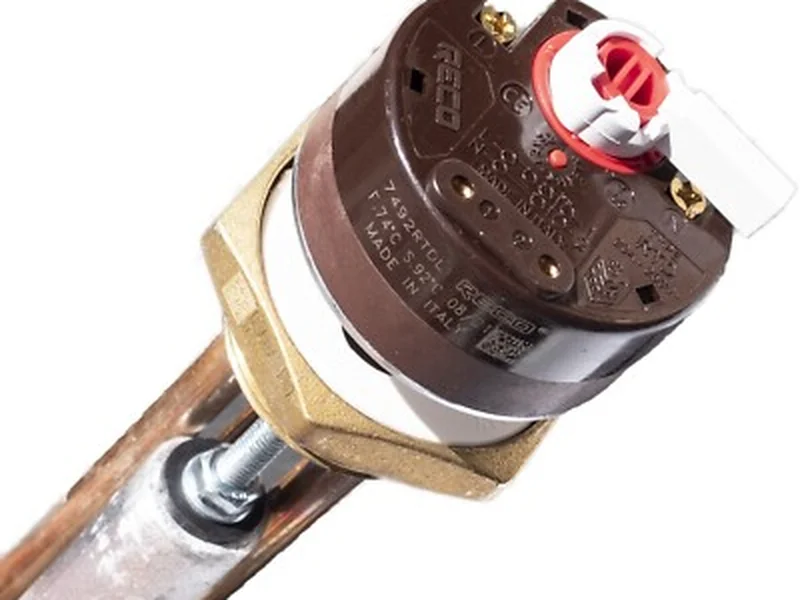
Hollywood is rural Charleston County — farms, timberland, and manufactured homes on large lots along SC-165, where private wells are the water supply and water heaters live in sheds, carports, crawlspaces, and compact utility closets. The thermostat in a Hollywood heater contends with well-water sediment, humid air, and often a tank that's been running for many years. When it fails, rural households feel it immediately: scalding water from a stuck-on control, lukewarm water from a stuck-off one, hot water that gives out halfway, a reset button that won't stay set. And with the nearest service a real drive, the fix needs to be right the first time. This page explains thermostat failures on well water, temperature safety and calibration, thermostat-versus-element diagnosis, and what a rural replacement visit involves. For bad water temperatures now, call (833) 713-2101.
Well Water and Thermostat Failures in Hollywood
Hollywood's private wells define the thermostat story. Well water here commonly carries sediment, hardness minerals, and iron that settle on the tank bottom and bury the lower element — blinding the lower thermostat's sensor to the actual water temperature. A blinded sensor misreads the tank in both directions: calling for heat when the water is already hot (overheating, tripped resets, scalding risk) or never calling when it should (lukewarm water, short supply). In 29449, "thermostat failure" is sediment failure wearing a control's name more often than anywhere else.
The standard electric tank — two thermostats, upper and lower, sequenced with two elements — shows the skew clearly. Lower-thermostat complaints dominate: hot water runs out fast because the bottom half never heats through its sediment blanket. Upper-thermostat stuck-on failures bring the safety hazard: scalding water, steam at taps, the red high-limit reset tripping as the safety fights the failed control.
Manufactured homes add the compact-installation factor. Tight utility closets, short plumbing runs, builder-grade tanks — a leak or overheat event reaches flooring fast, and access panels can be awkward to reach. Thermostat service in manufactured homes should be prompt and thorough, because the damage curve is steeper in compact construction.
The rural rule: never replace the control without addressing the sediment. A new thermostat on a tank bottom buried in well sediment inherits the blinded-sensor problem within months. The complete Hollywood service is diagnosis, flush, then parts — in that order, every time.
Temperature Safety in Rural Households
The 120-degree Fahrenheit setting protects Hollywood households the same as everywhere — at 140 degrees, serious burns happen in seconds; at 130, in about half a minute; at 120, minutes of exposure. Farm households with children, multi-generational homes, hired help using the facilities: everyone who turns a tap deserves water that can't scald in seconds.
Sudden scalding with no dial change signals likely stuck-on failure: turn the dial down, keep children from hot taps, call (833) 713-2101. It's a safety repair, not a convenience one — and in a rural home where the medical response is farther away, prevention matters even more. Repeated high-limit trips confirm active failure; stop resetting, start diagnosing.
Calibrate seasonally with a kitchen thermometer — well-water sediment accumulates between checks and changes the sensor's world. Hot tap nearest the heater, full minute of running, fill a cup, measure. Dials run 5 to 10 degrees off normally; more is drift. Adjust, wait hours, re-test. If temperature won't hold at the setting, the control needs replacement.
Sulfur-smelling wells deserve a note: the rotten-egg hot water many Hollywood wells produce is a chemistry issue more than a control issue, but the same chemistry accelerates tank aging. If your hot water smells and the temperature is wrong, mention both when you call — they're often related through the water, not the thermostat.
Diagnosing at a Distance: Getting It Right First Time
Rural distance makes the phone diagnosis valuable — one trip, right parts. Report the exact symptom pattern: no hot water (upper thermostat, upper element, tripped reset); runs out fast (lower thermostat, lower element, sediment — the Hollywood classic); too hot with tripping reset (thermostat stuck on); lukewarm only (control not calling or element failed). Add electric or gas, tank age, well details, and whether the reset has tripped once or repeatedly.
On site: power off at the breaker, verified dead — always. Upper panel off, red reset checked. Tripped once and holds? Possibly isolated. Tripping again? Active cause. Then multimeter testing: each thermostat for switching, each element for resistance, power off throughout. Sediment depth assessed in parallel — in Hollywood it's part of every diagnosis, and the flush attempt itself is diagnostic: what comes out tells the technician whether the tank is serviceable.
- Have ready: brand, model, age, electric/gas, symptom pattern, well info.
- Note the reset: once, or repeatedly? It changes everything.
- Clear access: sheds and crawlspaces hide heaters — clear a path.
Thermostats mount on the tank surface (no draining to replace); elements are inside (draining required). In rural installations with awkward drain routing, knowing which is failed before opening the drain valve saves real time, water, and mess.
The Single-Trip Rural Replacement
The Hollywood thermostat visit is engineered for one trip. Power off at the breaker, verified dead. Panels and insulation off. Both thermostats tested — replaced as a pair on electric heaters, standard practice, since rural callbacks are expensive and the failed one's partner is stressed. New controls matched to voltage, range, configuration; wiring transferred one wire at a time; thermostats seated firmly against the tank; 120 degrees set; full heating cycle run with tap temperatures verified.
The sediment work is integral, not optional: the tank is flushed as part of the visit. In Hollywood, a thermostat replacement without a flush is half a job — the sediment that blinded the old sensor will blind the new one. If the tank won't flush clean, that's honest diagnostic information about remaining life, delivered before money is spent on a doomed tank.
Gas heaters get the control valve/thermostat assembly — professional gas work, leak-tested connections.
The tank-age call is blunt in well country: under 10 years with a flushable tank, the control repair is sound. Past 10 to 12 years on sediment-heavy well water, the tank is usually near done — and whole-heater replacement with a flush schedule matched to the well is the honest recommendation. The drive is too long for a repair that fails next season. To schedule in Hollywood, call (833) 713-2101 — with your heater's details ready so the visit counts.
Local Insight
Hollywood is farm country in Charleston County — SC-165 through fields and timber, manufactured homes and site-built houses on multi-acre lots, a town center serving a scattered population. Water heaters live in sheds, carports, crawlspaces, and manufactured-home closets; wells supply nearly every one of them. The sediment in that well water is the thermostat story here, full stop.
Manufactured homes are a large share of the 29449 thermostat calls, and they change the urgency: compact construction means a scalding or leaking event reaches living space fast, and tight utility closets make access difficult. Manufactured-home owners should treat water heater symptoms as prompt-action items, not wait-and-see ones.
Agricultural rhythms shape service too — planting and harvest seasons when nobody has time for a service call, and the well-stirring effects of irrigation and land work. Schedule heater maintenance in the shoulder seasons, keep the well test current, and remember that the fifteen minutes spent reporting precise symptoms by phone is what makes the single-trip rural visit possible.