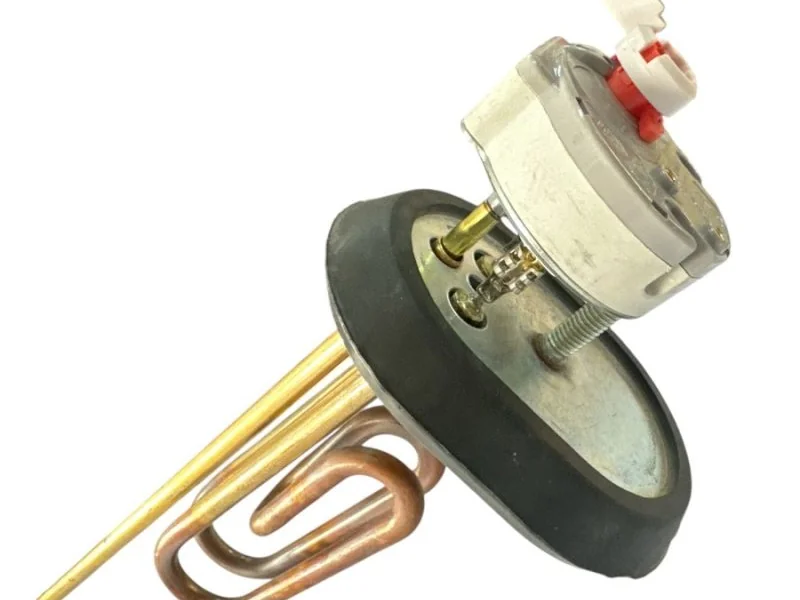
Folly Beach — the Edge of America — heats water for beach cottages, elevated homes, and a dense vacation-rental market, all in salt air that corrodes everything metal it touches. The water heater thermostat, a small electromechanical control, is no exception: corroded terminals, pitted contacts, and drifted calibration arrive earlier here than inland. In rental properties, a failed thermostat is a guest-safety issue — scalding water with strangers in the shower, or no hot water during peak season. In second homes, a stuck-on thermostat can overheat a tank for weeks between visits. This page explains how thermostats fail in the marine environment, temperature safety and calibration, thermostat-versus-element diagnosis, and what replacement involves on the island. For unsafe water temperatures now, call (833) 713-2101.
Salt Air vs. Thermostats on Folly Beach
Salt air is the island's thermostat killer. The marine atmosphere carries chlorides that corrode the thermostat's terminals, wiring connections, and the access-panel hardware around them — the green crust familiar to every beach homeowner. Corroded terminals create resistance, resistance creates heat and erratic signals, and the control's accuracy degrades: calibration drifts, switching gets unreliable, and eventual failure arrives years ahead of the inland schedule.
The failure modes are the standard ones, accelerated. Stuck-on: the control keeps calling for heat, water climbs toward scalding, the red high-limit reset trips repeatedly — a safety hazard in a rental where guests can't know the heater's history. Stuck-off: no heat call, lukewarm or cold water, angry guests in peak season. Partial: failed lower thermostat means hot water runs out fast; failed upper often means none at all.
Rental duty cycles compound the corrosion. A vacation rental's heater cycles far more than a residence's — more guests, more showers, more thermal stress on already-corroding contacts. The combination of salt air and heavy cycling is why island thermostats fail younger, and why rental owners should treat controls as scheduled-wear items rather than lifetime parts.
Under-house installations — standard in elevated Folly Beach construction — put the heater in the maximum-exposure zone: wind-driven salt air, sand, storm moisture. Thermostat access panels in these locations corrode fastest, and the wiring behind them deserves inspection at every service. When panels are replaced, corrosion-resistant hardware is worth specifying.
Guest Safety: Temperature Settings on the Island
The 120-degree Fahrenheit setting is the island's guest-safety standard. At 140 degrees, a serious scald takes seconds; at 130, about half a minute; at 120, minutes. Rental guests — including children — turn taps without knowing the heater's condition, and a drifted or stuck thermostat doesn't warn them. For every Folly Beach rental, 120 degrees verified by thermometer is the defensible, responsible setting.
Sudden scalding with no dial change means likely stuck-on failure: turn the dial down, warn occupants, call (833) 713-2101. Don't keep resetting a tripping high-limit — repeated trips confirm active failure. For second-home owners discovering overheating between visits: the tank may have been cycling hot for weeks, stressing every component — the visit should assess the whole heater, not just the control.
Calibrate with a thermometer at every turnover or season start: run the hot tap nearest the heater a full minute, fill a cup, measure. Dials run 5 to 10 degrees off normally; island drift runs larger. Log the reading per property. If temperature won't hold at the setting, the control needs replacement — adjustment can't fix corrosion-damaged contacts.
Property managers: make temperature verification part of the turnover checklist, alongside the linens and the keypad code. Five minutes with a thermometer prevents the scalding incident that no review score survives.
Diagnosing Thermostat vs. Element in Corrosive Air
Island diagnosis starts with the same sequence — power off at the breaker, verified dead, upper panel off, check the red reset — but with corrosion-aware eyes. Green-crisped terminals, swollen wire insulation, rust-streaked panels: the environment's signatures, and they affect the diagnosis, because a thermostat can test fine on the bench while its corroded connections fail in service. The honest island diagnosis inspects connections as well as components.
- No hot water: upper thermostat, upper element, tripped reset — or corroded feed connections.
- Runs out fast: lower thermostat, lower element, sediment.
- Too hot / reset tripping: thermostat stuck on — safety priority.
- Lukewarm: control not calling, element failed, or connection resistance.
Multimeter testing — thermostats for switching, elements for resistance, power off throughout — remains definitive, but the technician also cleans and evaluates every terminal and connection. Sometimes the "failed thermostat" is a corroded spade connector; the fix is cleaning and re-terminating, not a new control. Knowing the difference saves the part cost.
Gas units use the combined control valve/thermostat assembly. Salt air corrodes its exterior and pilot assemblies too; a burner that won't stay lit or a dial that won't hold temperature gets the same corrosion-aware diagnosis — professional gas work, leak-tested connections, no exceptions.
Replacement With Island Realities
Thermostat replacement on Folly Beach is 240-volt professional work with corrosion countermeasures: power off and verified dead, panels removed, both thermostats tested and replaced as a pair (standard practice — the failed one's partner has endured the same salt air), terminals cleaned and treated, new controls matched to voltage, range, and configuration, wiring transferred one wire at a time, thermostats seated firmly against the tank, temperature set to 120 degrees, full cycle run with tap verification.
The island extras: corroded access-panel hardware replaced with corrosion-resistant equivalents, wire terminals cleaned or re-terminated, and the heater's overall corrosion assessed — because a thermostat visit on a heater whose cabinet is rusting through should include an honest conversation about the tank's remaining life.
Gas control valve replacement follows the same pattern — assembly replaced as a unit, gas connections made and leak-tested, with the salt-air inspection of pilot and burner components included.
The tank-age call matters on the island, where tanks age faster: under 10 years with a sound tank, the control repair is worthwhile. Past 10 to 12 years with visible corrosion — on the tank as well as the controls — whole-heater replacement with marine-aware materials is usually the better money. The visit should assess and advise plainly; island owners benefit most from honesty about corrosion timelines. To schedule in 29439, call (833) 713-2101.
Local Insight
Folly Beach is a working beach town where the rentals never really stop — the Edge of America nickname, the Morris Island Lighthouse offshore, cottages and elevated homes serving a continuous flow of guests. Water heaters here are revenue infrastructure: they run harder, fail younger, and their failures have commercial consequences — refunds, reputation, rebookings lost. Thermostats, as wear items, deserve scheduled attention in this economy.
Salt air is the environmental constant that separates Folly Beach service from mainland service. It doesn't just age heaters faster; it changes the diagnostic approach — connections matter as much as components, corrosion inspection rides along with every electrical test, and "clean the terminals" is sometimes the whole repair. Any technician working the island who ignores corrosion is doing half the job.
Second-home owners face the between-visit risk: a stuck-on thermostat overheating a tank for weeks unnoticed, or a failed control discovered by the first guests of the season. The prevention stack — annual service with corrosion inspection, 120-degree verification, a local person checking the property — is inexpensive against a season's rental income. It's the cost of doing island business right.