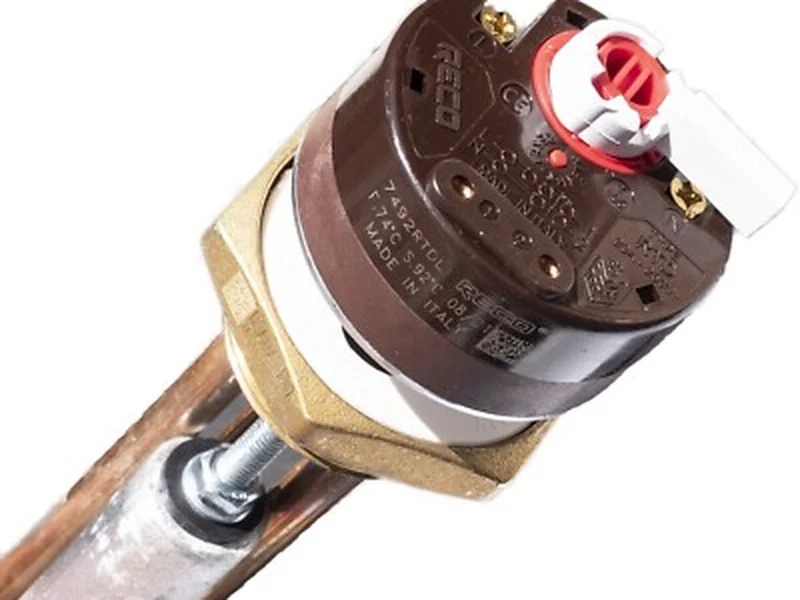
Cross is lake-country rural — scattered homes, fishing camps, and farms around Lake Moultrie's shores, nearly all on private wells, with water heaters in sheds, crawlspaces, and manufactured-home closets. The thermostat in these heaters works harder than its suburban counterpart: well-water sediment buries lower elements and blinds sensors, iron-rich water ages tanks faster, and long service drives mean a failed control should be fixed right the first time. When a Cross thermostat fails, the symptoms travel the familiar roads — scalding water from a stuck-on control, lukewarm water from a stuck-off one, hot water that quits halfway, a reset button that won't stay set. This page explains thermostat failures, temperature safety and calibration, thermostat-versus-element diagnosis, and what a rural replacement visit involves. For bad water temperatures now, call (833) 713-2101.
Well Water vs. Thermostats in Cross
Cross's private wells are the thermostat story. Lake Moultrie-area groundwater carries sediment, hardness, and iron that settle on the tank bottom and bury the lower element — and with it, the lower thermostat's ability to sense water temperature. A blinded sensor misreads the tank: it calls for heat when the water is already hot (overheating, tripping the reset) or never calls at all (lukewarm water). In well-water homes, "thermostat failure" is frequently sediment failure wearing a control's name.
The electric tank standard — two thermostats, upper and lower, sequenced with two elements — behaves the same here as anywhere, but the failure distribution skews. Lower-thermostat complaints dominate in Cross: hot water that runs out fast, because the bottom half never heats through its sediment blanket. Upper-thermostat stuck-on failures bring the safety hazard: scalding water, steam at taps, the red reset tripping as the safety fights the failed control.
Iron accelerates the aging. Iron-rich water not only sediments but corrodes — tank interiors, element surfaces, thermostat contacts in humid rural installations. A Cross tank on iron-heavy well water ages faster than its calendar years, which matters when deciding whether a failed thermostat deserves a new control or the tank deserves retirement.
The rural service principle: never replace the control without addressing the sediment. A new thermostat on a tank bottom buried in inches of well sediment inherits the same blinded sensor problem within months. The complete Cross service is diagnosis, flush, then parts — in that order.
Temperature Safety on the Lake
The 120-degree Fahrenheit setting matters everywhere; at a lake camp that fills with guests on weekends, it matters more. At 140 degrees, serious burns happen in seconds; at 130, in about half a minute; at 120, minutes of exposure. Guests — especially children — don't know your heater's quirks, and a stuck-on thermostat doesn't announce itself before the first scalding shower.
Sudden scalding with no dial change: turn the dial down, keep kids from hot taps, call (833) 713-2101. A thermostat failed on is a safety repair, not a convenience one. Lukewarm at a high setting: the control isn't calling, or sediment has blinded the sensor — the tap tells the truth.
Calibrate with a thermometer — well-water homes should do this seasonally, since sediment accumulation changes the sensor's world between checks. Run the hot tap nearest the heater a full minute, fill a cup, measure. Dials run 5 to 10 degrees off normally; more means drift. Adjust, wait hours, re-test. If temperature won't hold, the control needs replacement.
Camp owners: verify 120 degrees at season open, every season. It's a two-minute check that protects every guest who turns a tap all summer. Log it with the other season-open tasks.
Diagnosing Across the Distance
Rural distance makes accurate phone diagnosis valuable — the goal is one trip with the right parts. The symptom map: no hot water (upper thermostat, upper element, tripped reset); runs out fast (lower thermostat, lower element, sediment — the Cross classic); too hot with tripping reset (thermostat stuck on); lukewarm only (control not calling or element failed). Report the exact pattern when you call, plus electric or gas, tank age, and well details.
On site, the sequence is methodical. Power off at the breaker — always, and verified. Upper access panel off: check the red reset button. Tripped once and holds? Possibly isolated. Tripping again? The cause is active — stuck thermostat, failing element, deep sediment. Then multimeter testing: each thermostat for switching, each element for resistance, power off throughout. Sediment depth assessed in parallel — in Cross, it's part of every diagnosis, not an afterthought.
- Bring the details: brand, model, age, electric/gas, symptom pattern, well or municipal.
- Note the reset: tripped once, or repeatedly? It changes the diagnosis.
- Check access: clear a path to the heater — sheds and crawlspaces hide them.
Thermostats mount on the tank surface (no draining to replace); elements are inside (draining required). In a rural setting where the drain routing may be awkward and the visit is long, knowing which is failed before opening the drain valve saves real time and mess.
The Rural Replacement Visit
The Cross thermostat visit is planned as a single-trip resolution. Power off at the breaker, verified dead. Panels and insulation off. Both thermostats tested — and on electric heaters, replaced as a pair, since the failed one's partner has been stressed and rural callbacks are expensive. New controls matched to voltage, range, and configuration; wiring transferred one wire at a time; thermostats seated firmly against the tank; temperature set to 120; full heating cycle run with tap temperatures verified.
The sediment work rides along: the tank gets flushed as part of the visit — in Cross, skipping the flush with a thermostat replacement is malpractice-adjacent, since sediment is so often the root cause. If sediment won't flush clean, that's diagnostic information about the tank's remaining life, delivered honestly.
Gas heaters get the control valve/thermostat assembly — professional gas work, leak-tested connections, no exceptions.
The tank-age judgment is blunt in well country: under 10 years with a flushable tank, the control repair is sound. Past 10 to 12 years on iron-heavy well water — where tanks age fast — a new thermostat is usually money toward a dying tank, and whole-heater replacement is the honest call. The visit includes that assessment, plainly stated, because the drive is too long for a repair that fails next season. To schedule in Cross, call (833) 713-2101 — with your heater's details ready.
Local Insight
Cross is defined by Lake Moultrie and by distance — fishing camps, farms, and scattered homes where the water heater might be in a shed a hundred feet from the well head. Private wells are nearly universal, and lake-country well water is famously sediment-heavy: sand, hardness minerals, iron. That sediment is the thermostat story in 29436 — burying lower elements, blinding sensors, and turning control failures into sediment failures.
Seasonal camps add the idle-time dimension. A tank that sits for weeks with mineral-heavy water inside accumulates sediment passively, and the first heavy-use weekend of the season is when the blinded thermostat reveals itself — scalding or lukewarm water with a house full of guests. Camp owners should flush at season open and verify temperature before the guests arrive, not after the complaints.
The practical reality is the drive: service in Cross is a planned expedition, and a thermostat call should resolve in one trip. Precise symptom reporting by phone — the exact pattern, electric or gas, tank age, well details, reset behavior — is what makes that possible. The technician's time should go to your heater, not to a return trip for the part the symptoms already named.