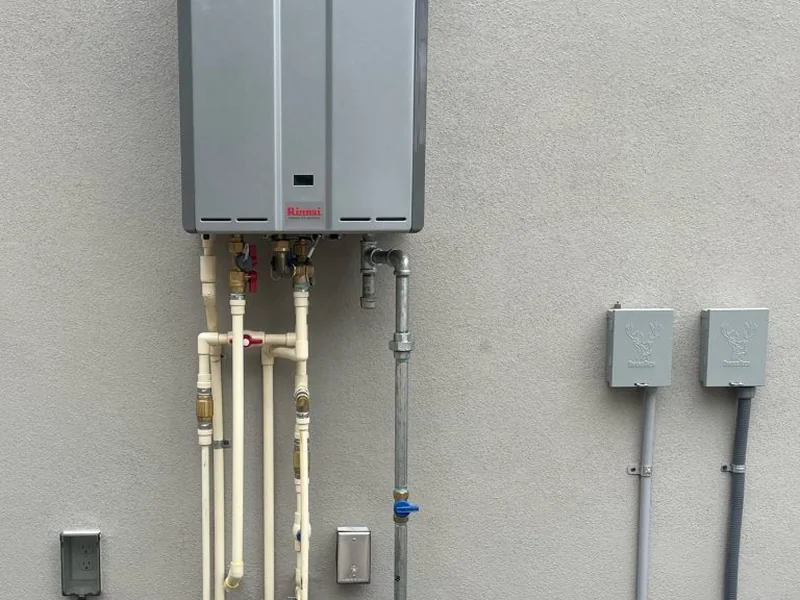
The 29420 ZIP covers southern North Charleston, where the city meets the Ashley and Cooper rivers — older mill-era and shipyard-worker neighborhoods, small homes on small lots, and a housing stock where many water heaters are well past their expected lifespan. Tankless units here are mostly retrofits and replacements: compact units threaded into the utility closets and carports of older homes, chosen for endless hot water and a footprint that fits. They inherit the neighborhood's aging plumbing — old galvanized and copper runs, dissimilar-metal joints, pressure quirks — and they work in riverside humidity that keeps crawlspaces damp year-round. When a 29420 tankless unit leaks, the repair needs to address both the failed part and the aging system around it. This page covers leak sources, early detection, descaling, and repair-versus-replace decisions for southern North Charleston. For a leaking unit now, call (833) 713-2101.
Aging Systems Meet New Technology
Southern North Charleston's tankless story is old pipes meeting new heaters. The homes went up for mill and shipyard workers decades ago; the tankless units arrived much later, as replacements and remodel upgrades. Every retrofit inherits the original plumbing: galvanized runs now past their prime, copper with decades of patina, joints and transitions in crawlspaces that have been damp since the house was built.
Dissimilar-metal corrosion is the signature failure. New brass or copper tankless fittings joined directly to old galvanized pipe create galvanic cells that eat the joint from within — accelerated by riverside humidity. The green-white crust at a transition is the tell, and in 29420 it's common enough to check every joint in the system during a leak call, not just the one that's weeping.
Scale compounds the age problem. The municipal water is moderately hard, and many 29420 units have never been flushed — installed as an upgrade, then forgotten. The scale-to-pinhole chain (mineral crust on the coil, over-firing, metal fatigue, weeping exchanger) runs its course in the seven-to-twelve-year window on unflushed units. A retrofit that skipped isolation valves makes every flush a plumbing project, which is partly why the flushing never happened.
Pressure quirks round out the picture. Older systems with original pressure regulation — or none — can run high, working relief valves and stressing every aging joint. Riverside humidity keeps crawlspaces damp, accelerating corrosion on the old runs the retrofit depends on. In 29420, the leak is often a symptom of the system, not just the unit.
Detecting Leaks in Older Homes
Older 29420 homes put water heaters in tight, original spaces — small utility closets, carports, crawlspace corners — and leaks hide in them. Monthly checks: floor and walls around the unit, every visible fitting for crust or staining, the relief-valve discharge pipe, and the crawlspace run if the plumbing passes through it. Check after hot-water use, when demand-dependent leaks appear.
Read the age signs: green-white crust at dissimilar-metal joints, orange-brown rust on old galvanized, a discharge pipe that never dries, plaster or drywall that softens near the unit. Behavior signs match: hot-cold-hot shower swings, error codes, longer hot-water waits, musty crawlspace intensification.
- Crust at transition joints — the galvanic corrosion tell.
- Error codes — note the exact code; overheating and flow codes point at scale.
- Relief valve dripping steadily — pressure, temperature, or valve failure.
- Damp crawlspace soil or stained joists — hidden weeps in old runs.
- Rust streaks on old pipe and the cabinet.
In these homes, check beyond the unit. A retrofit's old supply runs can weep independently of the heater — if the crawlspace is damp but the cabinet is dry, the leak may be in the inherited plumbing, not the tankless unit. The diagnostic visit traces the whole wet path.
Descaling and System Renewal
The descale procedure is standard — isolate at the service valves, circulate food-grade white vinegar or commercial descaler through the heat exchanger for 45 to 60 minutes, flush clean, test — but in 29420 it often comes with a companion project: bringing the installation up to maintainable condition. That means adding the isolation valves the retrofit skipped, replacing the worst dissimilar-metal transitions with dielectric unions, and verifying pressure regulation.
Done together during a leak repair, this renewal work transforms the unit's prospects. Valves make every future flush a service call instead of a project; proper transitions stop the galvanic corrosion cycle; correct pressure quiets the relief valve. The incremental labor while the system is already open is far less than three separate visits.
The interval: annually on the municipal supply, which is moderately hard. Many 29420 units are starting from zero — never flushed — so the first descale is diagnostic as well as therapeutic, revealing the exchanger's true condition. Heavy, baked-on scale that won't fully clear is itself information: it tells you how much life the exchanger has left.
A sediment pre-filter on the cold inlet is worthwhile here, catching the rust and grit that aging neighborhood lines shed. And calendar the flush — in this ZIP more than most, the units that leak are the ones whose maintenance never started.
Repair or Replace in Older Neighborhoods
The decision here weighs the unit against the system. A fitting, valve, or sensor repair on a younger unit is straightforward — but in 29420, the smart repair also addresses the system around it: the corroding transition, the missing valves, the pressure reading. Fixing the part without fixing the context schedules a callback.
Past twelve to fifteen years, or a breached exchanger on a never-flushed unit, replacement is usually the better money — and replacement in an older home is the opportunity to do the installation right: dielectric transitions throughout, isolation valves, verified pressure regulation, proper venting and condensate routing. A new unit on a renewed system starts clean in a way a repaired old unit on old plumbing doesn't.
Sizing should match the home as it is: small older homes with one or two bathrooms don't need large units, and our warm groundwater (often around 70 degrees) stretches effective capacity. An oversized unit in a small home short-cycles; correctly sized, it sips fuel and lasts. The calculation is quick and prevents a decade of mismatch.
A 29420 visit is a system visit, not just a unit visit: utilities secured, leak traced through unit and inherited plumbing, pressure read, transitions inspected, valves added where missing, part replaced, system descaled, full test. You get the whole picture, plainly explained. Call (833) 713-2101 to schedule.
Local Insight
Southern North Charleston grew up around work — the mills, the shipyards, the port — and 29420's neighborhoods still carry that history in their small homes and tight lots near the Ashley and Cooper rivers. The housing stock is among the area's oldest: mill-era cottages, shipyard-worker bungalows, post-war infill, much of it with original plumbing still in service. Water heaters here are replacements layered onto aging systems.
Riverside humidity is the environmental constant. The rivers keep the air damp and the water table high; crawlspaces stay moist year-round and corrode everything in them on schedule. Any plumbing work in 29420 has to respect that environment — corrosion-resistant transitions, sealed penetrations, and realistic expectations about component life in damp air.
The practical reality is economic: these are working-class neighborhoods where a water heater is a major purchase, not a casual one. That makes honest repair-versus-replace advice essential — repair what's repairable, renew the system details that prevent repeats, and recommend replacement only when the math genuinely favors it. No one here benefits from a premature replacement or a doomed repair.