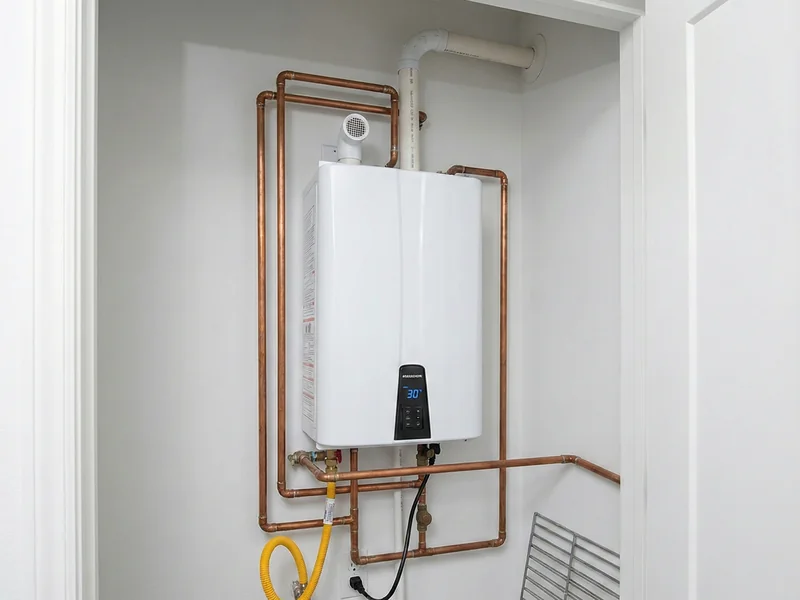
James Island sits between downtown Charleston and Folly Beach along the Folly Road corridor — a suburban island of 1960s–1980s subdivisions, newer infill, and marsh creeks threading between neighborhoods, all anchored by the James Island County Park. The housing stock is at the age where water heaters become a household topic: original tank heaters reaching end of life, and a growing population of tankless retrofits added during kitchen and bath remodels. Those retrofits are now old enough to show the classic Lowcountry pattern — scale building on moderately hard water, fittings loosening in humid crawlspaces and garages, relief valves weeping in laundry closets. When a James Island tankless unit leaks, fast diagnosis matters because island crawlspaces and finished living spaces sit close to every drip. This page covers leak sources, early warnings, descaling, and repair-versus-replace decisions for 29412. For a leaking unit now, call (833) 713-2101.
Where James Island Tankless Leaks Originate
James Island's tankless population is mostly retrofits — units added to 1960s–1980s homes during remodels, mounted in garages, laundry closets, and crawlspaces where tank heaters used to live. Retrofits inherit old plumbing, and the inheritance is where leaks start: new copper or stainless joined to aging galvanized or copper runs, threaded joints vibrating through thousands of firing cycles, dissimilar-metal transitions corroding in the island's damp air.
The heat exchanger faces scale. James Island water — Charleston Water System and James Island PSD, both moderately hard — deposits calcium and magnesium on the coil with every gallon. Family homes with multiple bathrooms and daily laundry run high volumes, so the film builds steadily. The scaled coil over-fires, the metal fatigues, pinholes open. The island's leak calls cluster in the seven-to-twelve-year window on units that missed flushing — the classic neglected-retrofit failure.
Crawlspaces deserve special attention here. Many James Island homes sit over vented crawlspaces that stay damp most of the year, and retrofit plumbing often runs through them to reach the tankless unit. Fittings in that environment corrode faster, and a weep inside a dark crawlspace can run for months — staining joists, feeding mold — before anyone connects the musty smell to the water heater. Any James Island leak check includes the crawlspace run, not just the unit.
Condensing models add the condensate drain: acidic condensate must drain freely, and garage installations with long drain runs clog or sag. A backed-up drain floods the cabinet from within. It's a minutes-long check during any service visit and a frequent answer to the mystery-puddle question.
Early Warnings in Island Subdivisions
James Island's ranch and split-level homes put water heaters in checkable places — garages, laundry rooms, carports. Use that: monthly, look at the floor around the unit, scan fittings for crust or discoloration, and glance at the relief-valve discharge pipe. Check after the morning shower rush, when demand-dependent leaks show themselves.
Mineral evidence comes first: white crust on a fitting, green on copper, a discharge pipe that never fully dries. Then behavior: hot-cold-hot shower swings as the scaled exchanger struggles, longer waits for hot water, or an error code flashing on the display. Write down any code — overheating and flow codes point at scale.
- Crust or staining on fittings, valves, or vent joints.
- Relief valve dripping steadily rather than occasionally.
- Musty crawlspace or closet odors — moisture reaching wood.
- Soft or discolored drywall near a wall-mounted unit.
- Reduced hot-water flow — scale narrowing the coil.
The crawlspace check matters most here. If your retrofit's plumbing runs through the crawlspace, get under there twice a year with a good light: look for damp soil, stained joists, and crust on fittings along the run. Island crawlspaces hide leaks longer than anywhere else in the house, and the damage they hide is the most expensive to repair.
Descaling for James Island Water
James Island's water is moderately hard — manageable with discipline, punishing without it. The annual descale is the standard: isolate at the service valves, circulate food-grade white vinegar or commercial descaler through the heat exchanger with a pump for 45 to 60 minutes, flush clean with fresh water, test. Done yearly, it holds the coil near factory condition and the unit to its 15-to-20-year design life.
Many island retrofits lack isolation valves — the installer tied into existing plumbing and skipped them. Adding valves during any repair visit is the highest-value upgrade available: it turns every future flush from a plumbing project into a routine service call. The incremental labor while the system is already open is small.
High-use households should watch the signs that suggest a tighter interval: energy use creeping up with steady habits, temperature swings at the shower, longer hot-water waits. Scale tracks gallons, and a busy family home can double a smaller household's throughput on the same moderately hard water.
A sediment pre-filter on the cold inlet is the other smart addition, catching grit from aging neighborhood service lines before it reaches the flow sensor and exchanger. And calendar the flush — the James Island units that develop exchanger leaks are, without exception in our experience, the ones whose last descale nobody can recall.
Repair or Replace on James Island
Under ten years old, repair is the default: relief valves, gaskets, fittings, condensate drains, flow sensors, igniters — all replaceable parts. A proper repair bundles the preventive checks — inlet pressure, venting, condensate slope, a descale while the cabinet is open — so the fix lasts. A younger unit repaired and flushed has another decade-plus ahead.
Past twelve to fifteen years, or with a breached heat exchanger and no flush history, replacement deserves a straight look. Individual exchanger replacement is possible, but on a heavily scaled older unit the neighboring components are degraded and the labor narrows the gap to a new unit with a fresh warranty and current efficiency.
Replacement invites a sizing review, because island retrofits were often sized by guesswork. Tankless capacity is rated by temperature rise at flow; our warm incoming groundwater (often around 70 degrees) keeps the required rise modest, so a correctly calculated mid-size unit usually serves the house. Oversized short-cycles, undersized strains perpetually — the calculation takes minutes and prevents a decade of compromise.
A 29412 visit runs the island arc: utilities secured, leak confirmed with the unit running, crawlspace plumbing run inspected, pressure and venting verified, condensate checked, part replaced, system descaled, hot water tested at multiple fixtures. You get a plain explanation of the failure and a maintenance interval for your household. Call (833) 713-2101 to schedule.
Local Insight
James Island is the in-between island — suburban, settled, threaded with marsh creeks, anchored by the County Park, and strung along the Folly Road corridor between downtown and the beach. The subdivisions went up mostly in the 1960s through 1980s, which puts the housing stock squarely in the water-heater replacement window: original tanks failing, retrofits aging, remodels adding tankless units to footprints designed for tanks.
The island's crawlspaces are the defining service factor. Vented, damp, and often tight, they hide both the plumbing runs and the leaks. A weeping fitting in a James Island crawlspace can run for a season before the musty smell prompts investigation — and by then joists are stained and mold has a foothold. Twice-yearly crawlspace checks with a good light are the highest-value habit an island homeowner can adopt.
Folly Road itself is the commercial spine — and a reminder of the island's commuter character. Quick access to downtown, West Ashley, and Folly Beach makes James Island a bedroom community, which means most water heaters sit idle all day and work hard morning and evening. That cycling pattern — cold, hot, cold — is exactly what stresses fittings and exchangers, another quiet argument for the annual descale.