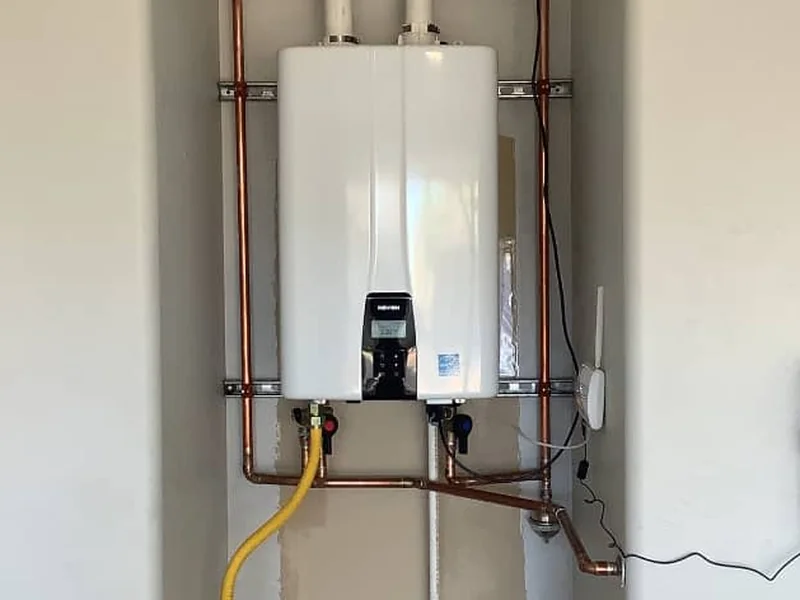
Huger is deep Lowcountry — a rural community wrapped by the Francis Marion National Forest, threaded by the Wando River and tidal creeks, where homes sit on acreage among pines and historic plantation lands. Private wells are nearly universal in the 29450 area, and the water they produce is famously variable: hardness, iron, and sulfur shift from well to well. Tankless water heaters serve these scattered homes well — compact, efficient, no tank to rust in a damp crawlspace — but the combination of mineral-heavy well water, humid forest air, and long service drives creates a demanding environment. Scale builds fast on unflushed exchangers, fittings corrode in the damp, and a leak in a crawlspace or shed can run unnoticed for weeks. This page covers where Huger tankless leaks start, how to catch them, well-water descaling, and repair-versus-replace decisions. For a leaking unit now, call (833) 713-2101.
Forest Humidity Meets Well Water: Huger's Leak Recipe
Huger pairs two leak accelerants: aggressive well water inside the pipes and saturated forest air outside them. The wells of the 29450 area commonly produce hard, iron-bearing water — sometimes with sulfur — and a tankless heat exchanger concentrates all of it onto a small coil of hot metal. Calcium and magnesium plate as scale; iron bakes into the layer. The scaled coil over-fires, the metal fatigues through violent thermal cycling, and pinholes open. On an unflushed unit, this chain can complete in under a decade.
Outside the pipes, the Francis Marion forest climate works on every fitting. Humidity rarely drops, pine pollen coats surfaces in a moisture-trapping film, and equipment in crawlspaces, sheds, and carports sits in essentially outdoor air year-round. Brass and copper fittings corrode, threaded joints weep, and the green crust of verdigris becomes a familiar sight. A joint that would last fifteen years in a conditioned closet may weep at eight in a Huger crawlspace.
Well pressure adds the third stress. Pressure tanks set high to serve long runs and irrigation keep the whole system — including the tankless unit — at the upper edge of its comfort zone. Relief valves weep, fittings strain, and the weakest joint declares itself. Every Huger leak diagnosis includes a pressure reading at the unit; the number often explains the symptom.
Finally, the wildlife of rural plumbing: rodents and insects in crawlspaces and sheds chew insulation, nest near warm equipment, and occasionally damage drain lines and wiring. A condensate drain chewed through or a sensor wire nicked can mimic or cause leak symptoms. The rural service check looks at the surroundings, not just the unit.
Catching Leaks Across Acreage
Huger homes are spread across acreage, and their water heaters are frequently remote — a shed, a crawlspace far from the living area, a utility corner of a barn-adjacent garage. Quarterly checks are the minimum; monthly is better. Always check after hot-water use, when demand-dependent leaks reveal themselves.
Read the evidence: white mineral crust or orange iron staining on fittings, a relief-valve discharge pipe that never dries, damp soil or stained joists in the crawlspace below the unit, rust streaks on the cabinet. In forest country, also look for the non-plumbing signs — chewed insulation, nesting material near the unit, drain lines pulled loose.
- Error codes for overheating or flow — note the exact code before calling.
- Hot-cold-hot shower swings — the scaled coil's signature.
- Sulfur or metallic smells in hot water — well chemistry warning.
- Iron staining at fixtures — visible proof of exchanger-hostile water.
- Musty crawlspace odors intensifying — water reaching wood.
Long driveways and gated properties are a practical consideration: when you call, mention access details — gate codes, dogs, which outbuilding holds the unit. A technician who can walk straight to the heater resolves the call in one trip; one who spends forty minutes finding it may not.
Descaling on Variable Forest Wells
Huger wells vary so much that the only responsible advice is: test first, schedule second. A hardness and iron test — inexpensive through well service companies — tells you whether your well is moderate, hard, or extreme, and the flush interval follows: annual for moderate wells, every six months for hard or iron-heavy ones. Neighbors' schedules are irrelevant; the aquifer doesn't respect property lines.
The flush itself is standard: isolate at the service valves, pump food-grade white vinegar or commercial descaler through the heat exchanger for 45 to 60 minutes, freshwater flush until clear. Iron-heavy scale sometimes needs a second pass or a purpose-made descaler. What matters in Huger is actually doing it on schedule — the forest's humidity won't pause scale, and the wells don't get softer with age.
Isolation valves and a sediment pre-filter are the two upgrades that pay for themselves fastest here. Valves make flushing a service call instead of a plumbing project; the filter stops the sand and grit that forest wells carry from abrading the flow sensor and lodging in the exchanger. For sulfur wells, the upstream treatment conversation belongs with a water treatment professional — the heater can be descaled and protected, but the chemistry should be addressed at the source.
Schedule flushes for the shoulder seasons — spring and fall — when the weather is cooperative and the unit isn't fighting summer demand or winter chill. And after any well pump service or pressure tank work, re-check the pressure at the unit; well work frequently changes the pressure the heater sees.
Repair or Replace in the Forest Corridor
The tyranny of distance governs Huger decisions: every trip is long, so fixes must be durable. On units under ten years old, component repairs — valves, fittings, gaskets, sensors, condensate drains — are straightforward and worth doing, bundled with valve installation and a descale that sets up simple future maintenance. A single thorough visit beats two quick ones.
A breached heat exchanger on an older, unflushed unit points to replacement, and the replacement conversation in Huger must include water. A premium unit on extreme well water with no treatment plan is a scheduled repeat failure. Minimum: isolation valves, sediment pre-filter, tested flush interval. For the hardest wells, a softener discussion is honest advice, not an upsell.
Siting deserves thought at replacement time. Moving a unit from a damp, critter-accessible crawlspace corner to a more sheltered, accessible location — where feasible — cuts corrosion, eases future service, and shortens leak-detection time. The incremental piping cost is small against a decade of easier maintenance.
Make the visit count: brand, model, age, well details, error codes, and access notes by phone beforehand. On site: utilities secured, leak traced with the unit running, pressure read against the well setting, venting and condensate verified, surroundings checked, repair completed, system descaled, full test. One trip, resolved. Call (833) 713-2101.
Local Insight
Huger is defined by the Francis Marion National Forest and the Wando River — pine woods, tidal creeks, historic plantation lands at Cainhoy, and homes scattered across acreage. It's beautiful country and demanding country for plumbing: saturated air, variable wells, long distances, and equipment tucked wherever it fit. Tankless units suit the scattered settlement pattern — efficient, compact — but they need owners who respect the environment.
The forest climate is the differentiator from other rural areas. Humidity here is essentially constant, pollen season coats everything in a moisture-holding film, and the woods press close to homes and outbuildings. Fittings corrode faster than in open farmland, and crawlspaces stay damp year-round. The maintenance response is straightforward: inspect more often, keep vegetation cut back from equipment, and don't let a weep ride.
Access is the practical reality. Huger's addresses can be hard to find and slow to reach — long dirt drives, gates, minimal signage. When you schedule service, be as precise a guide as you can: exact directions, gate codes, a marked path to the unit, pets secured. The technician's time should go to your water heater, not to finding it.