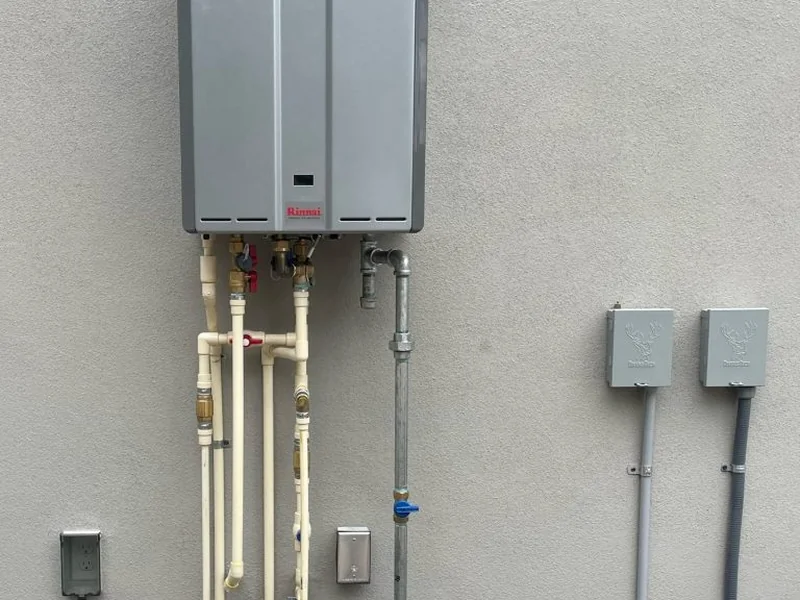
Folly Beach — the Edge of America — is a barrier island of beach cottages, elevated homes, and vacation rentals, where the Morris Island Lighthouse watches over a community that lives with salt air, sand, and surf. Tankless water heaters are everywhere here: compact enough for a cottage utility closet, powerful enough for a rental's back-to-back showers and outdoor rinse stations. But the island environment is punishing on plumbing. Salt air corrodes brass fittings, copper lines, and steel cabinets at an accelerated pace. Sand works into every outdoor connection. Elevated homes put heaters in vented crawlspaces underneath, where humid ocean air never stops moving. When a Folly Beach tankless unit leaks — weeping from a corroded fitting, dripping from a relief valve, or flashing error codes after a storm — the cause usually traces to corrosion, scale, or storm-stressed connections. This page covers island-specific leak sources, early warnings, descaling, and repair decisions. For a leaking unit now, call (833) 713-2101.
Salt Air and Sand: Why Folly Beach Units Leak
On a barrier island, corrosion is the headline leak cause. Salt air doesn't need direct ocean spray to do damage — the ambient marine atmosphere carries enough chloride to pit brass fittings, corrode copper joints, and rust steel cabinets and venting. A tankless unit's threaded connections, relief valve, and service valves are all metal, all exposed, and all slowly corroding from the day of installation. The first sign is usually a green-white crust at a joint; the second is a weep that no longer stops.
Outdoor and under-house installations multiply the exposure. Many Folly Beach homes are elevated, with the water heater mounted in the open or vented space beneath the house — exactly where wind-driven salt air and sand circulate freely. Sand is abrasive: it works into threads, scores valve seats, and settles in condensate drains. A unit under a beach house lives a harder life than the same unit in a mainland garage, and its fittings should be inspected on a shorter cycle.
Scale plays its part too. Folly Beach's municipal water is moderately hard, and rental properties run enormous hot-water volumes — guests showering between beach sessions, outdoor showers rinsing sand all afternoon. High gallons plus moderate hardness equals steady scale accumulation on the heat exchanger, with the familiar endgame: over-firing, metal fatigue, pinhole leaks. Rental owners who skip descaling are effectively choosing a shorter unit life.
Storms add the final stressor. Tropical systems drive rain horizontally into vent terminations and outdoor cabinets, and power surges from storm-related outages can damage control boards. After any major storm, a quick check of the unit — standing water in the cabinet, new error codes, damp venting — catches storm-related problems before they become leaks.
Leak Warnings in Cottages, Rentals, and Elevated Homes
Beach rentals complicate leak detection because the person who notices the symptom is a guest, not the owner. Train your cleaners and property managers to report: water under the utility closet, a shower that runs hot-cold-hot, an error code on the display, or a relief valve discharge pipe that stays wet. Those four reports cover nearly every tankless leak mode on the island.
For owner-occupied cottages, the checks are hands-on. Look at every visible fitting for crust or discoloration — on Folly Beach, corrosion shows as green on copper and brass, orange-brown on steel. Feel the wall behind a wall-mounted unit for dampness. Check under the house after heavy hot-water use; a puddle that appears only after showers points to a demand-dependent leak in a fitting or the exchanger.
- Error codes — overheating, flow, or ignition codes; photograph the display.
- Corrosion crust on any fitting, valve, or vent joint — the island's early warning system.
- Relief valve dripping steadily — pressure, temperature, or a failed valve.
- Sand in the condensate drain or around outdoor connections — abrasive wear in progress.
- Musty smells in the utility space — water reaching wood framing.
- Rust streaks on the cabinet — the enclosure itself corroding.
Elevated homes have a specific vulnerability: a leak under the house can run for weeks unnoticed, dripping onto sand or soil where it leaves little trace. If your heater lives beneath an elevated home, make the under-house check part of your monthly routine — a flashlight and two minutes is all it takes.
Descaling and Maintenance in the Marine Environment
Descaling on Folly Beach follows the standard procedure with island adjustments. The flush itself — isolate at the service valves, circulate food-grade white vinegar or commercial descaler through the heat exchanger with a pump for 45 to 60 minutes, freshwater flush, test — is the same. The interval is what changes: rental properties with high guest turnover should flush every six months, because their gallon counts dwarf a residence's. Owner-occupied cottages can usually stay annual.
Sand management is the island-specific addition. A sediment pre-filter on the cold-water inlet is strongly recommended here — not just for well-style grit, but for the fine sand that infiltrates outdoor and under-house plumbing. The filter protects the flow sensor and the exchanger from abrasive wear, and it keeps the condensate drain clearer.
Corrosion inspection should ride along with every flush. A technician servicing a Folly Beach unit checks every fitting, the relief valve, vent joints, and the cabinet for the green and orange signatures of marine corrosion, and replaces suspect components before they weep. Dielectric transitions where dissimilar metals meet are especially important in salt air; many island leaks start at a galvanic joint that was fine on the mainland.
Storm-season readiness rounds out the program. Before hurricane season, verify the condensate drain is clear, vent terminations are intact, and the unit's electrical connections are sound. After a storm, check for water intrusion in the cabinet and new error codes. An hour of seasonal attention prevents the corrosion-plus-storm combination that kills island units early.
Repair or Replace at the Beach
At the beach, corrosion age and calendar age are different things. A ten-year-old Folly Beach unit may have the fitting condition of a fifteen-year-old mainland unit — salt air simply accelerates the timeline. That shifts the repair-or-replace line: component repairs (valves, fittings, sensors, condensate drains) remain worthwhile on units with sound heat exchangers, but a corroded cabinet plus a scaled exchanger on a twelve-year-old unit usually argues for replacement.
Replacement at the beach is also a materials conversation. Stainless-steel venting, corrosion-resistant fittings, and a cabinet rated for marine exposure last measurably longer than standard components in salt air. The incremental cost is modest against the installed cost, and it pays back in years of service. Siting matters too — moving a replacement from fully exposed under-house mounting to a more sheltered position, where feasible, cuts the corrosion rate.
Sizing for rentals needs a realistic fixture and occupancy count. Tankless capacity is rated by temperature rise at flow; our warm groundwater helps, but a rental that runs three showers plus an outdoor rinse station simultaneously needs the math done honestly. An undersized unit in a rental runs at maximum fire all summer, scaling fast and failing early. Size for the peak Saturday in July, not the quiet Tuesday in February.
A Folly Beach service visit covers the island checklist: utilities secured, leak traced with the unit running, corrosion survey of every fitting and joint, inlet pressure checked, condensate and venting verified, repair completed, system descaled, full test at multiple fixtures. Expect straight talk about which components the salt air has claimed and what's still sound. Call (833) 713-2101 to schedule.
Local Insight
Folly Beach is a working beach town, not a resort facade — the Edge of America nickname is earned. Cottages from the mid-20th century stand beside new elevated builds, the Morris Island Lighthouse keeps its offshore watch, and a large share of the housing stock serves the vacation-rental market. Water heaters here work harder than their mainland counterparts: more showers per day, outdoor rinse stations running sand-filled water, and salt air attacking every metal surface around the clock.
The elevated-home factor is unique to the islands. Flood-zone construction puts living space up and utilities underneath, which means tankless units often hang in open, vented space beneath the house — maximum exposure to salt air, sand, and storm-driven rain. These installations need more frequent inspection than a garage unit, and owners should budget for shorter component life on fittings and valves even when the heat exchanger itself is healthy.
Finally, the rental economy sets the maintenance tempo. A Folly Beach rental's tankless unit can heat several times the gallons of a residence, compressing every scale and wear timeline. Rental owners who put descaling and corrosion checks on a six-month calendar — timed before and after the summer season — spend far less over a unit's life than those who wait for the first guest complaint about cold showers.