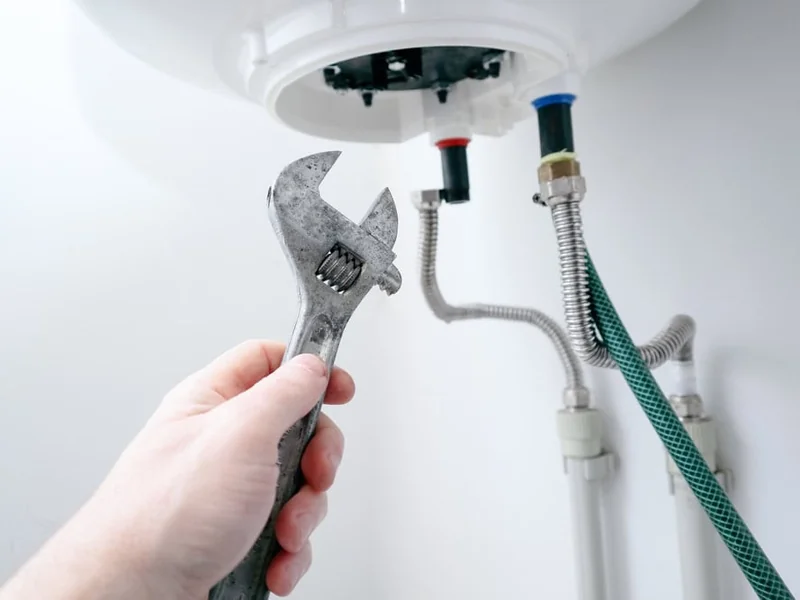
Saint Stephen is small-town Berkeley County at its most genuine — a quiet town on the edge of Lake Moultrie, where the houses are modest, the lots are generous, and the water heaters are expected to do their job without ceremony. In the 29479, a leaking tank is usually discovered the small-town way: noticed during a routine day, mentioned to a neighbor, dealt with practically.
The practical approach is also the correct one. Most Saint Stephen leaks are component failures — a weeping drain valve, a tired T&P relief valve, a corroded supply connection — each repairable on a tank with life remaining. But lake-country well water ages tanks faster than town water, so the honest assessment matters: some leaks mark a tank's natural end, and saying so plainly saves the homeowner from spending repair money on a replacement problem.
Our Saint Stephen service is small-town service: show up, find the real problem, fix what is fixable, and tell the truth about the rest. We trace every leak to its source, read the tank's condition with the evidence in front of you, and recommend only what the unit actually needs. Call (833) 713-2101 when water appears where it should not.
First Minutes: Your Saint Stephen Leak Response
Water around your heater is a call to action, not a puzzle to ponder. Here is the first-minutes sequence for Saint Stephen homeowners.
Stop the water. Close the cold-water shutoff valve above the tank — clockwise, lever across the pipe. In Saint Stephen's older homes this valve may be original and stiff from decades of disuse: firm, steady pressure, never force to the breaking point. If it will not move, use the main house shutoff, often near the well pressure tank.
Cut the energy. Electric: the dedicated breaker, off. Gas: control knob to pilot or off. If water has reached wiring, controls, or the burner area, leave the unit alone entirely until we arrive — no hot water is worth the hazard.
Contain and document. Towels at the base, a bucket under active drips, valuables moved clear. Photograph exactly where water appears — top, side discharge pipe, or base. That single detail focuses our diagnosis and decides which parts come on the truck.
The don'ts
Do not cap, plug, or crimp the T&P discharge pipe — it is a safety device, and blocking it risks dangerous over-pressurization. Do not pour sealants into the tank. And do not let the drip wait for a convenient week: in Saint Stephen's humid air, standing water molds quickly, and a seeping shell can fail without further warning. Call (833) 713-2101, describe what you see, and we will walk you through everything that follows.
The Anode Rod: Saint Stephen's Quiet Tank Saver
Inside every Saint Stephen tank hangs the component that most decides its fate — and almost nobody in the 29479 has ever seen theirs. The anode rod deserves an introduction.
The rod, magnesium or aluminum, is engineered to corrode so the steel shell does not. It is sacrificial and consumable: over years it dissolves, and when the metal is gone, corrosion transfers to the tank. The handoff is silent. The first visible evidence — a pinhole leak, rusty hot water, sulfur odor — arrives months or years after protection actually ended.
Saint Stephen's well water accelerates the timeline. Iron, sediment, and mineral content typical of lake-region groundwater consume rods faster than their ratings; water softeners, where present, accelerate it further through higher conductivity. A rod rated for five years may be spent in two or three on a 29479 well — invisibly, until the tank starts telling the story instead.
The check that pays for itself
Inspection is quick and definitive: pull the rod, look at it, know exactly where protection stands. Replacement on a mid-life tank with a sound shell is a high-return service in home maintenance — modest cost buying years of tank life. We check rod condition during leak visits because it reveals how long the tank has been exposed, which directly shapes the repair-or-replace verdict. If your Saint Stephen heater is past year five and the rod is a mystery, treat it as overdue. Small-town practicality says: maintain the thing, don't replace the thing.
Pressure in Disguise: When Your Saint Stephen Heater Isn't Leaking
Some Saint Stephen "leaks" are pressure problems in disguise — and the disguise is convincing enough to have cost homeowners real money on wrong fixes. Here is the mechanism.
Every heating cycle expands the tank's water slightly. Modern plumbing components — check valves, pressure-reducing valves, backflow preventers — increasingly close the system, trapping that expansion. Pressure spikes each cycle; the T&P relief valve opens to bleed it off, performing exactly its designed function. The discharge pipe drips. The homeowner concludes the valve is bad. A new valve is installed. The dripping resumes within days — because the valve was never the defect.
Well systems add a rural variant: waterlogged pressure tanks and misadjusted pressure switches that swing house pressure and keep the relief valve working overtime. We check well pressure-tank behavior early on Saint Stephen calls, because it is a frequent co-conspirator.
The fix that actually fixes it
Pressure gets measured on every leak visit — no exceptions. Sustained readings above 80 psi identify the mimic, and the lasting correction is a thermal expansion tank on the cold-water line, a small pressurized vessel absorbing each cycle's expansion, plus correction of any well pressure-tank or switch issues. Resolve the pressure and the "leak" ends permanently, while the tank, valves, and fixtures gain system-wide protection. If your discharge pipe drips despite a newer T&P valve, stop replacing valves and get the pressure tested.
Saint Stephen Rentals: Leak Roles and Straight Service
Saint Stephen's rental stock — modest single-family homes, manufactured-home rentals, rural properties — sees regular water heater leak calls, and clear roles make them go smoothly.
Tenants: close the cold-water valve above the tank if safe, contain the water with towels, and notify your landlord immediately — in writing, with photos and dates. Do not authorize major repairs yourself; the heater belongs to the property owner. Documented notice protects you if damage spreads.
Landlords: in this humid lake-country air, a slow leak becomes mold and subfloor damage with remarkable speed — fast, documented response is asset protection, plain and simple. For multiple properties, periodic heater checks (rod condition, T&P function, pan drainage, pressure) turn tenant emergency calls into scheduled maintenance. The economics are not close.
Small-town rental service
We handle Saint Stephen rental calls the way the town expects: promptly, honestly, and with documentation. Written findings with photos, straight repair-or-replace recommendations, scheduling that respects occupied homes. In a small town, every service call is also a reputation event — landlords remember who solved the problem cleanly and who created new ones. We aim to be the first kind of memory: the technician who diagnosed it right, fixed what was fixable, and told the truth about the rest.
Local Insight
Saint Stephen sits in northern Berkeley County near Lake Moultrie's upper reaches — a small incorporated town surrounded by rural countryside, timber land, and lake-influenced lowlands. The 29479 runs on private wells as the rule, and lake-region groundwater brings the mineral profile that defines local water heater service: iron, sediment, and hardness that deplete anode rods early, clog drain valves, and shorten shell life compared with municipal supplies.
Housing is modest and long-held: older frame homes, manufactured housing, rural properties where water heaters occupy crawl spaces, sheds, and utility rooms on installations that often predate modern containment practice. High water tables and lake humidity keep those spaces damp; exterior fittings corrode steadily; and distance from major service centers makes every trip count — which is why we diagnose and usually repair in a single visit.
Saint Stephen's unhurried character should not be mistaken for indifference to quality. Homeowners here remember who treated them straight and who did not — reputation travels fast in a small town. We earn it the only way that works: honest diagnosis, fair scope, clean work, and plain explanations.