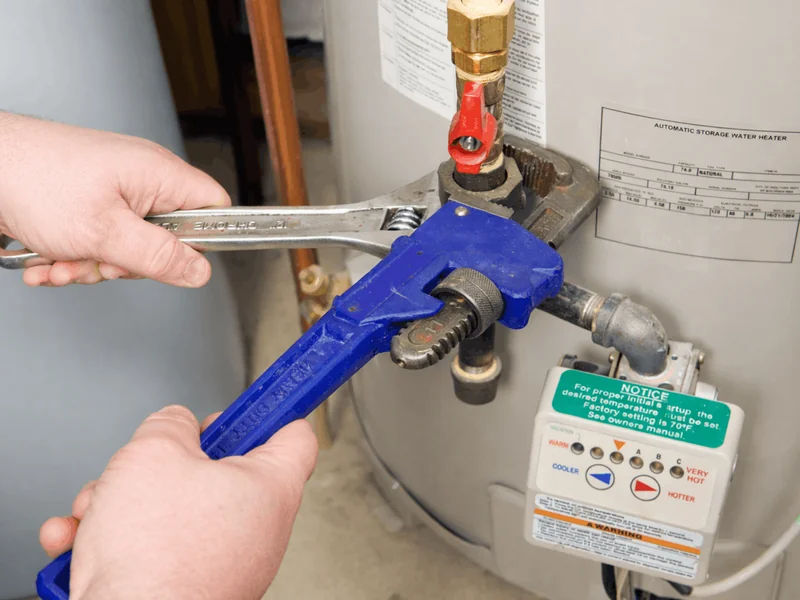
South North Charleston's 29420 is post-war Lowcountry: modest ranch homes and bungalows from the 1940s through the 1970s, the Dorchester Road corridor, neighborhoods built for the region's industrial workforce and still lived in by their families. Its water heaters are veterans — many on second or third tanks, but often still served by original valves, original supply lines, and installations that predate modern containment practice entirely.
Leaks here follow the logic of age. Components that have endured forty years of thermal cycling in humid air eventually surrender: drain valves weep, supply unions corrode, T&P valves tire. These are repairs — straightforward, economical, and well worth doing on tanks with life remaining. But age also means shells: tanks that have never been flushed, never had a rod checked, finally seeping at the base seam after decades of quiet internal wear.
Our 29420 visits respect both the homes and their history. We trace each leak to its source with extra care for legacy plumbing, assess the tank's true condition, and deliver a verdict grounded in evidence: fix the part, or retire the vessel. Older homes deserve the same honest diagnosis as new ones — arguably more, because the stakes of guessing wrong are higher. Call (833) 713-2101 when water appears where it should not.
Containment in Older 29420 Installations: Pans and Discharge Lines
In the 29420's older homes, drain pans and discharge routing are frequently absent — not out of negligence but because the installations predate the practice. A leak here meets no containment at all, which makes these details worth addressing during every repair visit.
The pan principle is simple and absolute: a pan that does not drain is not protection. We find 29420 heaters sitting directly on concrete, on wood subfloor, and in one memorable case on bare earth in a crawl space — no pan, no drainage, no chance. Correct practice places a pan beneath the tank with a dedicated drain line to a floor drain, the exterior, or another approved termination, so even a major failure is carried away from the structure.
The T&P discharge pipe gets the same scrutiny. It must fall from the valve and terminate where discharge is visible but harmless. In these older installations we encounter pipes that end inside walls, discharge into crawl spaces unseen, or were severed during long-ago remodels. A relief valve whose discharge nobody can see is a safety device operating blind.
Correcting decades of omission
Adding a drained pan or re-routing a discharge line is modest work against the damage an uncontained leak causes — and in the 29420's humid air, uncontained water molds with speed. We assess every installation we touch, explain what modern practice requires, and price corrections plainly. For older homes, this is also the moment to evaluate the shutoff valve and supply lines: original-era components often deserve retirement alongside the failed part, and we will say so honestly with the reasoning attached.
Pressure Events in Aging 29420 Plumbing
A significant share of 29420 "leaks" are pressure events, and the area's aging plumbing makes the pattern especially common. Understanding it prevents paying for the wrong fix.
Each heating cycle expands the tank's water slightly. Where older open systems let that expansion breathe back toward the supply, the 29420's homes have accumulated check valves, pressure-reducing valves, and backflow preventers over decades of updates — closing systems incrementally. The trapped expansion spikes pressure every cycle; the T&P relief valve opens to bleed it off, exactly as designed. The discharge pipe drips. The valve gets blamed. A replacement valve is fitted — and drips again, because pressure was the culprit all along.
Aging pressure-reducing valves add a local twist: a PRV installed in the 1980s may no longer regulate, sending house pressure high enough to keep the relief valve working constantly while stressing every fixture and supply line in the home.
Measure first, fix once
We measure house water pressure on every leak visit — non-negotiable in the 29420. Sustained readings above 80 psi identify the mimic, and the lasting correction is a thermal expansion tank on the cold-water line absorbing each cycle's expansion, plus PRV evaluation and replacement where the old regulator has failed. Fix the pressure and the "leak" ends permanently while the entire plumbing system gains years. If your heater's T&P valve has been replaced before and still drips, stop replacing the valve and call (833) 713-2101 for the pressure test that should have come first.
Decades of Sediment: Why 29420 Tanks Need Flushing Now
If there is one maintenance habit the 29420's tanks need most, it is flushing — because almost none of them have ever had it. Here is what decades of neglect accumulate.
Mineral grit precipitates out of heated water and settles: calcium, magnesium, sand, silt. In a never-flushed tank it builds into a deep insulating blanket across the bottom, exactly where the burner or lower element works. The heater fires longer and hotter to heat through the mineral layer — wasting energy for years — while water trapped in the sediment bed flashes to steam, producing the rumbling and popping that owners of older 29420 tanks know well.
The cumulative effect is base failure. Thermal shock cycles weaken the tank's bottom precisely where shells most often breach, and the drain valve — submerged in grit for decades — clogs, corrodes, and eventually weeps, becoming a leak source itself. We regularly drain 29420 tanks that produce gallons of sediment before running clear: the visible proof of years of accumulation.
Starting the habit late
Annual flushing is the cadence, even — especially — for older tanks, with one caution: on a severely neglected unit, the first proper flush sometimes reveals a drain valve too far gone to reseal, and we will tell you that possibility upfront. We inspect the valve during service and replace it when needed. Combined with an anode rod check, establishing the flushing habit now is high-impact maintenance for an older 29420 heater — a modest service against the early replacement that neglect otherwise brings on.
Honest Timelines for Older-Home Leak Work
Timelines in the 29420 come with an honest caveat: older installations add variables. Here is what to realistically expect.
Diagnosis: typically under an hour, sometimes more. Source tracing and condition assessment are standard, but legacy installations reward extra diligence — distinguishing decades of exterior corrosion from shell failure, verifying which original-era components remain serviceable, mapping nonstandard piping. That care is the visit's value.
Component repair: one visit, usually a few hours. Drain-down, part replacement, refill, purge, test. The 29420 variable is seized original valves and corroded legacy fittings, which can extend the work — we identify this during diagnosis and tell you before starting, not after.
Replacement, when warranted: options and timing presented before anything is disconnected, with attention to legacy transitions — old pipe sizes, nonstandard venting on gas units, access through older home layouts.
Honesty about old-house variables
We will not quote firm times before seeing the unit; anyone who does is guessing past the evidence. What we commit to instead: thorough diagnosis, clear communication at each step, clean work with protection for your home, and hot water restored as fast as careful work allows. Most 29420 leak calls still resolve the same day. When an older installation genuinely needs more — a corroded-shut valve replacement, a piping transition — you will know why, what it involves, and exactly when it completes before we begin.
Local Insight
The 29420 covers south North Charleston — the post-war neighborhoods along and around Dorchester Road, built substantially between the 1940s and 1970s for the area's industrial and military workforce. Housing is modest and sturdy: concrete-block and frame ranch homes, small bungalows, and duplexes, many still carrying original plumbing infrastructure beneath decades of updates. Water heaters sit in carports, utility rooms, crawl spaces, and garage corners on installations that span the full history of local practice.
Charleston's municipal water serves the area at moderate hardness, but the defining water factor in the 29420 is neglect-by-era: generations of tanks that were never flushed and never had anode rods inspected. Sediment-heavy, rod-depleted tanks are the norm here, which compresses realistic lifespans and makes the condition assessment the most important part of any leak visit. Humidity and high water tables corrode exterior fittings continuously.
The area's working-class character shapes service expectations: fair, honest work at a fair scope — no more, no less. That is our operating principle in the 29420. Diagnose accurately, recommend only what the evidence supports, do clean work, and explain everything in plain terms.