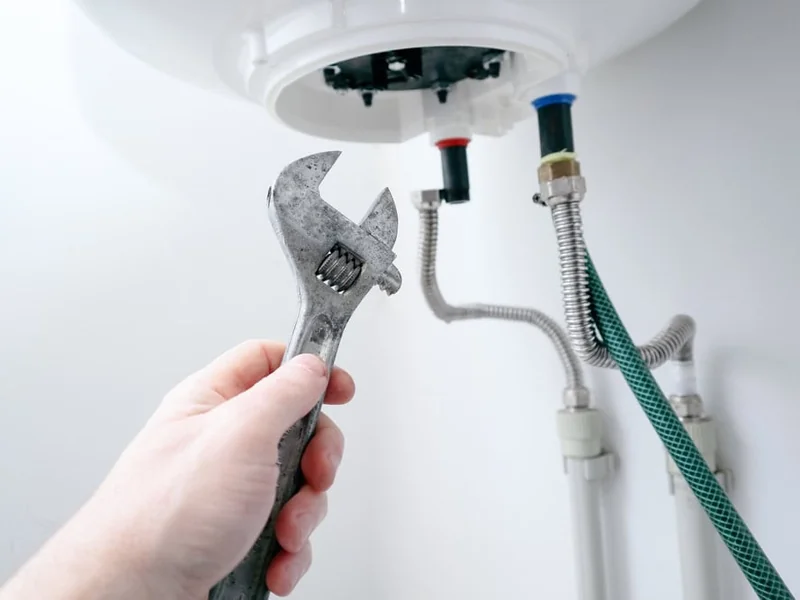
Mount Pleasant sets a high bar — for homes, for neighborhoods, and for the service those homes receive. From the Old Village's historic streets to the planned communities along Coleman Boulevard and the growth corridors toward Carolina Park, the 29464's water heaters sit in well-kept garages, utility rooms, and laundry spaces. When one starts leaking, homeowners here expect what they expect from everything else: precision, cleanliness, and straight answers.
The leaks themselves are refreshingly ordinary. A T&P relief valve weeping from pressure, a drain valve surrendering after years of sediment, supply connections corroded by humid garage air — the standard cast, in nicer surroundings. What distinguishes a Mount Pleasant leak call is rarely the failure; it is the standard of the response: protection for finished spaces, diagnosis you can watch, and a recommendation backed by evidence rather than assertion.
That is the service we bring to the 29464. We trace every leak to its actual source, assess the tank completely — rod, water clarity, pressure, exterior — and give you the verdict plainly: repair the component, or replace the vessel. No jargon, no pressure, no mess left behind. Call (833) 713-2101 when water appears where it should not.
The Mount Pleasant Diagnostic Standard: Our Visit, Step by Step
What separates a professional leak diagnosis from a guess with a wrench? Process. Here is exactly how we work through a Mount Pleasant leak call, step by step.
Arrival and protection. Drop cloths and floor protection go down before tools come out — Mount Pleasant homes have finishes worth defending, and we treat them that way. Then the interview: unit age, leak history, water treatment equipment (softeners are common here and highly relevant), recent plumbing changes, where water was first noticed.
Source tracing. The methodical core of the visit. We dry the area and verify precisely where moisture returns — top supply connections, T&P discharge pipe, drain valve, base seam. Water travels along shells and pipes, so the puddle's address is treated as a hint, never a conclusion. Condensation on cold-water piping, common in humid Lowcountry garages, is ruled out before anything is labeled a leak.
Whole-unit health check. With the source identified, we assess the complete picture: exterior corrosion, flush-water clarity, anode rod condition, house water pressure, expansion tank presence. A valve drip on a healthy mid-life tank is a repair; the same drip on a depleted, rusting tank opens the replacement discussion.
The verdict, demonstrated
We show you the findings — the rod we pulled, the water's color, the pressure reading, the leak point — and explain the recommendation in plain terms. Most repairs proceed immediately: drain-down, component replacement, refill, air purge, and a monitored test cycle you are welcome to watch. You will know what failed, what we did, and what to monitor. Thorough, transparent, and typically complete in a single visit.
The Anode Rod: Mount Pleasant's Most Consequential Unknown Part
Your Mount Pleasant water heater contains a component doing critical work in total obscurity: the anode rod. It deserves five minutes of your understanding, because it largely determines your tank's lifespan.
The rod — magnesium or aluminum alloy — is deliberately more reactive than the steel tank. Corrosion, which is inevitable in hot water, attacks the rod first. The rod dissolves over years; the shell survives. When the rod is finally consumed, corrosion transfers to the tank itself, and the countdown to pinhole leaks begins — silently, months before the first visible symptom.
Mount Pleasant has a specific accelerant: water softeners. Extremely common in the town's homes for taste and fixture protection, softeners make water more electrically conductive, which dissolves anode rods measurably faster. A household that softens diligently while never checking the rod is unknowingly trading fixture longevity for tank longevity — a trade most would not make if they saw it stated plainly.
The check that changes the math
Rod inspection is quick and conclusive: pull it, look at it, know exactly where protection stands. Replacement on a mid-life tank with a sound shell restores years of defense at a fraction of replacement cost — genuinely an excellent value in home maintenance. We assess rod condition during leak visits because it reveals how long the tank has been unprotected, directly informing the repair-or-replace call. Mount Pleasant heater, past year four or five, softener in use, rod never checked? That inspection is overdue, and we will tell you so plainly.
Honest Timelines for Mount Pleasant Leak Calls
Schedules matter in Mount Pleasant, so here is the realistic timeline for a leak call — honest phases, no inflated promises.
Diagnosis: typically under an hour. Source tracing, pressure testing, condition assessment. The visit's most important phase, and the one that should never be rushed — every downstream decision depends on it.
Component repair: one visit, a few hours. Drain-down is the longest stretch; a full tank empties at the valve's pace. The part swap — T&P valve, drain valve, supply connection — is efficient. Then refill, air purge, re-energize or relight, and a monitored test confirming the repair holds.
Replacement, if warranted: options and timing presented before anything is disconnected. Mount Pleasant installations are generally accessible, keeping this straightforward.
What we will and will not promise
We will not quote a completion time over the phone before seeing the unit — seized valves, legacy piping in Old Village homes, or access quirks can add time, and honest scheduling beats optimistic scheduling. We will communicate at every stage, protect your home meticulously, and restore hot water as fast as careful work allows. The overwhelming majority of 29464 leak calls conclude the same day: diagnosed, repaired, tested — with a dry floor, a clear explanation, and no mess to discover later.
Mount Pleasant Rentals: Leaks, Duties, and Professional Response
Mount Pleasant's rental market — from Old Village cottages to apartments and single-family rentals across the 29464 — generates steady water heater leak calls, and the responsibilities are worth stating clearly.
Tenants: if safe, close the cold-water valve above the tank, contain the water, and notify your landlord or manager immediately — in writing, with photos and dates. Do not commission major work yourself; the unit is the owner's. Thorough documentation protects you if damage spreads or disputes arise.
Landlords and managers: in this climate, a slow leak becomes mold remediation and subfloor work with alarming speed — rapid, documented response is asset protection, full stop. For portfolios, scheduled heater checks across units (rod condition, T&P function, pan drainage, pressure) convert emergency tenant calls into planned maintenance visits. The math is unambiguous.
Professional rental service
We support Mount Pleasant owners and managers with rapid diagnosis, written photo findings suitable for records, straight repair-or-replace recommendations, and scheduling respectful of occupied homes. High-end rentals carry high expectations — a documented, professional response to a leak protects both the property's condition and its reputation. One planned maintenance cycle beats one emergency flood call in every dimension that matters: cost, disruption, and tenant confidence.
Local Insight
Mount Pleasant's 29464 spans the town's established core — the Old Village with its historic homes, the Coleman Boulevard corridor, and the residential growth pushing toward Carolina Park and beyond. Housing ranges from early-20th-century village homes to 1970s-90s subdivisions to new construction, which means water heater installations run the full spectrum: legacy crawl-space and closet placements, modern garage and utility-room setups, and everything retrofitted in between.
Mount Pleasant Waterworks supplies the area with moderately hard water — sediment-building, rod-depleting, and entirely manageable with routine maintenance. Water softeners and filtration are common in the town's homes, which accelerates anode rod consumption and makes periodic rod checks more valuable here than in unsoftened households. Marsh and creek proximity adds humidity and a salt edge to the air around waterside neighborhoods, showing up as exterior corrosion on garage-kept units.
Expectations in Mount Pleasant run high, and rightly so. Homeowners here notice details — which is why our visits emphasize them: floor protection as standard, evidence shown rather than described, work areas left cleaner than found, and communication that respects your time. Precision is the local standard; we meet it.