Ladson straddles three counties along the US-78 and I-26 corridors, and its water heaters reflect that crossroads character: 1970s subdivisions with original-era plumbing, 1990s builds on their second tanks, newer infill near the interstate, and rural edges where wells still rule. When a leak appears in the 29456, the right response depends on which Ladson your home belongs to.
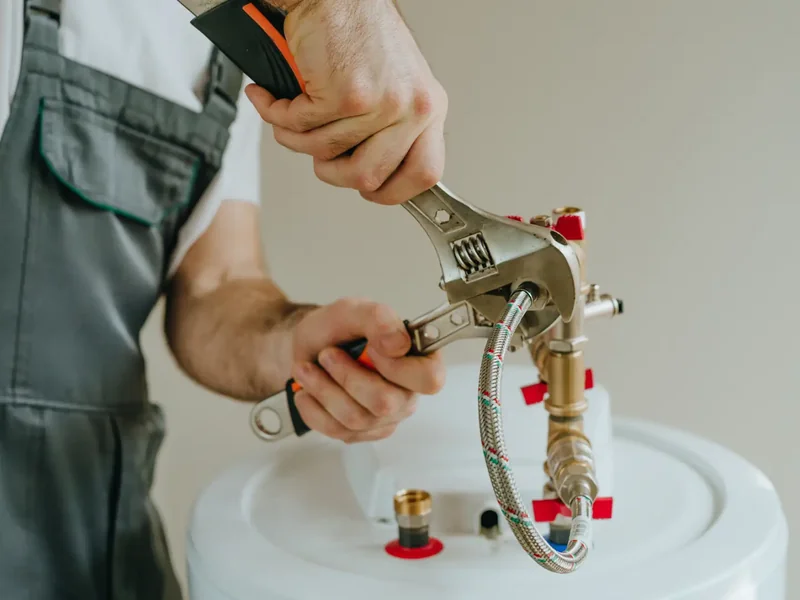
The pattern we see most: an aging subdivision heater — mechanically fine at its core — betrayed by a component. A drain valve weeping after years of sediment, a T&P relief valve dripping from pressure the homeowner never knew was high, supply connections corroded by decades of humid garage air. These are repairs, and they restore heaters with genuine life remaining.
Less often but just as important: the tank shell itself, thinned from the inside over years of hard water and finally seeping at the base seam. That is not a repair, and saying so honestly saves the homeowner from spending repair money on a replacement problem. Our Ladson visits exist to tell those two situations apart — with evidence, in plain language, before any work begins. Call (833) 713-2101 at the first sign of water.
First Minutes: Your Ladson Leak Response Plan
Water around your heater calls for action, not deliberation. Here is the first-minutes sequence for Ladson homeowners.
Stop the water. Turn off the cold-water shutoff valve above the tank — clockwise, lever perpendicular to the pipe. In Ladson's older subdivisions this valve is often original to a decades-old install and stiff from disuse: firm and steady pressure, never force to the breaking point. If it will not budge, fall back to the main house shutoff.
Cut the energy. Electric heater: its dedicated breaker, off. Gas: control knob to pilot or off. If water has reached wiring, the control area, or the burner, do not touch the unit further — wait for the technician.
Contain and document. Towels around the base, a bucket under an active drip, valuables moved away. Photograph exactly where water appears — top, side discharge pipe, or base — because that one detail focuses our diagnosis and determines which parts ride along on the truck.
What never to do
Do not cap, plug, or crimp the T&P discharge pipe. It is a safety device managing pressure and temperature, and blocking it is genuinely dangerous. Do not pour leak-seal chemicals into the tank. And do not schedule the problem for "sometime next week" — in Ladson's humid air, standing water feeds mold quickly, and a seeping shell can let go with little warning. Call (833) 713-2101, describe what you see, and we will walk you through the rest.
Drain Pans and Discharge Lines in Ladson's Subdivisions
Ladson's subdivision history means many heaters sit exactly where a leak hurts most — laundry closets over finished floors, garages sharing walls with living space, utility rooms above crawl spaces. Drain pans and discharge routing are the containment system for those moments, and older 29456 installations frequently lack them.
A pan earns its keep only if it drains. We still encounter pans with no drain line whatsoever — shallow trays that manage the first quart of a leak before surrendering. Proper installation runs a dedicated line from the pan to a floor drain, the exterior, or another approved termination, so even a substantial leak is carried away from the structure. We check pan presence, condition, and true drainage on every leak visit.
The T&P discharge pipe receives the same inspection. It should descend from the valve and end where discharge is visible but harmless — typically inches above the floor or to the exterior. In Ladson's older homes we find pipes terminating inside walls, cut short during remodels, or routed where dripping would never be noticed. An unseen warning is no warning.
The economical moment to correct it
A leak repair visit is the natural time to bring containment up to standard — adding a drained pan or re-routing discharge piping is modest work beside the cost of the damage an uncontained leak inflicts. Ladson's humidity ensures escaped water does more than stain; it molds. We will assess your installation, explain what current practice requires, and price the correction plainly. No pressure — just the facts about what stands between the next leak and your floors.
The Anode Rod: Ladson's Most Overlooked Tank Saver
Every Ladson tank contains a part most owners never hear about until it is too late: the anode rod. Understanding it changes how you think about your heater's lifespan.
The rod — magnesium or aluminum — hangs inside the tank and corrodes preferentially, drawing corrosion away from the steel shell. It is sacrificial by design and consumable in practice: when the metal is gone, protection ends and the shell becomes the next target. The transition is silent. The first visible symptom — a pinhole leak, rusty water, sulfur odor — arrives months or years after protection actually ceased.
Ladson's water sets the consumption rate. Moderately hard municipal supplies deplete rods steadily; softeners, common in the area's subdivisions, accelerate depletion because softened water conducts better; rural wells with iron and sediment can be harder still. A "five-year" rod may be spent in three — invisibly.
Checking beats guessing
A rod inspection is quick and definitive: pull it, look at it, know exactly where you stand. Replacement on a mid-life tank with a sound shell is a high-return service in home maintenance — modest cost, years of added protection. We check rod condition during leak visits because it reveals how long the tank has been exposed, which feeds directly into the repair-or-replace judgment. If your Ladson heater is past year five and the rod is a mystery, consider it overdue. One inspection now beats one emergency replacement later.
Leak Service in Crawl Spaces and Tight Subdivision Spots
Ladson's subdivision heaters live in subdivision spaces: low crawl spaces over damp soil, garage corners crowded with storage, laundry closets, and utility rooms where the builder allocated exactly enough room and not an inch more. Leak service here is routine — for a crew equipped for it.
Diagnosis in tight quarters takes discipline. Water travels along pipes and shells, so a top-connection drip pools at the base looking exactly like shell failure. We trace upward with lighting and dry testing rather than condemning from the puddle — a discipline that has saved many Ladson homeowners from replacements they did not need.
The work itself is planned, not improvised: hose routing for drain-downs, compact tools for overhead valve work in crawl spaces, protection for the finished areas we pass through. Seized original valves and corroded fittings are the norm in the area's older subdivisions, and we arrive expecting them.
Upfront about access
Severely restricted access can add labor time, and we will tell you that before starting — never as a mid-job surprise. Occasionally the wise long-term play, discussed during a replacement, is relocating the heater to a more serviceable spot; a garage wall beats an eighteen-inch crawl space for every future visit the unit will ever need. We present the trade-offs plainly and execute carefully. Tight Ladson spaces are our weekly routine; surprises are not.
Local Insight
Ladson's identity is the tri-county crossroads — where Charleston, Berkeley, and Dorchester counties meet along US-78, with I-26 putting the whole region within commuting reach. The 29456's housing grew in waves: 1970s subdivisions, 80s and 90s expansion, and newer development filling the gaps. Water heater installations track those waves, from no-pan originals in crawl spaces to modern garage placements — and many homes are still on original shutoff valves and supply lines two tanks later.
Water here is a patchwork matching the county lines: municipal supplies that run moderately hard, and private wells on the rural fringes with iron and sediment. Either way, sediment accumulation and anode depletion are the constants — Ladson tanks live or die substantially on whether anyone ever flushed them or checked the rod. Humidity and high water tables corrode exterior fittings across the whole area.
Ladson's practical, commuter-suburb character shapes expectations: homeowners want the problem diagnosed correctly, fixed efficiently, and explained without jargon. That is exactly our service model — evidence first, straight recommendations, clean work, and a clear account of what was done and why.