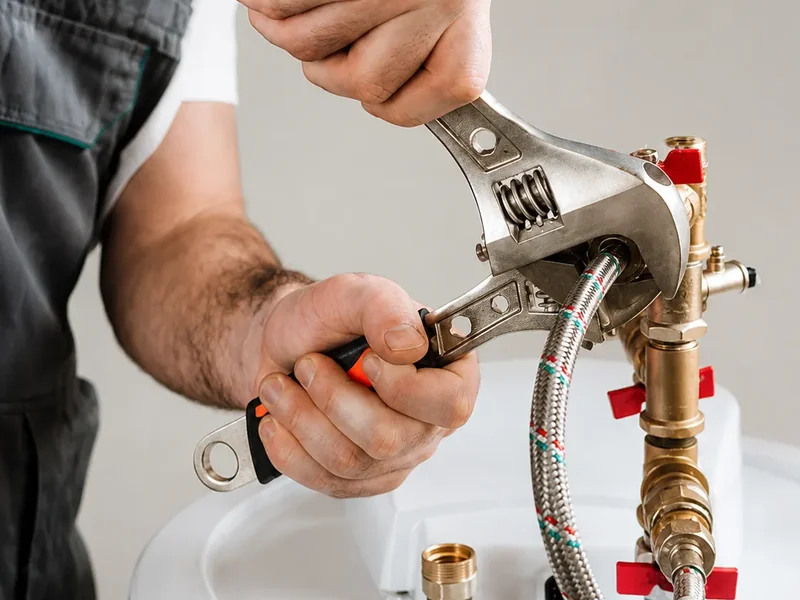
Isle of Palms water heaters serve at the pleasure of the Atlantic. Salt air moves through every garage, ground-level enclosure, and under-house utility space on the island, working on brass fittings, steel jackets, and valves with quiet persistence. Between that and the humid air that rarely fully dries, the 29451's tanks endure one of the most corrosive residential environments in the Lowcountry.
When island homeowners — or their property managers — discover water around the heater, the context is often urgent: a vacation rental with guests arriving, an elevated home where the ground-level enclosure took on moisture during the last storm, a beach house whose heater sits where flood-zone rules put it rather than where service would prefer. The leak itself, though, is usually one of the familiar culprits: a salt-corroded fitting, a weeping drain valve, a tired T&P relief valve.
Our Isle of Palms service is built for these realities. We trace every leak to its actual origin — exterior corrosion versus internal failure matters enormously here — assess the tank honestly, and fix what is fixable. With rentals, we move fast and document everything. Call (833) 713-2101 when water appears where it should not.
The Island Assault: Salt, Moisture, and What They Do to Tanks
Isle of Palms tanks corrode from the outside in faster than almost anywhere we service, and that fact reorders the usual leak investigation. Here is how the island environment attacks, front by front.
The salt-air front. Ocean air carries chloride that accelerates corrosion on every exposed metal surface. Brass supply unions pit and weep. Drain valve bodies crust, seize, and eventually leak at the stem or threads. T&P valve exteriors corrode. The base ring — lowest, dampest, saltiest — rusts until the tank's footing is compromised. We find island leaks weekly that are purely exterior in origin: the tank's interior is fine, but the fittings have surrendered to the air.
The moisture front. Humid air condenses on cooler tank surfaces; ground-level enclosures in elevated homes trap dampness; storm events leave units sitting wet for days. Constant moisture keeps corrosion reactions running without pause, and it feeds mold the moment any leak adds liquid water to the equation.
The interior front. The municipal supply is moderately hard — sediment accumulates in unflushed tanks, anode rods deplete steadily. Less dramatic than the exterior assault, but it determines the shell's fate over the long term all the same.
What island conditions mean for repair decisions
A corroded fitting on a sound shell is a repair — straightforward and economical. But when exterior corrosion is advanced across the whole unit, the honest assessment weighs whether the heater's remaining life justifies the work. We make that call on evidence: the shell's interior condition, the rod, the water clarity, the base. Island tanks do not get town timelines; they get island timelines, read from the actual unit in front of us.
First Response: What to Do When You Find Island Water
Water where it should not be demands action, not contemplation. Here is the sequence for Isle of Palms homeowners and rental managers.
Stop the water. Close the cold-water shutoff above the tank. In island installations the valve may be corroded from salt air — firm and steady, not forced. If it will not move, use the main house shutoff.
Cut the energy. Breaker off for electric; control to pilot or off for gas. If water has reached electrical parts or the burner, step away and wait for the technician.
Contain and document. Towels, a bucket under active drips, valuables moved clear. Photos of where water appears — top, side discharge pipe, base — because that detail drives our diagnosis and parts planning. For rentals, send those photos to your manager immediately along with written notice.
Critical don'ts
Never cap or plug the T&P discharge pipe — it is a safety device, and island pressure events are real. Do not pour sealants into the tank. And do not wait: in a humid island enclosure, standing water becomes a mold problem with remarkable speed, and salt air does not pause its work on a weeping fitting while you decide. Call (833) 713-2101, describe what you see, and we will guide the next steps — including what you can safely handle yourself before we arrive.
Pans, Discharge Lines, and Island Storm-Season Reality
On Isle of Palms, drain pans and discharge routing are not bureaucratic details — they are the difference between a contained incident and a flooded ground-level enclosure. Island installations fail these basics more often than they should.
The pan rule is absolute: a pan without a drain line is decoration. We find island pans that terminate nowhere — trays that hold the first quart and then surrender to the enclosure floor. Correct practice runs a dedicated drain line to a safe termination: a floor drain, the building exterior, or another approved point, routed with flood-zone grading in mind. During a leak visit we verify pan presence, condition, and actual drainage — not assumed drainage.
The T&P discharge pipe needs the same verification. It must drop from the valve and terminate where discharge is visible but harmless. On the island we find discharge pipes that vanish into walls, end inside enclosures where dripping goes unseen, or terminate where sand and debris block them. A safety device you cannot see working is not protecting you.
Storm-season stakes
These details matter doubly before hurricane season. A properly drained pan and a visible discharge termination mean the next leak — or the next pressure event — announces itself instead of silently soaking an enclosure for days while you are off-island. If your Isle of Palms heater lacks proper containment, a leak repair visit is the economical moment to add it. We will assess, explain, and quote the correction plainly.
Working Leaks in Elevated Homes and Island Enclosures
Isle of Palms heaters occupy some of the most challenging service positions in our territory: ground-level enclosures under elevated homes, tight cottage utility spaces, garage corners in stilt houses, and flood-zone-dictated placements that never considered the technician. Leak work here is an adaptation exercise.
Tracing comes first and matters most. In a dim enclosure, water migrates along pipes and shells and pools deceptively — top-fitting drips present at the base like shell failure. We trace upward with lighting and dry testing, because the island's exterior-corrosion profile makes misdiagnosis expensive: condemning a tank for a corroded union wastes thousands.
Execution takes planning: hose routing for drain-downs that respects grading and landscaping, compact tools for enclosure work, and protection for the living spaces above and around. Sand infiltrates everything — valve seats, threads, pan drains — and we work with that reality, not against it.
Straight talk on island access
Severely restricted access can add labor time; we will tell you before starting, never mid-job. During replacements, relocating the heater to a more serviceable position is sometimes the wisest long-term move — every future visit gets easier and cheaper. We lay out the options honestly and do meticulous work wherever the unit sits. Difficult access is the island standard; we are equipped for it as a matter of course.
Local Insight
Isle of Palms is a barrier island community — Front Beach cottages, Wild Dunes resort properties, and elevated homes built to flood-zone standards — and every water heater here answers to the ocean. Salt air is the defining corrosive force: it pits supply unions, crusts drain valves, and rusts base rings far faster than inland air. Island tanks routinely look a decade older externally than their nameplates claim, and exterior-origin leaks are genuinely common here in a way they are not inland.
Construction follows flood-zone logic. Elevated homes place heaters in ground-level enclosures, garages beneath living space, or utility rooms designed around elevation certificates rather than service access. These spaces breathe damp, salty air and can take on water during king tides and tropical systems — each storm leaves a spike in leak calls from units that sat wet for days. The Isle of Palms Water & Sewer Commission supply is moderately hard, so interior sediment and anode depletion proceed on a normal schedule while the exterior takes the beating.
The vacation-rental economy compresses every timeline. A leaking heater between guest stays is an emergency measured in hours, not days. We work with island owners and managers continuously: rapid response, photo documentation, decisive repair-or-replace calls, and work scheduled around turnovers.