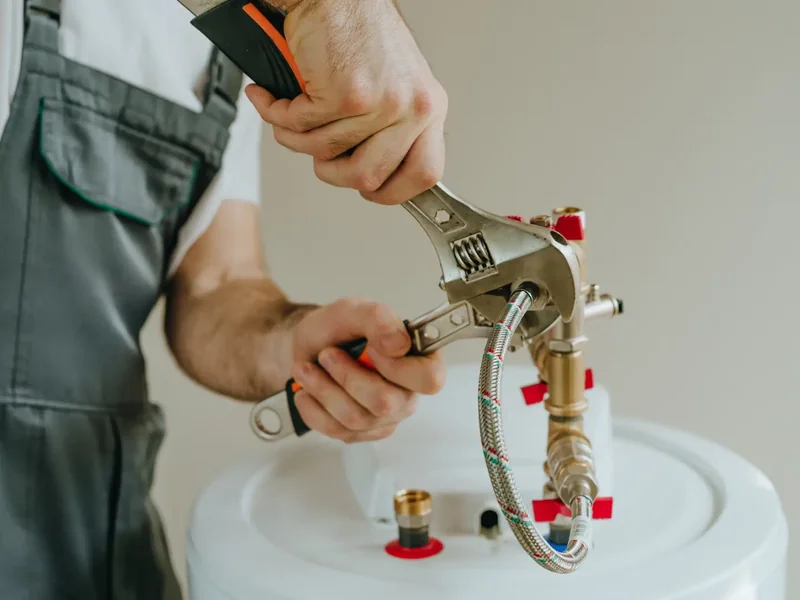
Daniel Island looks nothing like the rural Lowcountry around it — manicured streets, modern construction, and water heaters sitting in clean garages and utility rooms rather than crawl spaces and sheds. But even in the 29492, tank water heaters leak, and when they do, the questions are the same ones homeowners ask everywhere: is the unit finished, or is this fixable?
More often than island homeowners expect, it is fixable. Daniel Island's housing stock is relatively young — most of it built from the 1990s onward — which means the tanks we see are frequently mid-life units with plenty of service left. A dripping temperature-and-pressure relief valve, a weeping drain valve, or a corroded supply connection accounts for the majority of leak calls here, and each is a straightforward repair on a sound tank.
Where Daniel Island differs is in the details: water softeners are common and accelerate anode rod depletion; HOA standards mean exterior discharge routing matters; and busy households want the problem solved cleanly in one visit. Our approach fits the island: arrive on time, protect your home, diagnose precisely, and give you a straight repair-or-replace answer with the evidence to back it. Call (833) 713-2101 when water appears where it should not.
Repair or Replace: The Straight Framework for Daniel Island
A leaking water heater on Daniel Island presents the same decision every homeowner faces: fix it or replace it. The answer is never a guess — it follows from the leak's location, the tank's age, and the unit's overall condition. Here is the framework we use.
Repair is the right call when the leak traces to a component and the tank is healthy. The usual candidates: a dripping T&P relief valve, a weeping drain valve, a corroded dielectric union or flex connector at the top. On a tank under eight or so years old with a clean exterior and clear water, these are component failures — fix the part, and the heater has years left. Daniel Island's younger housing stock means we see this scenario often.
Replacement is honest when the steel shell has failed. Tell-tale signs: moisture beading along the bottom seam, rust staining at the base, pinhole seepage through the side wall. No valve or sealant restores a breached shell. The same applies to tanks past ten to twelve years showing rusty flush water or heavy sediment — even if today's drip is "only" a valve, the tank is broadcasting that its time is limited.
The island-specific factor
Water softeners, common on Daniel Island, shift the math. Softened water depletes anode rods faster, which means a softened-water tank can be internally older than its nameplate suggests. We pull and inspect the rod as part of the assessment — what is left of it tells us how protected the tank has actually been. Whatever we find, we show you: the rod, the flush water color, the base condition. The recommendation follows the evidence, and the decision stays yours.
What Your Daniel Island Leak Repair Visit Looks Like
Wondering what actually happens when a technician comes out for your Daniel Island leak? Here is the visit, step by step.
Protection and interview. Floor protection goes down first — island homes have finishes worth protecting. Then questions: where did you first notice water, is hot water still flowing, how old is the unit, any recent plumbing changes, water softener in use? Your answers steer the diagnosis.
Source tracing. We dry the area and watch where moisture returns — top fittings, T&P discharge pipe, drain valve, base seam. Because Daniel Island installations are typically accessible, this goes quickly, but we never rush it: a drip from a top connection can run down and pool at the base, and calling that a tank failure would be an expensive misdiagnosis.
Health check. With the source found, we assess the whole unit: exterior rust, drain-water clarity, anode rod condition, house water pressure, expansion tank presence. A valve drip on a sound six-year-old tank is a repair; the same symptom on a corroding twelve-year-old tank starts a replacement conversation.
The answer, with evidence
We explain the findings plainly and show you what we are seeing. Most Daniel Island repairs happen on the spot: drain-down, part replacement, refill, air purge, and a monitored test to confirm the leak is gone. You will know what was wrong, what we did, and what to watch for — before we leave, not after.
The Anode Rod: Small Part, Big Say in Your Tank's Future
Inside your Daniel Island water heater hangs a metal rod that most homeowners never know exists — and it may be the most important part of the tank. The anode rod is made to corrode so the steel shell does not. It is sacrificial by design, and it is consumable: when it is gone, corrosion moves to the tank.
Daniel Island has a specific reason to pay attention. Water softeners are widespread here, and softened water's higher conductivity dissolves anode rods faster than unsoftened water. A rod that might last five years elsewhere can be spent in three on a softened island supply — silently, invisibly, until the first pinhole leak announces that the tank has been unprotected for months or years.
The symptoms of a long-dead rod are the ones island homeowners call us about: rusty hot water, a rotten-egg sulfur smell from the hot taps, or moisture at the tank's base. By the time these appear, the tank has been fending for itself, and the remaining lifespan is shorter than the nameplate suggests.
Cheap insurance, honestly described
A rod inspection is quick; a replacement is quick and inexpensive next to a new tank. On a mid-life heater with a sound shell, a fresh rod restores protection and can add years of service — it is genuinely an excellent return on maintenance spending. We check rod condition during leak visits because it tells us how long the tank has been exposed, which feeds directly into the repair-or-replace call. If your island heater is past year four or five, especially with a softener, and the rod has never been checked — it is time.
Timelines: What to Realistically Expect on Daniel Island
Daniel Island households run on schedules, so here is the realistic timeline for a leak call — no inflated promises, just how the work actually flows.
Diagnosis runs under an hour in most cases. Island installations are accessible, which helps: source tracing, pressure check, and condition assessment move quickly when the technician can actually reach and see the unit.
Valve or fitting repair: one visit, a few hours total. Draining the tank takes the longest stretch — water leaves through a standard drain valve at its own pace. The part swap itself is efficient; then refill, air purge, re-energize or relight, and a monitored test cycle to verify the repair holds.
If the tank has failed: we will lay out replacement options and timing before anything is disconnected. Island access keeps this straightforward, and most replacements complete quickly once decided.
What will not happen
We will not quote a firm completion time over the phone before seeing the unit — anyone who does is guessing. Seized valves, nonstandard piping, or an installation quirk can add time, and we would rather tell you after inspection than overpromise beforehand. What we will do is communicate clearly at each step, work cleanly in your home, and get your hot water back as fast as honest work allows. The overwhelming majority of Daniel Island leak visits end the same day: diagnosed, repaired, tested, dry floor.
Local Insight
Daniel Island is a master-planned community built almost entirely from the mid-1990s forward, which gives its water heaters a distinct profile. Installations are modern and generally accessible — garages, dedicated utility rooms, laundry areas — with proper drain pans far more common than in older Lowcountry housing. That accessibility makes leak diagnosis faster and repairs cleaner than in the crawl-space country surrounding the island.
The island's water story has its own twist. Charleston's municipal supply serves Daniel Island, and many households add water softeners or whole-home filtration for taste and appliance protection. Softened water, while easier on fixtures, is more electrically conductive and consumes anode rods noticeably faster — a fact that surprises homeowners who assumed their "gentle" water was being kind to the tank. We check rod condition on Daniel Island as a matter of routine, because softener-plus-never-checked-rod is the most common path to a premature tank failure we see here.
Community standards add a final consideration. HOA guidelines govern exterior appearances, so T&P discharge routing and any exterior drain terminations need to be both code-correct and tidy. We keep that in mind on every island visit — the repair should work correctly and look like it belongs.