West Ashley's ranch homes have a familiar layout: brick or siding exterior, a low crawl space or slab foundation, and a water heater tucked wherever the builder found room — a garage corner, a laundry closet, or beneath the house in the crawl space itself. When one of those heaters starts leaking, the 29407's damp soil and humid air give the water plenty of places to hide, and plenty of time to do damage before anyone notices.
Across West Ashley — from Avondale and South Windermere to the neighborhoods along Ashley River Road and Bees Ferry — the story repeats: a homeowner spots a damp spot, a musty smell, or a water bill that crept upward, and traces it back to the water heater. The assumption is usually that the unit is finished. The reality, more often than not, is a worn valve or a corroded fitting — both repairable, both far less disruptive than a full replacement.
Our work in West Ashley starts with finding the truth. We dry the area, trace the moisture to its actual origin, check the tank's overall condition, and then give you a straight answer: repair or replace, with the evidence in front of you. If it is a valve, we fix the valve. If the tank shell has failed, we will show you why replacement is the honest call. Call (833) 713-2101 at the first sign of trouble.
The Usual Suspects: Where West Ashley Tank Leaks Begin
Every tank water heater leak in West Ashley comes from one of a handful of places, and knowing the lineup helps you understand what a technician is looking at — and why the diagnosis matters more than the drip.
Temperature-and-pressure relief valve. Mounted near the top with a discharge pipe down the side, the T&P valve is a safety device that opens to relieve excess pressure or temperature. A dripping discharge pipe means either the valve is worn or your house water pressure is running high. Both are fixable; neither means the tank is dead.
Drain valve. The small spigot at the tank's base sees little use and much neglect. Sediment and mineral grit wear its seat over the years, and it often starts weeping after a flush disturbs years of buildup — or simply with age. Replacement is straightforward once the tank is drained down.
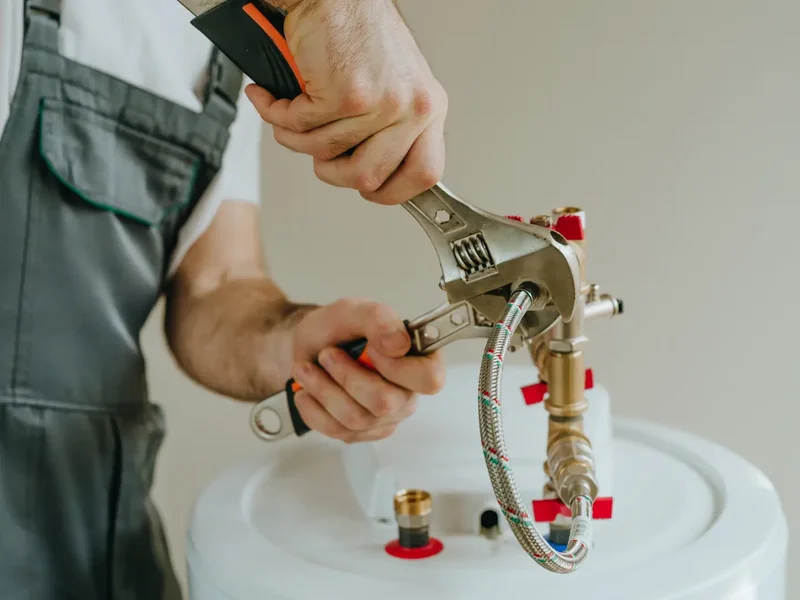
Supply connections. The hot and cold lines join the tank top through unions or flex connectors that expand and contract with every heating cycle. After a decade or two of thermal cycling in a humid crawl space or garage, these joints corrode and loosen. The leak appears at the top and runs down, sometimes pooling at the base and masquerading as a tank failure.
The leak that ends the debate
The tank shell itself. Pinholes or seepage along the bottom seam, the base ring, or the side wall mean internal corrosion has breached the steel. This is the one source no repair can honestly address — patching a compromised shell is money spent on borrowed time. When we find shell failure in a West Ashley heater, we show you exactly what we are seeing and shift to discussing replacement.
A final note: condensation fools people regularly here. Cold-water inlet pipes sweat heavily in West Ashley's humid air, and the resulting puddle looks just like a leak. Ruling out the impostors is part of every honest diagnosis.
Drain Pans and Discharge Lines: What Older West Ashley Installs Miss
Many West Ashley water heaters sit where a leak can do real damage — in a laundry closet over finished floors, in a garage sharing a wall with living space, or above a crawl space that funnels moisture straight to framing and subfloor. That is exactly the situation drain pans and proper discharge routing exist for, and it is also where older 29407 installations most often fall short.
A drain pan only works if it drains. We still find pans with no drain line at all — shallow trays that fill in the first hour of a real leak and overflow exactly where you did not want water. Proper practice runs a dedicated drain line from the pan to a floor drain, the exterior, or another safe termination. During a leak repair visit, we check whether your pan exists, whether it drains, and where it drains to.
The T&P discharge pipe gets the same scrutiny. It should run downward from the valve and terminate where discharge is visible but harmless — typically a few inches above the floor or to the exterior. We regularly find downtown and West Ashley installs where the pipe disappears into a wall, terminates where no one would ever see it drip, or was cut short during a remodel. A discharge you cannot see is a warning you will never get.
Bringing older installs up to standard
A leak repair visit is the natural moment to correct these details. Adding a pan with proper drainage or re-routing a discharge pipe is modest work compared with the damage an uncontained leak causes — and in West Ashley's humid climate, uncontained water does not just stain, it feeds mold. We will assess your installation honestly and explain what bringing it up to modern practice involves, without turning a repair call into a remodeling project.
The Anode Rod: Your Tank's Invisible Bodyguard
Buried inside your water heater is a metal rod doing a job nobody sees and few homeowners know about. The anode rod — magnesium or aluminum — corrodes preferentially so the steel tank does not. It is the reason a glass-lined steel tank survives years of hot, mineral-laden water instead of rusting through in months.
The catch is that the rod is consumable. In West Ashley's moderately hard municipal water it dissolves steadily; in homes with water softeners it dissolves faster, because softened water is more conductive. Once the rod is gone, corrosion has only one target left: the tank shell. The first pinhole leak usually follows within a few years of the rod's demise — and by then, no new rod can undo the damage.
This is why two neighbors with identical heaters can have such different outcomes. The household that had the rod checked and replaced at year five is still running the original tank at year twelve. The household that never knew the rod existed is shopping for a replacement at year nine with a rust-stained base.
What a rod check involves
We pull the rod and look at it — there is no mystery to the assessment. A healthy rod still has substantial metal; a depleted one is a thin wire or bare core. Replacement takes well under an hour on most tanks, and on a mid-life heater with a sound shell it is high-return spending in home maintenance. During leak visits we check the rod because its condition tells us how long the tank has been unprotected, which directly informs the repair-or-replace recommendation. If your West Ashley heater is past year five and the rod has never been touched, it is overdue for a look.
Leaks in West Ashley Rentals: A Note for Tenants and Landlords
West Ashley has more rental property than many Charleston suburbs — duplexes, rented ranch homes, and rooms in shared houses — and water heater leaks in rentals raise questions worth answering plainly.
Tenants: what to do. If you rent and find water around the heater, shut off the cold-water valve above the tank if you can do so safely, contain the water with towels, and notify your landlord or property manager immediately — in writing, with photos. Do not authorize major work yourself; the unit and the repair decision belong to the property owner. Document everything, because water damage disputes are miserable without a paper trail.
Landlords: why speed pays. A dripping valve ignored for a month becomes subfloor damage, mold remediation, and a tenant without hot water — all more expensive than the original repair. In West Ashley's humid climate, delay multiplies damage faster than in drier regions. A fast, documented response protects both the property and the tenancy.
What we provide for rental situations
We work with landlords and property managers across the 29407 regularly: clear written findings with photos, straightforward repair-or-replace recommendations, and scheduling that respects occupied units. If you manage multiple West Ashley properties, periodic water heater checks — rod condition, valve function, pan drainage — catch the small problems before they become emergency calls from tenants. One planned maintenance visit beats one flooded laundry closet every time.
Local Insight
West Ashley's 29407 is classic post-war suburbia, and its water heaters show it. The dominant housing stock — 1950s through 1980s ranch homes on crawl spaces or slabs — put heaters in garages, laundry rooms, and beneath the house, where Lowcountry humidity and damp sandy soil corrode exterior fittings and pans year-round. Many of these installations are on their second or third heater but still on their original shutoff valves and supply lines.
Charleston's municipal water serves most of West Ashley, and it is moderately hard — enough to build sediment in every tank that never gets flushed and to deplete anode rods on a steady schedule. Neighborhoods near the Ashley River and the marshes add a salt edge to the air that works on exterior components, while summer's intense humidity keeps crawl spaces damp enough to rust a drain pan from the outside.
The area's maturity is actually an advantage for diagnosis: we have seen thousands of West Ashley installations and know their patterns — the seized original shutoffs, the corroded dielectric unions, the T&P discharge pipes that terminate in questionable places. That familiarity means faster, more accurate leak tracing and fewer surprises once work begins.