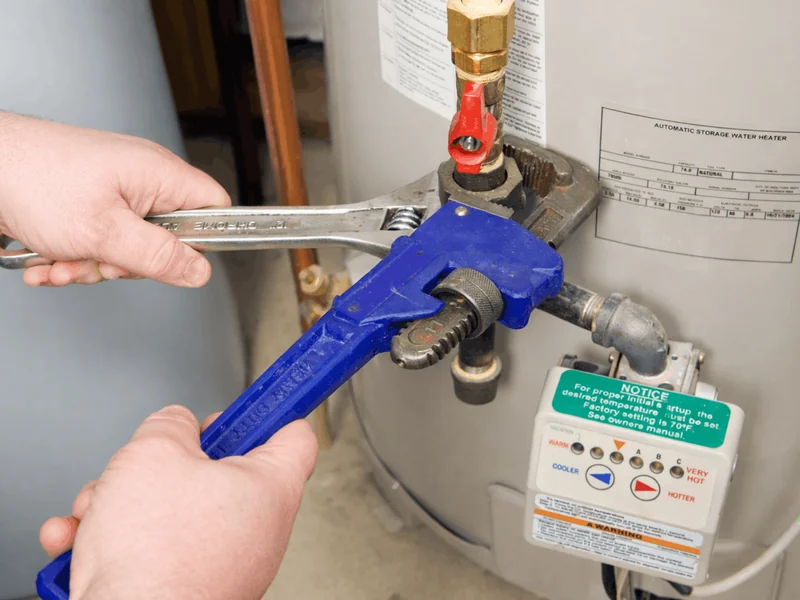
When a tank water heater starts leaking in Bonneau, the setting is usually the same: a utility room, garage corner, or crawl space in a home near Lake Moultrie, and a puddle that was not there yesterday. Bonneau's housing — lakeside cottages, older ranch homes, and rural properties on well water — puts water heaters in environments where leaks can hide until the damage is done. Humid air, sandy soil, and mineral-heavy groundwater all take their toll on steel tanks and brass fittings alike.
The most expensive mistake a homeowner can make with a leaking heater is also the most common: assuming the whole unit is finished and ordering a replacement before anyone has actually found the leak. A surprising number of Bonneau leaks come from serviceable parts — a worn temperature-and-pressure relief valve, a weeping drain valve, a corroded supply connection. Those are repairs, not replacements, and they cost a fraction of a new tank.
The opposite mistake runs the other way: patching and hoping when the tank shell itself has failed. A seeping bottom seam or pinhole in the tank wall will not be fixed by a new valve, and money spent trying only delays the inevitable. Our job in Bonneau is to tell you which situation you are in — with the evidence in front of you, in plain language — and then do the right work. Call (833) 713-2101 at the first sign of water.
Repair or Replace? How the Decision Gets Made in Bonneau
Every leaking water heater in Bonneau eventually faces the same fork in the road: repair it or replace it. The right answer depends on three things — where the leak is, how old the tank is, and what condition the rest of the unit is in. Here is how a technician works through it.
Repair makes sense when the leak traces to a serviceable part and the tank itself is sound. A dripping temperature-and-pressure relief valve, a weeping drain valve, a corroded dielectric union or flex connector — these are all component failures on an otherwise healthy heater. If the tank is under eight or so years old, the exterior is clean, and the water runs clear, fixing the part restores a heater with real life left in it.
Replacement is the honest call when the tank shell has failed. Moisture beading along the bottom seam, rust staining at the base, or pinhole seepage through the side wall all mean internal corrosion has won. No valve swap or sealant changes that. The same goes for a tank past ten to twelve years showing rusty water or heavy sediment rumbling — even if today's leak is "just" a valve, the tank is signaling that its time is short.
The Bonneau wrinkle: well water math
On Bonneau's mineral-heavy well water, tanks live harder lives than the national averages suggest. A nine-year-old tank here may have the internal wear of a twelve-year-old tank elsewhere, which shifts borderline calls toward replacement. We factor your actual water into the recommendation — and we will show you what we are seeing, from the condition of the pulled anode rod to the color of the flush water, so the decision is yours with full information.
What we will never do is sell a repair we do not believe in, or push a replacement when a valve would do. The diagnosis comes first; the recommendation follows the evidence.
Drain Pans, Discharge Lines, and the Details Older Installs Miss
A drain pan is the unsung hero of water heater installations — a simple metal or plastic tray under the tank that catches leaks and routes them to a drain instead of your floor. In Bonneau, where many heaters sit over crawl spaces, in closets, or near finished areas, a proper pan is the difference between a contained drip and a costly mess.
The key detail most older installations miss: a pan without a drain line is just a shallow bowl. Once it fills, water goes right over the edge. Proper practice runs a drain line from the pan to a safe discharge point — a floor drain, the exterior, or another approved location — so even a significant leak is carried away from the home. Many Bonneau heaters installed decades ago have no pan at all, sitting directly on concrete or wood subfloor.
The same logic applies to the T&P relief valve discharge pipe. Code calls for that pipe to run downward and terminate where discharge is visible but harmless — not capped, not threaded into a drain where you would never see it dripping, and never reduced in size. A surprising number of older installs violate one or more of these points, and a leak repair visit is the natural moment to bring them up to standard.
What we check during your visit
When we come out for a Bonneau leak, we assess the whole installation, not just the drip: pan presence and drainage, T&P discharge routing, shutoff valve condition, and strapping or support. If the heater sits where a future leak would damage the home, we will recommend adding proper containment and explain exactly what it involves. It is inexpensive insurance, and after you have mopped up one leak, most homeowners wish they had it sooner.
When High Water Pressure Masquerades as a Leak
Some of the most stubborn water heater "leaks" in Bonneau are not leaks at all — they are pressure problems wearing a disguise. Understanding the difference saves homeowners from repeated repairs that never quite fix the drip.
Here is the mechanism: when your heater fires, the water inside expands. In older plumbing systems that expansion pushed back into the municipal main. But most modern Bonneau-area homes have check valves, pressure-reducing valves, or backflow preventers that create a closed system — the expanded water has nowhere to go, so pressure spikes inside the tank with every heating cycle. The T&P relief valve does exactly what it was designed to do: it weeps to relieve the pressure.
Homeowners see the dripping discharge pipe and assume the valve is bad. A new valve goes in — and starts dripping again within days, because the valve was never the problem. The pressure was.
The real fix: give expansion somewhere to go
The correct answer is a thermal expansion tank: a small pressurized tank mounted on the cold-water line that absorbs the extra volume every heating cycle. We check house water pressure as part of every leak diagnosis — anything consistently above 80 psi is both a leak-mimic and a genuine threat to the tank, valves, and every fixture in the home. If pressure is high, a pressure-reducing valve plus an expansion tank solves the dripping and protects the whole plumbing system.
This is one of the most satisfying diagnoses we make in Bonneau, because the homeowner has often already paid for a valve replacement elsewhere that did not hold. Fix the pressure, and the "leak" disappears for good.
Leaks in Tight Spaces: Crawl Spaces, Sheds, and Cottage Compartments
A remarkable number of Bonneau's water heaters live in places that were clearly not designed with service access in mind: low crawl spaces over sandy soil, cramped utility sheds, garage corners boxed in by storage, lakeside cottage compartments with inches to spare. Leaks in these spots present a double challenge — finding the source and then actually working on it.
Diagnosis comes first and matters most here. In a dark, damp crawl space, water travels: a drip from a top fitting can run down the tank's side and pool at the base, looking exactly like a failed tank shell. We trace moisture upward with lighting and dry-touch testing rather than assuming the worst from the puddle's location. More than one Bonneau homeowner has been quoted a full replacement for what turned out to be a weeping supply connection six inches from the top.
The repair itself takes planning. Drain-down in a crawl space means routing hoses to daylight; element or valve work overhead means compact tools and patience. We carry low-clearance equipment specifically because so much of the 29431's housing stock demands it.
What tight access means for you
Honesty up front: some repairs cost more in labor when access is severely restricted, and we will tell you that before starting. Occasionally, relocating the heater to a more serviceable spot during a replacement is worth discussing — a garage wall beats a eighteen-inch crawl space for every future service call the unit will ever need. We lay out the trade-offs plainly and let you decide. What we will not do is start work in a tight space and surprise you with the difficulty halfway through.
Local Insight
Bonneau is Lake Moultrie country, and the lake shapes everything about water heater service in the 29431. Many homes here draw from private wells with the mineral-heavy groundwater typical of the Santee Cooper lake region — iron, sediment, and hardness that wear out anode rods and drain valves faster than municipal supplies do. Lakeside humidity hangs in garages and crawl spaces for much of the year, corroding exterior fittings while the water inside works on the tank.
The housing stock tells the rest of the story. Bonneau mixes longtime lakeside cottages and fish-camp conversions with ranch homes and newer construction spreading from Moncks Corner's growth. Water heaters land wherever they fit: carport-adjacent utility rooms, low crawl spaces over sandy soil, garage corners, and the occasional outdoor-adjacent shed. Many older installations predate modern drain-pan practice entirely, so a leak that would be contained in a newer home runs straight onto concrete or subfloor here.
Then there is the practical reality of a small lake town: parts and equipment are not around the corner. A failed tank in Bonneau becomes a logistics exercise, which is exactly why early, honest leak diagnosis pays off — catching a repairable valve drip now beats an emergency tank swap on a rural road later.