Summerville's 29485 is new-home country — Cane Bay Plantation, Nexton, and the master-planned communities along I-26, where the water heaters are builder-grade electric units in clean garages and utility rooms. When an element fails here, it catches owners off guard: the house is new, the heater looks new, and yet the shower runs lukewarm or the breaker trips. New, it turns out, does not mean maintenance-free.
Builder-grade tanks ship with thinner anode rods, basic elements, and no immunity to the area's moderately hard water or closed-system pressure dynamics. The failures we see in the 29485 are the standard mechanisms arriving early: sediment burying the lower element in an unflushed young tank, thermostats failing in step with the elements they control, thermal expansion stressing the system nobody accounted for.
The advantage of the growth corridor is access and standardization: modern installations, standard parts, straightforward service. Our 29485 element visits leverage that — fast electrical diagnosis, the correctly matched element (often a sediment-resistant fold-back upgrade), safe professional replacement, and the maintenance briefing that keeps a young tank from aging prematurely. Call (833) 713-2101 when the hot water falters.
Reading Element Symptoms in Newer 29485 Homes
Element trouble in the 29485's newer tanks presents a familiar symptom set — with a few growth-corridor twists. Here is how to read what your heater is signaling.
Lukewarm water that never fully heats is the classic upper-element (or upper-thermostat) failure: the tank's top never reaches temperature, and no amount of waiting fixes it. In young 29485 tanks, this sometimes traces to a thermostat rather than the element — builder-grade controls failing early under closed-system pressure cycling.
Hot water that vanishes quickly points to the lower element: the top heats, the bottom never does, and usable capacity collapses. On unflushed young tanks, sediment burial can claim a lower element years ahead of expectations — "new" is no defense against deposits.
The tripping breaker is the electrical alarm. A deteriorating element shorting internally, or a thermostat welded closed driving continuous heating, trips the 240-volt breaker. In the 29485 we also watch for pressure-related breaker trips: overheating from expansion stress can trip the high-limit safety, mimicking electrical failure.
Test, don't guess
Every symptom has at least two plausible causes in these systems, which is why we test electrically before replacing: resistance on both elements, function on both thermostats, plus a pressure reading given the corridor's closed-system prevalence. The meters deliver the verdict; we share the readings. In newer homes especially — where owners assume youth equals health — the testing often reveals the maintenance deficit hiding behind the "new" label.
Thermostats in Builder-Grade Tanks: Earlier Failures, Perfect Disguises
Thermostats in the 29485's builder-grade tanks deserve special attention — they fail earlier and more consequentially than owners expect, and their failures wear perfect element disguises.
Each element obeys its thermostat. A thermostat fused closed drives its element without limit until the high-limit safety trips the whole heater — cold water, tripped reset, element blamed. A thermostat stuck open never calls its element — lukewarm or fast-depleting hot water, element blamed again. In builder-grade 29485 units, where controls are value-engineered like everything else, these failures arrive sooner than the premium-tank timelines in the manuals.
Closed plumbing systems add a 29485-specific thermostat stressor: pressure and temperature cycling from unmanaged thermal expansion works the controls harder, accelerating contact wear and calibration drift. A thermostat that has been fighting expansion pressure for five years is a different component than its nameplate suggests.
Paired service, explained
We test both thermostats on every element call — non-negotiable. Failed units are replaced; aged-but-functional originals in a tank with a failed element are typically recommended for concurrent replacement, with the logic laid bare: shared service life, shared environment, minimal incremental cost now versus a second full visit later. On a young tank with a clearly isolated single-component failure, we replace only what the tests prove failed. The recommendation is always reasoning-first, and the decision always yours.
240 Volts in New Homes: Still Professional-Only
A safety note that applies fully in new-construction homes: element replacement involves 240 volts, and it is professional-only work regardless of how new or accessible the installation is.
The electrical facts do not change with construction date: two hot legs, high amperage, damp-adjacent environment, grounded steel tank. Newer 29485 panels are better labeled than legacy ones, but verification by meter — not by label — remains mandatory, because miswiring and mislabeling happen in new construction too. The dry-fire trap is equally unforgiving: re-energizing before complete refill destroys a new element in seconds, new tank or old.
DIY attempts in the growth corridor fail in the same ways: wrong wattage selected from a big-box shelf (close is not correct), gaskets misseated, thermostats untested (so the wrong part gets replaced), and no load-testing to verify the repair. The result is a second service call to fix the first attempt — the opposite of saving money.
Done right, verified working
Our procedure holds for every 29485 home: breaker off and meter-verified dead, lockout during work, element matched exactly to rating (or a deliberate fold-back upgrade for sediment resistance, explained beforehand), new gasket properly seated, complete refill with air fully purged, power restored only after water confirmation, then a monitored test cycle verifying current draw, heating, and breaker stability. Professional, verified, safe — and your home protected throughout. New house or old, 240 volts gets the same respect.
Choosing Elements for Growth-Corridor Tanks: Match or Upgrade
Correct element selection matters in every tank, and in the 29485's builder-grade units — where the original was chosen for cost — the replacement is an opportunity to choose for longevity. Here is the matching framework.
Voltage and wattage must match the unit's engineering: 240-volt supply, nameplate wattage (commonly 4500W, with variants). Deviating risks circuit overload or chronic underperformance — there is no "close enough" in electrical ratings. We verify and match exactly.
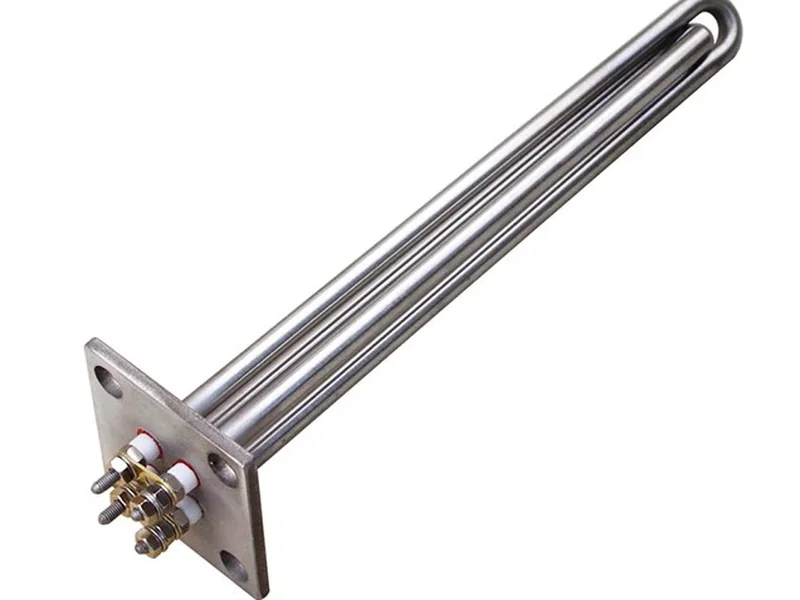
Physical type must fit the tank's ports — length, thread, and configuration. Then the upgrade question: standard versus fold-back low-watt-density. Fold-back elements deliver the same wattage across a folded, larger surface that runs cooler — accumulating scale slower and lasting longer in the 29485's moderately hard, often-unflushed water. For growth-corridor tanks, where sediment arrives early and flushing arrives late, the fold-back is frequently the smarter long-term choice, and we recommend it with the reasoning shown.
An upgrade, not an upsell
The distinction matters: we recommend the fold-back where the water and maintenance reality justify it — demonstrated by the sediment we flush from your tank during the visit — not as a default add-on. The element installed in your 29485 heater matches its engineering or deliberately improves on the builder's cost-driven original, with your informed approval. Correct part, correct installation, verified under load: the standard that keeps a young tank young longer.
Local Insight
The 29485's identity is growth — Cane Bay Plantation, Nexton, and the I-26 corridor developments that have made this Summerville's fastest-expanding ZIP. Water heaters here are overwhelmingly builder-grade electric units: competent, value-engineered, and installed in accessible garages and utility rooms on modern closed plumbing systems with pressure-reducing valves at the meter.
Those closed systems are the 29485's distinctive factor. Without expansion tanks — omitted in many builds — thermal expansion spikes pressure every heating cycle, stressing elements, valves, and the tank itself. Element failures here sometimes arrive with pressure-related companions: weeping T&P valves, stressed fittings. Our diagnosis always includes a pressure check, because the element may be the symptom of a system issue.
The area's municipal water runs moderately hard, and the "new house needs nothing" belief is the growth corridor's costliest misconception — young tanks with zero flushing already carry sediment loads that shorten element life. We use every element visit as a maintenance reset: flush the tank, check the young rod, explain the rhythm. New-home owners appreciate the straight guidance; it protects the investment they just made.