Saint Stephen heats its water the small-town way — electric tanks in modest homes, on well water, expected to work without attention for years. And mostly they do, until the morning the shower runs lukewarm or the breaker trips and the 29479 household meets its heating element for the first time. On lake-country well water, that meeting usually comes earlier than the manual suggests.
The well water is the story. Iron, sediment, and mineral hardness arrive in concentrations that bury lower elements years ahead of municipal-water timelines. The failure is still a component problem — the tank, the plumbing, the installation are typically fine — but the environment that killed the element will kill its replacement too, unless the service addresses the cause alongside the symptom.
Our Saint Stephen element service does both: electrical diagnosis proving exactly which component failed, safe replacement with the correctly rated element (often a sediment-resistant fold-back type for well water), a real flush of the deposits that caused the failure, and the maintenance rhythm that keeps the new element alive. Small-town service means doing it right the first time. Call (833) 713-2101.
Why Saint Stephen Elements Fail: The Well-Water Anatomy
Heating elements fail for reasons, not by whim — and in Saint Stephen, well water writes most of the reasons. Here is the failure anatomy.
Sediment burial is the overwhelming leader. Iron, sand, calcium, and mineral deposits from lake-country well water settle onto the lower element and accumulate without flushing. The mineral mass insulates the element from the water; sheath temperatures soar beyond design; the sheath breaches and the coil fails. Saint Stephen's unflushed well-water tanks produce the most aggressively buried elements in our service area — iron-stained, encrusted, unmistakable.
Dry-firing is the sudden killer. An element energized while exposed to air — incomplete refill after a drain-down, a well run dry mid-cycle — overheats catastrophically in seconds. Rural well systems add a specific dry-fire risk: pressure-tank or pump interruptions that leave the tank partially filled while power remains on.
Cycling fatigue and terminal corrosion finish the account. Thousands of heating cycles stress the sheath; humid air corrodes the electrical terminals, adding resistance, heat, and connection failure. In Saint Stephen's damp installations, terminal condition is always part of the diagnosis.
Mode determines prevention
We read how the element died because the mode dictates the fix: sediment deaths get a real flush and a sediment-resistant element recommendation; dry-fire damage gets procedure review and well-system awareness; connection failures get terminal service. Replace the part, address the cause — the Saint Stephen standard for making the repair last.
Two Elements, Two Roles: What Each One Does
Two elements share every electric tank, with distinct responsibilities — and distinct failure signatures that diagnosis must respect.
The upper element commands the tank's top portion, firing first for rapid recovery after hot water is drawn. Its cycles are shorter and more frequent, governed by the upper thermostat's slightly higher setting. When it fails, the tank never reaches full temperature: water stays stubbornly lukewarm regardless of wait time, because the lower element cannot satisfy the upper thermostat's demand alone.
The lower element handles volume — the long heating cycles that bring the bulk of the tank to temperature once the top is satisfied. Positioned at the bottom, it inhabits the sediment zone, which is why Saint Stephen's well-water sediment claims lower elements disproportionately. Its failure signature: hot water that starts strong and collapses, as the unheated lower two-thirds overwhelm the heated top.
Sequential operation governs both: one element at a time, upper first, never simultaneous. A single failure therefore degrades rather than eliminates hot water — and the degradation pattern is diagnostic. But pattern is not proof: we electrically test both elements on every Saint Stephen visit, because well-water tanks often conceal a second weakened component behind the obvious failure.
240 Volts: Why Element Replacement Is Never DIY
Straight talk on the most important safety fact of this service: your water heater's elements run on 240 volts, and that makes element replacement professional-only work — no exceptions, no matter how handy you are.
The numbers: two hot legs at 240 volts, elements drawing roughly 18-19 amps, in damp surroundings around a grounded steel tank full of water. This is a lethal combination for anyone without training and proper equipment. Saint Stephen's rural installations add risk factors: older panels with uncertain labeling, damp crawl-space and shed locations, and well-system electrical quirks that can surprise the overconfident.
The technical failure modes of DIY attempts are equally real: re-energizing before complete refill dry-fires the new element instantly; wrong wattage overloads the circuit or underheats chronically; misseated gaskets weep at the port; skipped thermostat testing replaces the wrong part. We see the aftermath of these attempts, and the "savings" never survive the rework.
The procedure that keeps it safe
Breaker off, verified dead by meter at the unit — labels never trusted. Lockout during work. Element matched exactly to the unit's voltage, wattage, and type. New gasket, proper seating. Complete refill with full air purge. Power restored only after water is confirmed at the element. Monitored test cycle verifying current draw, heating performance, and breaker stability. Every step, every time, without shortcut — the small-town standard being, as always, doing it right the first time.
Choosing the Right Element for Saint Stephen Well Water
Selecting the replacement element is a matching exercise with real consequences — particularly on Saint Stephen's aggressive well water, where the right choice extends life meaningfully.
Voltage must match the 240-volt residential supply — verified, not assumed. Wattage must match the nameplate rating exactly: oversized elements threaten the circuit and breaker; undersized elements labor through endless cycles. Physical type must fit the tank's ports — length, thread, and style.
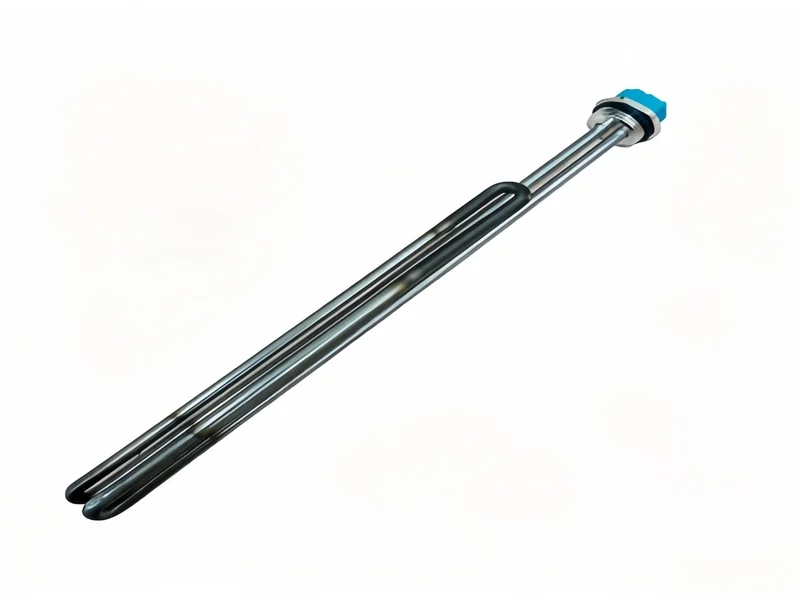
Then comes the Saint Stephen-specific decision: standard versus fold-back (low-watt-density) elements. Fold-back elements pack the same wattage into a folded, larger-surface-area design that runs at lower surface temperature. On sediment-heavy well water, that cooler operation accumulates scale significantly slower — a genuine lifespan advantage, not a marketing claim. For the 29479's iron-and-sediment wells, we routinely recommend the fold-back upgrade and explain exactly why: the water that buried the old element will be kinder to this one.
Matched, explained, verified
We stock the common ratings, source correct parts for unusual units, and never force a near-fit. The element in your Saint Stephen tank matches its engineering — or represents a deliberate, explained upgrade for local water. Installed correctly, gasketed properly, verified under load: the complete standard, delivered with the meter readings to prove it.
Local Insight
Saint Stephen's 29479 is lake-country rural — small town surrounded by countryside near Lake Moultrie's upper reaches, running on private wells as the overwhelming norm. The groundwater's iron, sediment, and mineral profile is the single biggest factor in local element life: lower elements buried in iron-stained deposits are the standard failure we extract, sometimes from tanks only a few unflushed years old.
Housing is modest and long-held — older frame homes, manufactured housing, rural properties where electric tanks sit in crawl spaces, sheds, and utility rooms. Electric heat dominates where gas infrastructure never reached. Installations are practical rather than polished, and maintenance histories are typically "never flushed, never checked" — which makes the element visit both a repair and an introduction to the maintenance the tank always needed.
In a small town, reputation is everything and everyone knows everything. We earn Saint Stephen's trust the durable way: accurate diagnosis shown with meter readings, correct parts, fair scope, clean work, and plain explanations. No upsell, no shortcuts — the kind of service that gets recommended at the post office.