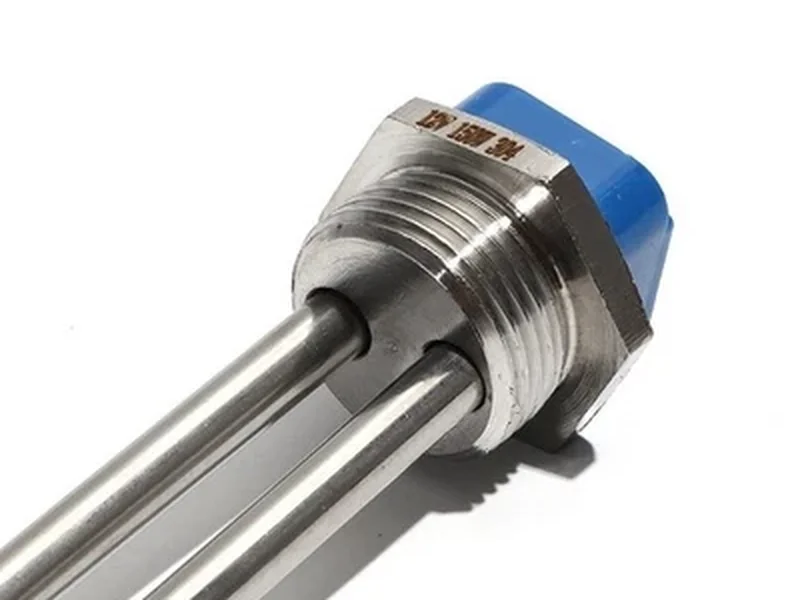
Ravenel heats its water electrically and its wells supply the minerals — a combination that makes heating element failure one of the most common service calls in the 29470. Farmhouses, manufactured homes, and rural properties run electric tanks on well water carrying iron, sediment, and hardness that bury lower elements years ahead of their time. When the hot water turns lukewarm or the breaker starts tripping, Ravenel homeowners usually know exactly what happened — they just need it fixed right.
The fix is practical, like everything in Ravenel: test electrically to confirm the failed component, replace it with the correctly rated element, flush the sediment that killed the original, and verify the repair under load. On a sound tank it is a clean, economical service that restores full hot water the same day.
Where Ravenel element work differs is the well-water context. Iron and sediment loads here exceed municipal norms, which compresses element life and makes the flushing conversation more urgent — annual at minimum, sometimes more often on heavy-sediment wells. We diagnose the failure, perform the replacement safely, and set up the maintenance rhythm that keeps the new element alive. Call (833) 713-2101 when the hot water goes unreliable.
The Failure Progression on Ravenel Well Water
Element failure on Ravenel's well water has a recognizable progression — learn it, and you will catch the next failure earlier. Here is the symptom sequence.
Stage one: declining recovery. Hot water runs out a little faster than it used to; the tank takes longer to recover between uses. The lower element is being buried — still working, but insulated by accumulating sediment, running hotter to deliver less. Most households adapt without noticing.
Stage two: lukewarm or short-lived hot water. The lower element can no longer heat through its mineral tomb (hot water vanishes fast), or the upper element has failed outright (water never fully heats). Showers become strategic exercises in timing.
Stage three: the tripping breaker. The failing element shorts or draws abnormal current; the 240-volt breaker trips. Resetting buys a little time — then it trips again. This is the electrical system demanding attention, and repeated resetting without diagnosis risks the wiring.
Well-water acceleration
On Ravenel's iron-and-sediment wells, this progression compresses: what takes eight unflushed years on municipal water can take four on a heavy well. Iron staining on fixtures is the visible hint of what is happening invisibly inside the tank. The diagnostic answer is the same regardless of speed — electrical resistance testing of both elements and both thermostats, with power verified off — but the maintenance lesson is Ravenel-specific: well-water electric tanks need flushing on a disciplined schedule, or the element replacement becomes a recurring event.
The Ravenel Element Visit: Practical and Complete
A Ravenel element visit follows a practical sequence — thorough, safe, and usually complete in one trip.
Diagnosis. Breaker off, verified dead by meter. Resistance readings on both elements; function tests on both thermostats; a look at terminal condition (well-country humidity corrodes connections). The readings identify the failed component precisely — and on Ravenel's sediment-heavy tanks, we often find the lower element buried while the upper tests fine, a clean single-component call.
Preparation. Water supply closed; tank drained below the element ports. Drain-down on a well-water tank doubles as the start of a serious flush — we clear the iron and sediment that killed the old element, because installing a new element into a dirty tank is asking for a repeat.
Replacement. The failed element extracts — penetrating treatment when scale has seized it — and the correctly rated replacement installs with a new gasket: voltage, wattage, and type matched to the unit. Thermostats are addressed per testing and age, with the reasoning explained plainly.
Refill, verify, and advise
Complete refill, air purged, water confirmed at the element — then power returns, because dry-firing is instant death for a new element. A monitored test cycle verifies current draw, heating, and breaker stability. Then the Ravenel-specific part: we set up your well-water maintenance rhythm — flushing frequency matched to your sediment load, what iron staining tells you, when to call. The visit fixes today's failure and prevents tomorrow's.
Thermostats: The Hidden Partners in Element Failures
Thermostats rarely get credit and often cause confusion — their failures are element failures in disguise. Here is the control-system picture for Ravenel tanks.
Each element operates under its thermostat's command. When a thermostat welds closed, its element heats without limit until the high-limit safety trips — the homeowner discovers cold water and a tripped reset button, and the element takes the blame. When a thermostat sticks open, its element never fires — lukewarm water or rapidly depleting hot water, again blamed on the element. The disguise is perfect, which is why thermostat testing is inseparable from element diagnosis.
On Ravenel's well-water tanks, thermostats endure the same harsh environment as elements: sediment, humidity-corroded terminals, years of cycling. Original thermostats in aging rural tanks are common, and their calibration drifts with age — running elements longer or shorter than intended, accelerating wear.
The paired-service reasoning
When testing proves a thermostat has failed, it gets replaced — straightforward. When thermostats test functional but share the failed element's advanced age, we recommend replacing them together and explain why: same service life, same environment, small incremental cost during an already-open service, versus a second drain-down and visit when the old thermostat fails months later. It is a recommendation with visible logic, not a sales tactic — and on a newer tank with an isolated element failure, we replace only what the tests prove failed. Your call, fully informed, as Ravenel expects.
Element Lifespan on Well Water: What Controls It
Element lifespan on well water is not mysterious — it is maintenance-determined. Here is the honest picture for Ravenel.
A quality element in a flushed, maintained tank serves several years reliably. The identical element in a never-flushed Ravenel well-water tank may fail in a few short years — buried in iron and sediment, overheated, burned out. The part is the same; the environment and maintenance differ completely. Well water does not forgive neglect the way gentle municipal water might.
The lifespan controls, ranked: flushing frequency — the dominant factor, and on heavy-sediment wells, annual may not suffice; we calibrate the rhythm to your water's actual load. Sediment type — iron-rich deposits insulate aggressively; sand abrades. Thermostat settings — moderate settings reduce scale formation and cycling stress. Element selection — fold-back low-watt-density elements, with their larger cooler-running surface, resist well-water scale meaningfully better than standard elements.
Setting up the win
We install the correctly rated element — and where well-water sediment is severe, we recommend the fold-back upgrade with the reasoning shown, not just stated. Then we establish your maintenance rhythm explicitly: how often to flush for your water, what to watch for, when to call. A Ravenel element installed right and maintained for its water should outlast its neglected predecessor by multiples, not margins. That is not optimism — it is what happens when the maintenance matches the water.
Local Insight
Ravenel's 29470 runs overwhelmingly on private wells, and well water is the defining fact of local element service. Iron, sediment, sand, and mineral hardness arrive in concentrations that municipal supplies never approach — and all of it settles onto lower heating elements. We extract Ravenel elements encrusted in iron-stained deposits, sometimes after only a few unflushed years: well water does not negotiate.
The rural housing stock compounds it: manufactured homes, farmhouses, and older rural properties with electric tanks that have never been flushed and never had a rod checked. Electric heat is the default where gas lines do not reach, so element issues are simply frequent. Installations in crawl spaces, sheds, and utility rooms add access planning to every visit — routine for us, but real.
Ravenel's self-reliant streak means some homeowners attempt element replacement themselves — and we offer honest counsel: 240 volts in damp rural installations, combined with dry-fire risk and wattage matching, makes this a poor DIY candidate. Our service is priced fairly and done right the first time, which is the Ravenel definition of value.