North Charleston's 29406 heats its water electrically in the great majority of homes — bungalows, ranches, duplexes, and rentals from Park Circle to Rivers Avenue. When a heating element fails here, the household feels it immediately: showers that won't get hot, a breaker that keeps tripping, hot water that gives up halfway through the morning routine.
In the area's older housing, element failure often arrives as the first symptom of years of deferred maintenance — a tank never flushed, a lower element buried in sediment, thermostats original to the installation. The failure itself is a component problem and entirely fixable; the surrounding maintenance deficit is the conversation worth having while we are there.
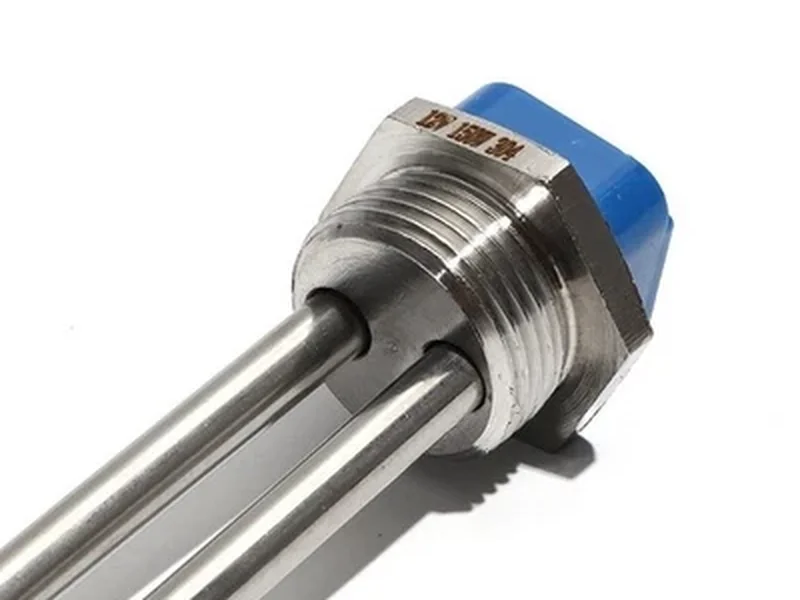
Our North Charleston element service starts where it should: with electrical testing that proves which component failed. Then a clean, safe replacement — correct voltage, correct wattage, correct physical type, new gasket, verified refill, monitored test. And because the 29406's tanks so often need it, we address the sediment and maintenance picture too, so the new element does not inherit the old one's fate. Call (833) 713-2101.
How Elements Die in North Charleston's Older Tanks
Heating elements die by a short list of mechanisms, and in the 29406's older tanks, they often die by all of them at once. Here is the failure anatomy.
Sediment burial dominates. Decades of moderately hard water without flushing entomb the lower element in mineral deposits — calcium, magnesium, scale hardened into insulation. The element, unable to shed heat into water, runs far beyond its thermal design; the sheath weakens and breaches; the coil shorts or burns open. The 29406's unflushed legacy tanks produce the most dramatically buried elements we see anywhere.
Dry-firing kills instantly. Power applied to an element exposed to air — after a drain-down, a repair, a water interruption — overheats the sheath in seconds. In older homes where well-meaning DIY drain-downs precede our arrival, we check for this specifically: a dry-fired element looks distinctly different from a sediment-killed one.
Terminal corrosion and cycling fatigue complete the picture. Humid air corrodes the electrical terminals where element meets wiring, creating resistance, heat, and eventual connection failure. Thousands of thermal cycles fatigue the sheath. In the 29406, a "failed element" is sometimes a failed connection — which is why we test the complete circuit, not just the element in isolation.
Diagnosis reads the mode
Identifying how the element died shapes everything downstream: sediment deaths get a flush with the replacement; dry-fire damage prompts procedure review; connection failures get terminal and wiring attention. We replace the part and address the cause — the combination that keeps the new element alive.
The North Charleston Element Visit, Start to Finish
Here is the 29406 element visit in full — the procedure from arrival to verified hot water.
Electrical diagnosis. Breaker off and verified dead by meter — in these older homes, panel labels are never trusted. Resistance measurements on both elements, function tests on both thermostats, and a check of terminal connections and wiring condition. Older 29406 installations sometimes reveal wiring issues alongside the element failure, and we identify everything before quoting any work.
Preparation. Water supply closed, tank drained below the element ports. Given the area's sediment legacy, drain-down doubles as the beginning of a real flush — clearing the deposits that killed the old element.
Replacement. The failed element extracts — with penetrating treatment when decades of scale have seized it — and the new element installs: voltage, wattage, and type matched to the unit, fresh gasket, proper torque. Thermostats are addressed based on testing and age, with the reasoning explained.
Verification, not assumption
Refill completes, air purges from the hot side, water is confirmed at the element — then, and only then, power returns. A monitored heating cycle verifies correct amperage draw, steady temperature rise, and a breaker that holds. In older homes we also verify the circuit and connections under load, since legacy wiring deserves confirmation. You see hot water restored and proven before we leave. Most 29406 visits complete in a few hours.
What Determines Element Lifespan in the 29406
Element lifespan is not a fixed number — it is an outcome, determined substantially by maintenance. Here is what controls it in the 29406.
A quality element in a maintained tank delivers several years of service, often approaching a decade in gentle conditions. The same element in a never-flushed 29406 tank may survive a fraction of that — not because the part differs, but because sediment burial is a death sentence executed on schedule. The area's legacy tanks demonstrate this brutally: elements entombed in twenty years of deposits, failed long before their time.
The lifespan levers, in order of impact: flushing — annual drain-downs keeping sediment off the lower element, the single biggest factor; thermostat settings — moderate settings reducing cycling stress and scale formation; anode rod maintenance — protecting the tank environment the element operates in; terminal condition — clean, tight electrical connections in humid air.
What we install, and what we establish
We fit quality elements matched exactly to your unit — and where sediment is severe, we discuss fold-back low-watt-density elements, whose larger surface area runs cooler and resists scale accumulation better. But the part is half the equation; we also establish the maintenance rhythm explicitly: flushing cadence, warning signs, when to call. A 29406 element installed correctly and maintained properly should dramatically outlast its neglected predecessor. Physics plus maintenance — that is the whole formula.
Matching the Element to Your North Charleston Tank
Element selection is engineering, not guesswork — and in the 29406's varied housing stock, getting it right matters. Here is the matching discipline.
Voltage: residential supply is 240 volts, and the element must match. A mismatched voltage element either overheats dangerously or heats uselessly. We verify supply voltage at the unit rather than assuming.
Wattage: the nameplate rating — typically 4500 watts, with variants — must be matched exactly. Oversized elements overload the circuit and breaker; undersized elements run marathon cycles and never satisfy demand properly. In older 29406 homes with legacy wiring, correct wattage is also a safety matter: the circuit was sized for the original rating.
Physical type: screw-in elements vary in length and design. Standard elements suit most tanks; fold-back (low-watt-density) elements are the thoughtful upgrade for sediment-prone 29406 water — more surface area, lower surface temperature, slower scale accumulation, longer life in hard-water conditions.
Fit for the tank in front of us
We stock common ratings and source correct parts for unusual units rather than forcing near-fits. The element installed in your North Charleston tank matches what the unit was engineered for — or represents a deliberate, explained upgrade for local water conditions. Correct part, correct installation, verified operation: the complete standard, applied to every 29406 element we replace.
Local Insight
The 29406's housing — among the oldest in our service area — shapes its element failures distinctly. Decades-old electric tanks in Park Circle bungalows and post-war ranches have endured years of Charleston's moderately hard water without flushing, which means lower elements buried in deep sediment are the norm rather than the exception. We extract elements from 29406 tanks that tell the story of twenty unflushed years in their mineral encasement.
Original-era electrical infrastructure adds a second dimension: aging thermostats, legacy wiring, and panels where breaker labeling is more hope than fact. Our verification procedure — meter-confirmed dead, not label-trusted — matters more here than in newer construction. Humid air in crawl spaces and older garages also corrodes element terminals over time, contributing electrical faults.
Rentals are a major 29406 presence, and element failures in rentals follow the standard playbook: tenants report the symptom, owners need fast documented diagnosis, and the repair-or-replace assessment must consider the unit's overall condition honestly. We provide the written findings landlords need and the fast restoration tenants need.