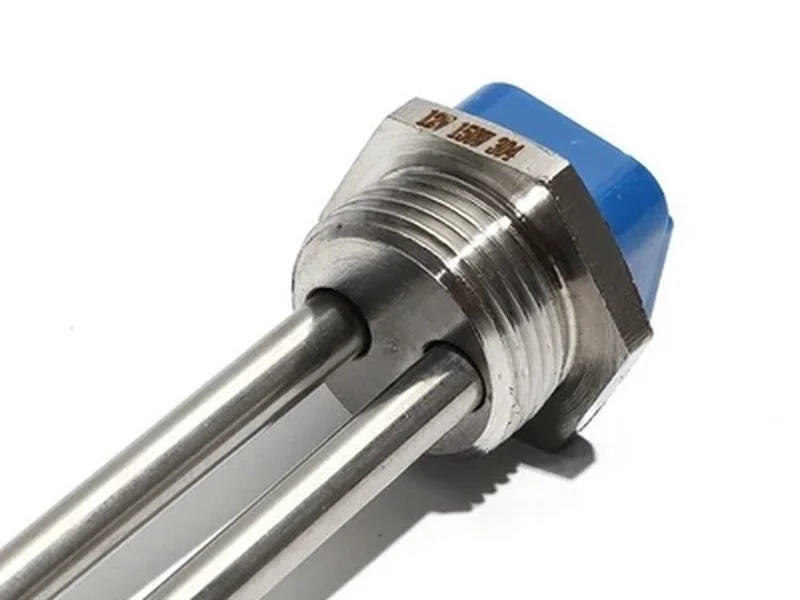
Mount Pleasant expects precision — in its homes, its services, and its hot water. When a heating element fails in the 29464, the symptoms disrupt a well-run household fast: the morning shower runs lukewarm, the large tub never quite fills hot, or the breaker trips and the whole system goes dark. It is an annoyance, but it is also one of the most straightforward repairs in home plumbing — when diagnosed and executed properly.
The key word is properly. Element failure shares its symptoms with thermostat failure and wiring faults, and replacing the wrong component wastes the visit. Professional element service starts with electrical proof: resistance measurements, thermostat function tests, supply verification. Only then does the wrench come out — with the correctly rated element, proper gasket, verified refill, and a monitored test cycle proving the repair.
Our Mount Pleasant element service delivers exactly that standard: accurate diagnosis you can see, clean work with full home protection, and the maintenance guidance that keeps the new element from suffering the old one's fate. Most calls resolve the same day. Call (833) 713-2101 when your hot water turns unreliable.
Symptom Diagnosis: Reading Your Mount Pleasant Heater's Signals
Element problems announce themselves through hot water behavior — and each symptom points toward a specific failure. Here is the diagnostic map for Mount Pleasant heaters.
Water that never gets fully hot — lukewarm no matter how long you wait — is the textbook upper-element failure. The upper element handles quick recovery of the tank's top portion; when it dies, the upper thermostat never satisfies and the whole tank sits tepid. Homeowners often misread this as total heater failure, but the lower element may be perfectly healthy.
Hot water that starts strong and vanishes implicates the lower element. The top third heats normally; the bottom two-thirds — the lower element's territory — never warms. Large households and tub-fillers notice first, usually on the busiest mornings.
A tripping breaker is the electrical distress flare. A deteriorating element can short internally or draw abnormal current, tripping its dedicated 240-volt breaker. An isolated trip may be incidental; a pattern demands investigation, not repeated resetting.
From symptom to proof
Symptoms nominate suspects; electrical testing convicts. With power verified off, we measure each element's resistance — healthy elements read within their rated range, failed ones read open or shorted — and we test both thermostats, whose failures produce identical symptoms. This disciplined sequence takes minutes and eliminates the expensive mistake of replacing the wrong part. In Mount Pleasant, where precision is expected, we show you the meter readings behind the diagnosis.
Mount Pleasant Water vs. Heating Elements: The Sediment Story
Mount Pleasant's water does not just heat — it deposits, and those deposits are what kill heating elements. The mechanism deserves a clear explanation.
Mount Pleasant Waterworks supply carries dissolved calcium and magnesium at moderate hardness. Heated water cannot hold these minerals in solution, so they precipitate — settling directly onto the lower heating element and the tank floor around it. Without flushing, the accumulation is relentless: a dusting becomes a crust, a crust becomes an encasement.
The encased element faces a thermodynamic trap. Designed to shed heat into surrounding water, insulated instead by mineral deposits, its sheath temperature climbs far beyond rating. The metal weakens, pits, and eventually breaches; water reaches the internal coil; the element shorts or burns open and the breaker trips. We extract lower elements from unflushed Mount Pleasant tanks so thoroughly entombed that the original sheath is barely visible — the water's multi-year signature.
Prevention is straightforward
Annual flushing breaks the cycle entirely: draining substantially until water runs clear removes sediment before it can bury the element. It is modest, quick maintenance with an outsized return — the difference between elements that serve their full rated life and elements that die young. Every Mount Pleasant element replacement we perform includes flushing the deposits that killed the original, and we establish the going-forward rhythm explicitly. The water's chemistry is fixed; the maintenance response is a choice.
Thermostats: The Partners That Can Fool the Diagnosis
Thermostats are the quiet partners in every element failure story — controlling when elements fire, and failing in ways that perfectly imitate element death. Understanding them prevents misdiagnosis.
Each element answers to its own thermostat. A thermostat welded closed keeps its element heating without limit — water overheats until the high-limit safety trips, killing power to the entire heater. The homeowner finds cold water and a tripped reset, and blames the element. A thermostat stuck open never energizes its element at all — producing lukewarm water or fast-depleting hot water identical to element failure.
Because the mimicry is perfect, thermostat testing is mandatory in professional element diagnosis. We verify calibration and switching on both thermostats during every Mount Pleasant call, and we treat thermostat replacement as a judgment call with clear logic: failed thermostats get replaced; original thermostats sharing a failed element's advanced age usually get replaced alongside, since the incremental cost during an open service is small and a thermostat failure months later means a repeat visit.
Presented, not pushed
We explain the paired-replacement reasoning plainly — shared service life, shared environment, small incremental cost versus a second service call — and leave the decision to you. On newer tanks with an isolated, clearly diagnosed element failure, we replace only what the tests prove failed. Precision in diagnosis, honesty in recommendation: the Mount Pleasant standard, applied to thermostats too.
Why 240 Volts Makes This a Professional Job
A direct word on safety, because this repair involves electricity that commands respect: residential electric water heaters operate at 240 volts.
Two hot legs, roughly 18-19 amps per element, in a damp environment around a grounded steel tank of water — this is not a casual DIY project. The hazards are real and documented: mislabeled breakers in the panel (the water heater's breaker is not always obvious), residual energy, scalding water during drain-down, and the dry-fire trap that destroys a new element in seconds if power returns before the tank is completely full.
Mount Pleasant homeowners are capable people, and capability sometimes tempts self-reliance past the safe boundary. Element replacement sits firmly past it. The failure modes of DIY attempts — wrong wattage installed, gasket misseated causing slow leaks, dry-fired new element, unverified electrical connections — convert a straightforward professional service into a damaged heater or a safety incident.
The professional standard
Our procedure: breaker off and verified dead by meter (never by label alone), lockout during work, element matched exactly to the unit's rating, new gasket seated correctly, complete refill with air fully purged, power restored only after water is confirmed at the element, then a monitored test cycle verifying correct current draw and heating performance. You receive safe, verified hot water — and the certainty that every step was done right. In Mount Pleasant, that certainty is simply the expected standard.
Local Insight
Mount Pleasant's 29464 runs on Mount Pleasant Waterworks supply — moderately hard water that builds sediment in unflushed electric tanks as steadily as anywhere in the Lowcountry. Sediment burial of the lower element is the dominant failure mode we see in town, from Old Village cottages to Carolina Park new construction. The water does not care about the neighborhood's prestige; the maintenance does.
Water softeners are widespread in Mount Pleasant homes — installed for taste, fixtures, and appliance protection. Softening reduces the mineral load that buries elements, which helps element life, but it accelerates anode rod depletion, which shortens tank life if ignored. The complete picture matters: softener owners need rod checks all the more, even as their elements breathe easier.
Expectations in the 29464 run high, and our service matches: floor and finish protection as standard, evidence shown rather than asserted, work areas left spotless, and communication that respects a busy household's time. Precision is the local standard for everything — element replacement included.