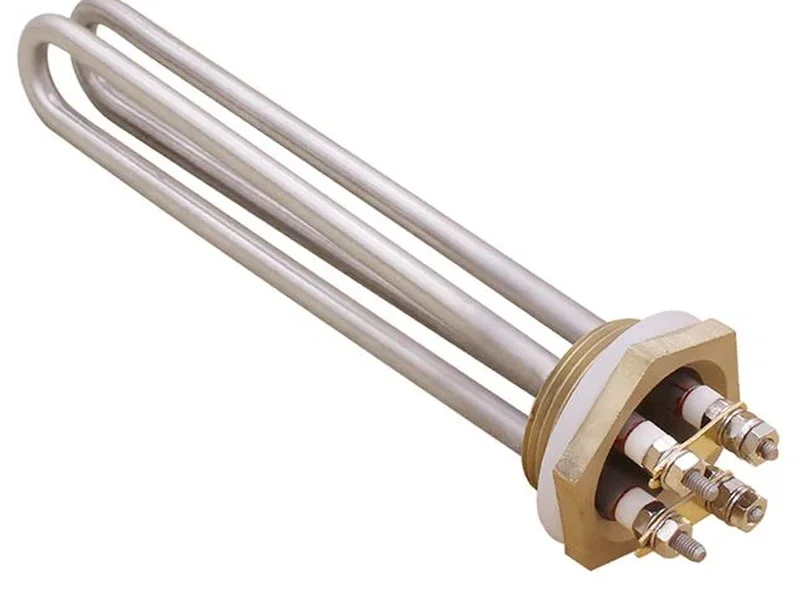
Moncks Corner's electric water heaters serve a town in transition — historic streets near the courthouse, lake-area subdivisions filling with new families, and rural edges where the heater sits in a well-house-adjacent utility room. Across the 29461, when an element fails, the symptoms are democratic: lukewarm showers, hot water that quits early, a breaker that will not stay reset.
What varies is the context around the failure. A five-year-old subdivision tank with a sediment-buried lower element is a clean repair on a young heater. A twelve-year-old town tank with a failed element, a dead thermostat, and base rust is a different conversation — one about the vessel, not the component. Telling those apart is the entire value of professional diagnosis.
Our Moncks Corner element service is built on electrical proof, not assumption. We test both elements and both thermostats, assess the tank's overall condition, and then do the right work: a clean element replacement with the correctly rated part when the tank deserves it, or an honest replacement recommendation when it does not. Call (833) 713-2101 when your hot water turns unreliable.
Two Elements, Two Jobs: Understanding Your Tank's Heating Team
Your electric tank's two elements are a study in division of labor — and understanding their roles explains why a single failure produces such specific symptoms.
The upper element occupies the tank's top portion and fires first whenever hot water is needed. Its mission is speed: heating the upper volume quickly so recovery begins promptly after demand. The upper thermostat, typically set slightly higher than the lower, governs it. When the upper element fails, the tank can never reach full temperature — water stays persistently lukewarm no matter how long the heater runs, because the lower element alone cannot satisfy the upper thermostat's call.
The lower element is the workhorse: once the upper portion is satisfied, control passes down, and the lower element heats the bulk of the tank's volume through longer cycles. Positioned near the bottom, it lives in the sediment zone — which is why lower elements fail more frequently. Its death produces the characteristic "hot, then suddenly cold" shower: the top third delivers, the bottom two-thirds never heated.
Sequencing matters: residential tanks fire elements one at a time, upper first, never simultaneously. This is why one dead element means partial hot water rather than none — and why testing both elements (not just the symptomatic one) is essential. We have found many Moncks Corner tanks where the "obvious" failure masked a second failing component.
The Moncks Corner Element Visit, Phase by Phase
Here is the Moncks Corner element visit exactly as it happens — each phase, no surprises.
Phase one: electrical diagnosis. Breaker off, verified dead with a meter — never trusted from a panel label. We measure resistance across both elements and test both thermostats' switching function. This identifies the failed component precisely: upper element, lower element, thermostat, or combination. You see the readings; the diagnosis is demonstrated, not declared.
Phase two: safe preparation. Water supply closed, tank drained below the element ports. On Moncks Corner's sediment-prone tanks, we flush during drain-down — removing the deposits that killed the old element so the replacement starts in a clean tank.
Phase three: replacement. The failed element unthreads (with penetrating treatment when scale has seized it), and the new element — voltage, wattage, and physical type matched to your unit — installs with a fresh gasket. Thermostats are replaced when testing implicates them or when age makes it prudent; we explain the reasoning and leave the choice to you.
Phase four: prove it
Complete refill, air purged from hot lines, water confirmed at the element level — and only then is power restored, because dry-firing destroys a new element in seconds. A monitored heating cycle verifies correct current draw, steady temperature rise, and a breaker that stays set. Hot water, proven working, before we leave. Most visits run a couple of hours.
Element or New Heater? Reading the Whole Tank
A failed element raises the question every Moncks Corner homeowner asks: fix the part or replace the heater? The answer follows the tank's condition, not the element's.
Replace the element when the vessel is sound: under roughly ten years, clean base, clear flush water, serviceable anode rod. On those facts the tank has years ahead, and an element swap — a component repair — is the clear economical choice. This covers most of Moncks Corner's subdivision tanks and many town units.
Replace the tank when the shell is failing: base rust, seam seepage, rusty water, or advanced age compounded by total maintenance neglect. A new element in a breached or breaching tank is money spent on borrowed time. We will show you the shell evidence and say so directly — spending your money twice helps no one.
Reading the whole unit
Our assessment goes beyond the failed part: rod condition, water clarity, base integrity, pressure behavior, thermostat age. On lake-country water — and especially rural well water — calendar age understates internal wear, so we read the physical evidence rather than the nameplate. Borderline cases get honest probabilities: what the repair likely buys, what the tank's trajectory suggests. The recommendation follows the evidence, the decision stays yours, and the reasoning is always visible. That is how Moncks Corner likes its service: straight.
Choosing the Right Element: Why Matching Matters
Not every replacement element is equal, and installing the wrong one causes problems ranging from poor performance to circuit overload. Here is what correct matching involves.
Voltage must match the supply. Residential tanks run 240 volts; installing a 120-volt element in a 240-volt tank (or vice versa) produces dangerous overheating or useless underheating. We verify supply voltage rather than assuming it.
Wattage must match the unit's rating. The nameplate specifies element wattage — commonly 4500 watts, but variants exist. Higher-wattage elements heat faster but draw more current, potentially overloading the circuit and breaker sized for the original. Lower-wattage elements underperform and run excessively long cycles. We match the rating exactly.
Physical type must fit. Screw-in elements come in different lengths and styles — standard, long, fold-back (low-watt-density) designs that resist sediment buildup better. Fold-back elements are often the smart upgrade for Moncks Corner's sediment-prone water: their larger surface area runs cooler, accumulating less scale and lasting longer in hard-water conditions.
Why matching matters
A mismatched element is not a minor imperfection — it is a performance and safety defect. We stock the common ratings and source the correct part for less common units rather than forcing a near-fit. The element that goes into your Moncks Corner tank is the element your tank was engineered for — or a deliberate, explained upgrade like a fold-back design for sediment resistance. Correct parts, correctly installed, verified working.
Local Insight
Moncks Corner's 29461 blends the historic county seat with explosive lake-country growth, and its electric water heaters reflect both. Older town homes carry electric tanks of various vintages — many never flushed, many on original thermostats — while new subdivisions toward Lake Moultrie run builder-grade units on modern systems. Element failures appear in both, but the surrounding story differs: sediment-neglect in the old, thin factory rods and closed-system pressure in the new.
Lake-country water defines the failure pattern. Moderately hard with real mineral content, it builds sediment that buries lower elements; on the rural fringes, well water with iron and heavier sediment accelerates the process. Humidity corrodes element terminal connections in garage and crawl-space installations, adding electrical faults to the mechanical ones. We read the local water's signature in every failed element we extract.
Moncks Corner homeowners are practical people who appreciate straight dealing — which suits our method: test electrically, show the readings, replace exactly what failed with the correct part, and explain the maintenance that prevents recurrence. No mystery, no oversell.