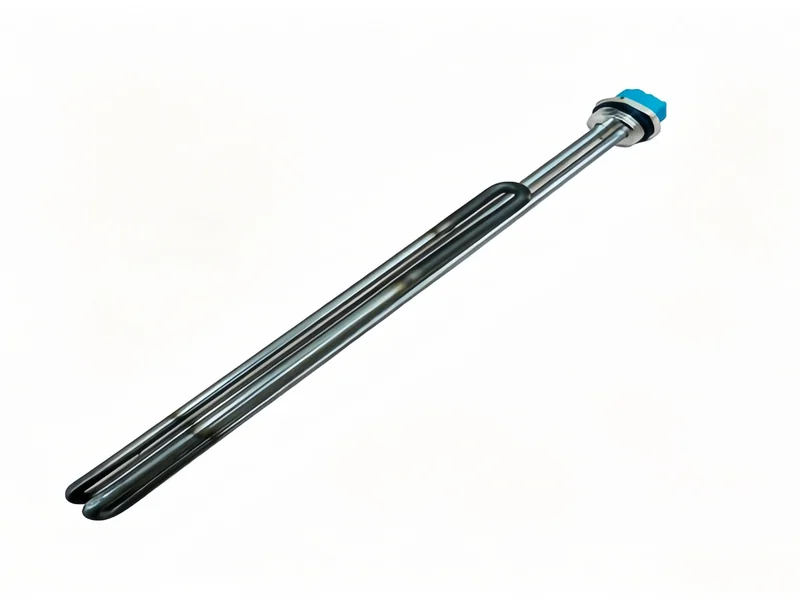
Ladson's electric water heaters fail their elements the same way most suburban tanks do: quietly, then suddenly. For months the lower element labors under accumulating sediment; hot water recovery gets a little slower; nobody notices. Then one morning the shower is lukewarm, the breaker has tripped, and the 29456 household discovers what a heating element is.
The fix is straightforward — but the electricity is not. Water heater elements operate on 240 volts, and the difference between a clean professional replacement and a dangerous DIY attempt is training, testing equipment, and respect for the power involved. This is one repair where calling a technician is not convenience but safety.
Our Ladson element service combines both halves properly: accurate electrical diagnosis to confirm the element (not the thermostat, not the wiring) is the culprit, then safe replacement with the correctly rated element, proper gasket seating, verified refill before re-energizing, and a monitored test proving the repair. Same-day service in most cases, with the maintenance guidance that keeps the new element alive longer than the old one. Call (833) 713-2101.
Anatomy of an Element Failure in Ladson
Heating elements look indestructible — a metal sheath, a coil inside — but three failure mechanisms account for nearly every dead element in Ladson. Understanding them explains both the repair and the prevention.
Sediment burial leads by a wide margin. Dissolved minerals precipitate out of Ladson's moderately hard water and settle onto the lower element, gradually encasing it in an insulating mineral shell. The element cannot shed heat into water it can barely touch, so it runs progressively hotter — sheath temperatures climbing beyond design limits — until the sheath breaches or the internal coil burns through. The failure often announces itself as a tripped breaker after weeks of declining hot-water performance.
Dry-firing is the instant killer. An element energized while exposed to air — tank partially drained, refill incomplete, well run dry — overheats in seconds with nothing to absorb the heat. The sheath fails catastrophically. This is why professional procedure verifies full water at the element level before restoring power, every single time, without exception.
Cycling fatigue ends the survivors. Thousands of on-off heating cycles expand and contract the sheath; mineral scale pits the surface; the resistance coil eventually fails from thermal stress. Even perfectly maintained elements have a finite life — but "finite" should mean years, not the premature death sediment deals.
Reading the failure
We do not just confirm the element is dead — we read how it died, because the mode dictates the prevention. Sediment-caked elements get a flush with the replacement. Dry-fire damage triggers a review of refill procedure. Age failures on maintained tanks simply get a like-for-like quality replacement. The new element deserves better than the old one's fate.
Hard Water's War on Heating Elements
Ladson's water is moderately hard, and hard water is an element-killing machine when sediment is allowed to accumulate. Here is the chemistry of the damage.
Calcium and magnesium dissolved in the supply precipitate out when water is heated — basic physics, unavoidable. In an electric tank, that precipitate settles directly onto the lower heating element and the tank floor surrounding it. Each year without flushing adds to the mineral blanket: first a dusting, then a crust, eventually an insulating tomb.
The thermodynamics are unforgiving. An element rated to shed its heat into water, wrapped instead in mineral insulation, experiences surface temperatures far above its design envelope. The sheath — typically Incoloy or copper alloy — weakens, pits, and finally breaches. Water contacts the internal resistance coil; the element shorts or burns open; the breaker trips. On Ladson's unflushed tanks, we extract lower elements so encrusted they are barely recognizable as heating devices.
The flushing defense
Annual flushing interrupts the cycle completely: draining substantially until water runs clear removes sediment before it can entomb the element. It is high-impact maintenance every electric tank owner can perform — minutes of service protecting years of element life. Every Ladson element replacement we perform includes a flush of the sediment that killed the original, plus a clear recommendation on the rhythm going forward. The water's hardness will not change; the tank's maintenance can, and that changes everything.
240 Volts Deserves Respect: Why Element Work Isn't DIY
This section is direct, because the subject allows no softening: a water heater's electrical system can kill you, and element replacement is electrical work.
Residential electric water heaters run on 240 volts across two hot legs, with elements drawing around 18-19 amps each. That is not a tingle — it is a lethal combination of voltage and current, delivered through wiring in a damp environment next to a grounded steel tank full of water. Every year, DIYers are injured working on water heaters they assumed were "just like changing a light bulb." They are not.
The hazards compound: breakers mislabeled in the panel (the water heater breaker is not always the one you think), stored energy in the system, scalding water released during drain-down, and the dry-fire trap — re-energizing before the tank is completely full, which destroys the new element instantly and can create additional electrical faults.
What professional handling includes
Our procedure treats the 240 volts with full respect: breaker off, verified dead with a meter (not assumed from a label), lockout during work, correct element rating matched to the unit, new gasket properly seated, complete refill with air purged, and power restored only after water is confirmed at the element. Then a monitored test cycle verifies correct current draw and heating. Ladson homeowners get safe, verified hot water — and never have to wonder whether the breaker they flipped was the right one.
Element Lifespan: What Determines It and How to Extend It
How long should a heating element last — and what separates the elements that do from the ones that don't? The answer is mostly maintenance.
A quality element in a maintained tank typically serves several years of reliable service — often the better part of a decade in gentle conditions. The same element in a never-flushed Ladson tank on hard water may fail in a fraction of that time, buried in sediment it never had a chance against. The element did not change; the environment did.
The lifespan levers are straightforward. Annual flushing is the dominant one: keeping sediment off the lower element removes the primary killer. Correct thermostat settings matter — excessively high settings increase cycling stress and scale formation. Anode rod maintenance protects the tank, which indirectly protects the element's operating environment. Water treatment (softening or conditioning) reduces the mineral load at the source, though softened water's effect on rods needs its own attention.
What we install and why it lasts
We replace with quality elements correctly rated for your unit — matched voltage and wattage, proper sheath material for the application — installed with a new gasket and a flushed tank. But the part is only half the lifespan equation; the maintenance rhythm is the other half, and we set you up with it explicitly: flushing cadence, what to watch for, when to call. A Ladson element installed correctly and maintained simply should outlive the neglected original by years. That is not a promise about a part — it is physics plus maintenance.
Local Insight
Ladson's 29456 sits at the tri-county junction along US-78 and I-26, with housing spanning 1970s subdivisions through 2000s infill. Electric water heaters are common across these neighborhoods, and the area's moderately hard water — from municipal supplies and, on the fringes, private wells — builds sediment in unflushed tanks relentlessly. Lower-element burnout from sediment burial is the dominant element failure pattern we see in Ladson.
The suburb's practical character shows in how element failures surface: homeowners notice the symptoms, check the breaker, and call — usually with an accurate description of what's happening. That helps. What helps more is the area's generally accessible installations: garage, utility room, and laundry placements that make electrical testing and element extraction straightforward, keeping visits efficient.
Ladson also has its share of older electric tanks on original thermostats and elements — units where a single failed element is the first sign of a maintenance deficit years in the making. We treat those visits as both repair and reset: fix the failure, flush the sediment, check the rod, and establish the rhythm that prevents the sequel.