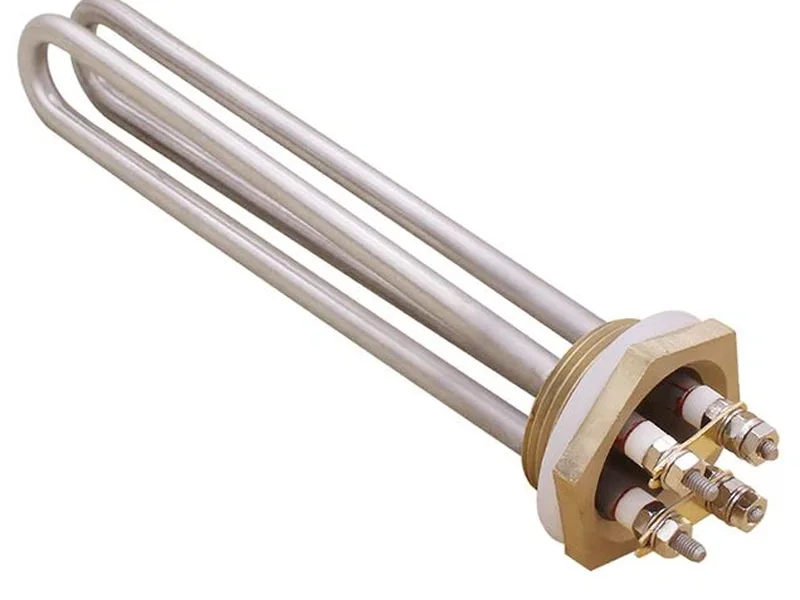
Johns Island's electric water heaters work hard — in new subdivisions along Main Road and Maybank Highway, and in rural properties where the heater sits in a well-house-adjacent utility room or a crawl space. When a heating element fails in the 29455, the household notices fast: the morning shower turns lukewarm, the dishwasher's sanitize cycle underperforms, or the breaker trips and stays tripped.
Element failure is refreshingly fixable. Unlike a breached tank shell — which ends the unit — a burned-out element is a component swap on an otherwise healthy heater. The tank, the plumbing, the installation all stay; only the failed part is replaced, and hot water returns the same day. On a mid-life tank it is among the most economical repairs a homeowner can buy.
The catch is accurate diagnosis, because thermostats fail in similar ways and wiring faults can mimic both. Our Johns Island element service is built on electrical testing first: resistance readings on both elements, function checks on both thermostats, verification of power supply. We replace what the tests prove failed — upper element, lower element, thermostat, or a combination — with parts matched to your unit. Call (833) 713-2101 when the hot water turns unreliable.
Symptom Map: What Your Johns Island Heater Is Telling You
Element failure has a signature, and learning to read it saves Johns Island homeowners from both unnecessary replacements and misdiagnosed repairs. Here is the symptom map.
Persistently lukewarm water — never fully hot no matter how long you wait — is the classic upper-element failure. The upper element heats the top of the tank for quick recovery; when it dies, the thermostat never satisfies, and the whole tank sits tepid. Homeowners often describe this as "the heater stopped working," but the lower element may be fine — the diagnosis is specific.
Hot water that vanishes fast — scalding at first, gone in minutes — points to the lower element. The top third heats normally, the bottom two-thirds never do, and the usable hot water is a fraction of the tank's capacity. Large households notice this first, usually at the worst possible morning.
The tripping breaker is the electrical alarm bell. A failing element can short internally or draw excessive current, tripping its 240-volt breaker. One trip might be a fluke; repeated trips are a diagnosis demanding attention. Resetting without investigating risks the wiring and the panel.
Confirm, don't assume
Symptoms suggest; tests prove. With power safely off, we measure resistance across each element — a healthy element reads in its rated range, a failed one reads open or shorted — and we test both thermostats, since thermostat failure produces overlapping symptoms. This electrical confirmation takes minutes and eliminates the costly error of replacing the wrong component. We share the readings with you, so the diagnosis is evidence, not assertion.
Upper vs. Lower: How Your Tank's Two Elements Divide the Work
Most electric tanks carry two heating elements, and understanding their division of labor explains why failures present so differently.
The upper element sits in the top portion of the tank and fires first. Its job is quick recovery: heating the upper volume so hot water is available soon after demand begins. The upper thermostat controls it, typically set a few degrees above the lower. When the upper element fails, the tank never reaches full temperature — lukewarm throughout, regardless of patience.
The lower element does the heavy lifting: heating the bulk of the tank's volume once the upper portion is satisfied. It runs longer cycles and, sitting near the bottom, lives in the sediment zone — which is why lower elements fail more often. When the lower element dies, you get a tank that starts hot and finishes cold: the top delivers, the bottom never heated.
They never fire simultaneously in standard residential tanks — the thermostats sequence them, upper first, then lower. This sequencing is why a single failed element produces partial symptoms rather than total failure, and why accurate testing of both elements (not just the "obvious" one) matters.
What this means for your repair
We test both elements and both thermostats on every Johns Island call, because the symptom points to a suspect but the meter delivers the verdict. Sometimes both elements have failed — common when sediment has been burying the lower while age took the upper. Sometimes the element is fine and a thermostat is the culprit. The division of labor is elegant; the diagnosis respects it.
Thermostats: The Control System Behind Every Element
Thermostats are the elements' control system, and their failures intertwine with element failures in ways that demand careful diagnosis.
Each element has a thermostat deciding when it fires. A thermostat stuck closed leaves its element heating continuously — overheating the water until the high-limit safety trips, cutting power to the whole heater. The homeowner finds no hot water and a tripped reset button, and reasonably blames the element. A thermostat stuck open never calls its element at all — producing the same lukewarm or depleted-hot-water symptoms as a dead element.
Because the symptoms overlap so completely, thermostat testing is inseparable from element diagnosis. We check calibration and switching function on both thermostats during every Johns Island element call. A thermostat reading years of drift, or one that has failed outright, gets replaced — guessing between the two components is how homeowners pay for two visits.
The paired-replacement logic
When an element has failed from age and the thermostats are original to the unit, we typically recommend replacing thermostats alongside the element. The reasoning is practical, not upselling: thermostats share the element's service life and environment, the incremental cost during an already-open service is small, and a thermostat failure six months later means a second drain-down and second visit. We present it as a recommendation with the reasoning attached — your call, fully informed. On newer tanks with a clearly isolated element failure, we replace only what the tests prove failed.
Element or Whole Heater? The Honest Decision for Johns Island
A failed element on a sound tank is a repair; a failed element on a dying tank is a down payment on an avoidable second bill. Here is how we help Johns Island homeowners tell the difference.
Replace the element when the tank deserves it: under roughly ten years old, no rust at the base, clear flush water, a live or replaceable anode rod, and no shell symptoms. On those facts, an element swap restores years of service at a fraction of replacement cost — the clear economical choice, and the most common outcome on Johns Island's newer subdivision tanks.
Replace the tank when the evidence says the vessel is failing: base rust or seam seepage, rusty water, heavy sediment that flushing cannot clear, a long-dead anode rod on an aging unit. A new element cannot save a breached shell, and installing one only spends money delaying the inevitable. We will tell you plainly when the tank — not the element — is the problem.
The Johns Island variables
Well-water rural tanks get extra scrutiny: internal wear runs ahead of calendar age, so a nine-year-old well-fed tank may read as twelve. Builder-grade subdivision tanks get the maintenance-history question: never flushed, never rod-checked at year seven means the element failure may be the first symptom of broader neglect. We weigh all of it, show you the evidence — rod, water color, base condition — and give you the honest recommendation. The tank's condition makes the case; we just present it clearly.
Local Insight
Johns Island's 29455 splits water-heater reality in two. New subdivisions run modern electric tanks on municipal water — moderately hard, sediment-building, and perfectly capable of burying a lower element in an unflushed tank within a few years. Rural Johns Island runs older electrics on well water, where iron and sediment loads are heavier and element-killing deposits accumulate faster. We diagnose both, and the water source always enters the assessment.
Electric heat dominates the island — many areas have limited natural gas availability, so electric tanks are the default. That makes element service one of our most frequent Johns Island calls. Builder-grade units in new subdivisions deserve a note: thinner anode rods and basic elements mean the maintenance clock starts at installation, and the "new house needs nothing" assumption is how lower elements die young.
Johns Island's growth also means many homeowners are new to the Lowcountry — unfamiliar with hard-water sediment, unfamiliar with what a tripped water-heater breaker means. We take the teaching part of the visit seriously: what failed, why it failed, and the simple flushing habit that keeps the replacement alive longer than the original.