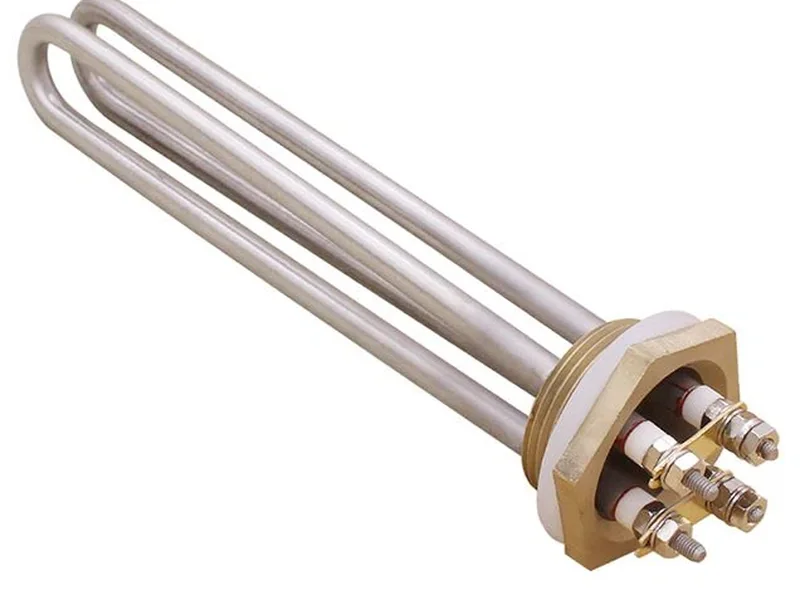
Electric water heaters do their work with parts most homeowners never see: two heating elements submerged in the tank, cycling on and off for years without a thought. On James Island, those elements labor in the 29412's moderately hard water — and when one fails, the symptoms arrive unmistakably: showers that never quite get hot, a breaker that keeps tripping, or a tank of hot water that runs out in half the time it used to.
The reassuring news for James Island homeowners: a failed element is a component problem, not a heater problem. The tank, the shell, the plumbing — all of it is usually fine. Replacing the element restores the heater to full function at a fraction of replacement cost, and on a mid-life tank it is one of the most economical repairs in home plumbing.
But "usually" is not "always," which is why we test before we replace. A tripped breaker can mean a failed element, a failed thermostat, or a wiring fault — and each has a different fix. Our James Island element service starts with electrical diagnosis, confirms the culprit, and then performs a clean, safe replacement with the correct element for your unit. Call (833) 713-2101 when the hot water starts misbehaving.
How James Island Heating Elements Actually Fail
Heating elements are simple devices — a resistance coil sealed in a metal sheath — and they fail in a handful of well-understood ways. Knowing the mechanisms helps you understand both the diagnosis and the prevention.
Sediment burial is the leading killer on James Island. Mineral sediment settles to the tank bottom and blankets the lower element. The element, insulated from the water by mineral deposits, cannot shed its heat — so it runs hotter and hotter trying to do its job until the sheath fails or the internal coil burns through. The symptom progression is characteristic: gradually diminishing hot water, then lukewarm, then a tripped breaker as the failing element draws abnormal current.
Dry-firing destroys an element in seconds. If power reaches the elements while the tank is not completely full of water — after a drain-down, after installation, after a well runs dry — the element overheats instantly with no water to absorb the heat. This is why the refill-and-purge sequence after any tank work is non-negotiable, and why we verify full water before re-energizing.
Age and cycling fatigue finish the rest. Thousands of heating cycles expand and contract the sheath; mineral scale pits it; eventually the coil fails. A typical element lifespan runs several years, but James Island's sediment-heavy tanks compress that significantly without flushing.
Why the failure mode matters
The mode shapes the fix. Sediment-killed elements call for a flush alongside replacement — otherwise the new element inherits the same burial. Dry-fired elements call for verifying the refill procedure. We diagnose the mode, not just the failure, so the replacement actually lasts.
Reading the Symptoms: Is It Really the Element?
Not every hot-water problem is an element — but element failures have a recognizable signature. Here is how to read the symptoms on your James Island heater.
Lukewarm water that never gets fully hot is the classic upper-element or thermostat story. The upper element handles the top portion of the tank; when it fails, you get a tank of tepid water no matter how long you wait. Hot water that runs out fast — plenty hot at first, gone in minutes — typically implicates the lower element: the top heats, the bottom never does, and the usable hot water is a fraction of the tank.
A tripped breaker is the electrical distress signal. A failing element can short or draw excessive current, tripping its dedicated 240-volt breaker. Resetting it may restore heat temporarily, but a breaker that trips repeatedly is telling you something is wrong inside the tank — and repeatedly resetting it is not a fix.
No hot water at all with an untripped breaker points toward thermostats or power supply rather than the element itself — which is exactly why we test electrically instead of assuming.
The test that settles it
Diagnosis is electrical and definitive: with power safely off, we measure each element's resistance. A healthy element reads in its specified range; a failed one reads open (burned out) or shorted. Thermostats get tested too, because element and thermostat failures mimic each other. Ten minutes of testing prevents the expensive error of replacing the wrong part — and we show you the readings, so the diagnosis is transparent, not asserted.
Hard Water vs. Heating Elements: James Island's Sediment Problem
James Island's water does not just fill the tank — it actively shortens element life, and understanding the chemistry explains why flushing is not optional here.
Charleston's municipal supply runs moderately hard: dissolved calcium and magnesium that precipitate out when heated. In an electric tank, that precipitate settles directly onto the lower heating element and the tank bottom around it. Year by year, the mineral layer thickens — insulating the element from the water, forcing it to run hotter to deliver the same heat, and baking the deposits into a hardened crust.
The overheating is what kills. An element designed to shed heat into water, encased instead in mineral insulation, experiences sheath temperatures far beyond its rating. The sheath weakens, pits, and eventually breaches; the internal coil, exposed to water, shorts or burns through. On James Island's unflushed tanks, this cycle compresses element life dramatically — we regularly pull lower elements caked in deposits from tanks that were never flushed.
Breaking the cycle
Annual flushing is the direct countermeasure: draining the tank substantially until water runs clear removes the accumulating sediment before it can bury the element. It is quick, inexpensive maintenance — and it is the difference between elements that last their rated life and elements that fail prematurely. When we replace a sediment-killed element on James Island, we flush as part of the service and set you up with the rhythm that protects the new element. The water will not change; the maintenance can.
Your James Island Element Replacement, Step by Step
Here is exactly what happens when we come out for a James Island element replacement — the full visit, no mystery.
Electrical diagnosis first. With the breaker off and verified dead, we test both elements' resistance and both thermostats' function. This ten-minute procedure identifies precisely which component failed — element, thermostat, or (less commonly) a supply issue — so we replace the right part the first time. We show you the readings.
Safe power-down and drain-down. Breaker locked off, water supply closed, and the tank drained below the element ports. On James Island's sediment-heavy tanks we flush during the drain-down, clearing the deposits that killed the old element so the new one starts clean.
Extraction and replacement. The failed element unthreads — sometimes with penetrating treatment and controlled leverage when years of scale have seized it — and the new element, matched to your unit's voltage and wattage, threads in with a fresh gasket. Thermostats are replaced alongside when testing implicates them or age suggests it.
Refill, purge, and prove it
The tank refills completely, air purges from the hot lines, and only then — with water verified at the element level — is power restored. Never before: dry-firing destroys a new element in seconds. Then a monitored heating cycle confirms proper operation: correct current draw, rising water temperature, no tripped breaker. You will see the hot water return before we leave. Most James Island element visits complete in a couple of hours, same day.
Local Insight
James Island's 29412 is served by Charleston's municipal water system at moderate hardness — the kind of water that quietly builds sediment in every unflushed electric tank on the island. Sediment is the heating element's nemesis: it settles over the lower element, insulates it from the water it is trying to heat, and forces it to run far hotter than designed. Lower-element burnout from sediment burial is the single most common element failure we diagnose on James Island.
The island's housing adds context. Ranch homes from the 60s through the 90s along Folly Road and Harbor View Road carry electric tanks of various vintages — many on their original thermostats, many never flushed. Electric heaters dominate here (gas is less common on the island), which means element issues are simply more frequent than in gas-heavy areas. Humid garage and crawl-space air also corrodes element terminal connections over time, adding electrical faults to the failure mix.
James Island homeowners tend to be practical diagnosticians — they notice the shower temperature, they check the breaker. We meet that halfway: clear explanations of what failed and why, the test readings that prove it, and maintenance guidance (flushing rhythm, mainly) that keeps the new element from meeting the old one's fate.