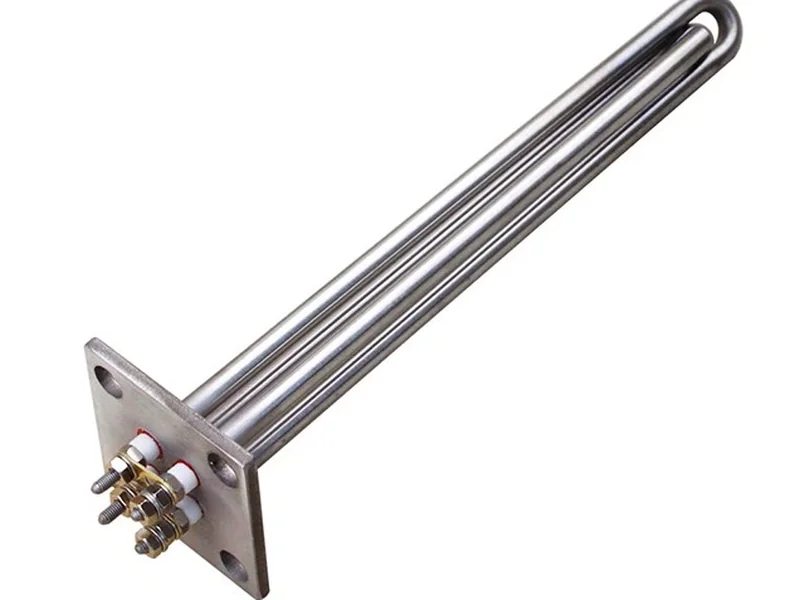
Hanahan's housing — 1970s and 1980s brick ranches from the Naval Base era plus the Tanner Plantation wave of the 1990s-2000s — carries electric water heaters across a wide age span, and their heating elements are failing on overlapping schedules. In the 29410 ZIP, the classic call is the mid-life element: a 12-to-18-year-old heater in a garage or laundry room whose lower element has finally succumbed to sediment, or whose upper thermostat has drifted out of calibration after decades of cycles. The elements are standard 240-volt resistive loops, upper and lower, but Hanahan gives them the full Lowcountry treatment — humid air on terminals, laundry-room chemicals on contacts, and tanks that in many cases have never been flushed. Our technicians replace heating elements throughout Hanahan with exact electrical diagnosis, correct-spec parts, and the honest tank assessment these mid-life heaters deserve.
Mid-Life Heaters: The Hanahan Element Window
Hanahan's electric heaters cluster in the 12-to-20-year range — old enough for elements to fail, young enough that the tanks are often worth saving. This is the decision window where honest assessment matters most, and it is where we spend our diagnostic effort. A 15-year-old tank with a failed lower element, no rust, a serviceable anode, and manageable sediment is an element-replacement candidate that buys five or more years for a fraction of replacement cost. The same-aged tank with jacket rust, a dead anode, and heavy scale is a replacement candidate — and we will show you which one yours is.
The failure modes here are the Lowcountry classics. Lower-element burnout from sediment burial leads the count: Hanahan's municipal water is moderately hard, and fifteen unflushed years build the insulating bed that overheats the lower loop. Thermostat drift follows — decades of cycling wear the bimetal mechanisms until temperature control goes erratic. Terminal corrosion from humid garage air rounds out the trio, dropping voltage and cooking connections. Our diagnosis tests all of it: element resistance, thermostat calibration and switching, high-limit function, connection integrity.
Laundry-room installations deserve their local note. Hanahan's ranch floor plans put heaters in laundry rooms at a high rate, and those rooms attack elements two ways: lint coating components and restricting air, and chlorine bleach fumes corroding terminals and contacts. A laundry-room element in a heavy-bleach household can fail years ahead of its garage counterpart. We assess the environment with every call because the environment is half the diagnosis.
Symptoms and What They Mean in Practice
The symptom code, applied to Hanahan's housing: no hot water at all — upper element or upper thermostat, the most common total-failure call. Hot water that fades within minutes — lower element down, the classic sediment-burial failure. Lukewarm water that never reaches setting — scaling element or drifting thermostat. Breaker tripping — shorted element or electrical fault, an immediate-call symptom. Red reset button popping — overheating, usually sediment-driven, needing diagnosis not just resets. Rumbling during heating — sediment boiling, the lower element's distress signal. Rusty hot water — anode exhausted, tank corroding, the element call becoming a tank-health call.
Two symptoms get the urgent response. A breaker that trips repeatedly signals a fault condition — shorted element, failing thermostat, or wiring problem — and repeatedly resetting it stresses the panel and risks worse. Call promptly and leave it off. Any burning smell near the heater or panel is an immediate call: de-energize at the breaker if safe to do so and get professional assessment. Electrical faults do not improve with time.
What we test on every Hanahan call: both elements' resistance, both thermostats' calibration and switching, the high-limit switch, wiring and terminal condition, and during drain-down, sediment depth and anode state. The quote that follows covers exactly what failed — element, thermostat, switch, or a combination — with the tank assessment attached. No blanket both-elements policies; the meters decide.
The Replacement: Electrical Rigor in Ranch Houses
Replacement runs the full safe electrical sequence: breaker off and verified dead at the heater with non-contact tester and multimeter — no exceptions in any home, any panel. Access panels and insulation removed; wiring disconnected, labeled, and documented; tank drained below the service point. Old element unthreaded; port cleaned and inspected. New element installed — exact wattage, voltage, and type match — with a new gasket, always. Thermostats and high-limit tested while the panels are open; marginal components replaced rather than left to fail next season.
Hanahan's older installations get the connection attention they need: corroded terminals cleaned or renewed, wire ends remade where heat-discolored, all connections torqued to specification. On heaters where the electrical environment caused the failure — corroded terminals dropping voltage — this renewal is the actual repair, with the element replacement secondary. We also verify the circuit's wire gauge against the element wattage, because long-ago installations occasionally surprise.
Dry-fire prevention is absolute: tank completely refilled, air purged through hot taps until flow is solid, then power restored — seconds of dry energizing destroys a new element. Final verification cycles both elements through the thermostats, confirms the high-limit holds, tests the temperature-pressure relief valve, sets 120 degrees, and includes a loaded connection check — no terminal heating under full current. Hot water restored the same visit; findings and maintenance guidance reviewed with you.
Getting Full Life From the Repair
A replacement element in Hanahan should deliver 8-12 years — if the conditions that killed the last one get addressed. Annual tank flushing is the lead habit: it prevents the sediment burial that causes most lower-element failures, and it provides the yearly window to check anode condition. We demonstrate the flush during our visit; most homeowners handle it themselves thereafter, and we offer it as a maintenance service for those who prefer not to.
Environment management is the Hanahan-specific piece: laundry rooms need lint control and bleach stored sealed and away from the heater; garages need ventilation air kept clear of storage and the heater's electrical area kept dry; crawlspace installations (where they exist) benefit enormously from a ground moisture barrier against the damp that corrodes terminals. None of this is expensive; all of it measurably extends component life.
The early-call habit closes the loop: lukewarm water, fading showers, rumbling, tripping resets — each is a modest repair at first symptom and a bigger one after months of strain. And the anode schedule: check every 3-5 years on municipal water, because the anode's sacrifice is what keeps the tank from becoming the next failure after the element. In Hanahan's mid-life heater population, consistent small maintenance beats reactive big repairs by a wide margin.
Local Insight
Hanahan's 29410 grew with the Charleston Naval Base — 1970s and 1980s brick ranch neighborhoods for military families and shipyard workers — then grew again with Tanner Plantation and the 1990s-2000s subdivisions. The result is an electric water heater population spanning 10 to 25 years old, overwhelmingly in garages and laundry rooms on slab foundations, served by municipal water of moderate hardness. It is the classic mid-life heater market: components failing from accumulated Lowcountry wear rather than extreme conditions.
The Hanahan element pattern reflects that ordinariness: lower-element sediment burial on unflushed tanks leads the failure count, thermostat drift follows from decades of cycling, and laundry-room chemical exposure plus garage humidity corrode the electrical connections that elements depend on. Cohort effects appear by neighborhood — base-era streets and Tanner-era streets aging on their own timelines. Our Hanahan element service is built for the mid-life decision: multimeter-exact diagnosis distinguishing element, thermostat, switch, and connection failures; honest element-versus-replacement assessment with visible evidence; connection renewal where the environment caused the failure; and maintenance guidance — flushing, lint and chemical management, anode scheduling — that gets the repaired heater to its full remaining life.